
Search Engine Usage in Australia (2026): Statcounter Data, AI Search and Zero-Click Behaviour
2026 Australian search engine statistics. Statcounter shows Google share has fallen from ~94% to ~88% over the year as Bing rises on Copilot/Edge defaults. AI Overviews, the eSafety age-restricted code (live 27 Dec 2025), and what it all means for SEO.

Australia’s search market in 2026 looks meaningfully different from where it sat a year ago. Google is still dominant, but Statcounter’s monthly data shows Google’s Australian share has slipped from 93.67% in August 2024, the reading the ACCC rounded to “nearly 94 per cent” in its Digital Platform Services Inquiry, to 88-91% across the first five months of 2026, with Bing climbing from ~3% to ~8.7% on the back of Copilot integration in Edge and Microsoft 365 defaults (Statcounter Australia, May 2026).
At the same time, AI search is no longer experimental. AI Overviews now appear regularly in Australian SERPs, though nobody has published a defensible population-level Australian measurement of how many people see them, and Pew Research has measured significant click-through impact when AI summaries appear. Our own tracking gives a first-party read on how saturated commercial SERPs already are: across 53 Australian queries we monitor for AI-visibility work spanning three client verticals (childcare, allied health and SEO services), an AI Overview was present on 49 of them, 92%, at the latest capture (July-August 2026). These are queries selected for AI-visibility tracking rather than a random sample, so treat it as a ceiling not an average, but on the commercial queries that matter to a local business, the AI Overview is now the rule, not the exception. Generative AI adoption in Australia hit 49% in the year to early 2025 per Google’s Ipsos survey, up from 38% in 2023. The Stanford AI Index 2026, released 13 April 2026, finds 53% of the global population now uses generative AI regularly, faster than the PC or the internet reached comparable adoption. What that means for a smaller operator is covered in our guide to AI SEO for small business in Australia.
Globally, clickstream data from SparkToro and Datos shows around 58-60% of Google searches in the US and EU now end without a click to the open web. Australia-specific zero-click figures at the same level of methodological rigour are not publicly available, but local behaviour is likely to track closely given heavy Google usage and rapid AI rollout.
This report covers the 2026 numbers Australian businesses actually need to plan against: market share by engine, mobile and browser splits, the impact of AI Overviews on organic traffic, the new eSafety Internet Search Engine Services Code that took effect 27 December 2025, and the practical SEO implications for the rest of 2026.
1. Scope and definitions
This report covers Australian search engine usage in 2026, with a particular focus on the year-on-year shifts that are now measurable: Google’s gradual share decline, Bing’s rise on Copilot/Edge defaults, AI Overview impact on organic traffic, the new eSafety code, and the practical implications for Australian SEO.
Methodology
Primary sources used: Statcounter Global Stats (monthly Australian data), Datareportal Digital 2026 Australia, Stanford AI Index 2026 (April 13, 2026), Google/Ipsos AI adoption survey, Pew Research, Ahrefs 2026 update, Seer Interactive 2025 AI Overview study, eSafety Commissioner regulatory guidance, SparkToro+Datos clickstream analyses, RedSearch’s Australian data, and SBS / AAP fact-checks for the recent code changes. Older figures are flagged with date qualifiers.
Note on where the 94% figure comes from: the ACCC’s Digital Platform Services Inquiry interim report 9 found Google held “nearly 94 per cent” of Australian general search as at August 2024, and its own footnote records that this was rounded up from Statcounter’s 93.67%. So the 94% and the 88% are the same source measured 22 months apart, not two competing methodologies. Where other sources report higher current numbers, it is usually because of methodology differences. We use Statcounter for monthly trend, Datareportal for annual context.
Key definitions
- Search engine: Web search platforms that index and rank web pages against user queries
- LLM (Large Language Model): AI systems trained on text datasets that generate human-like responses
- AI Overview / AI Mode: Google’s AI-generated SERP summary that appears above traditional blue links
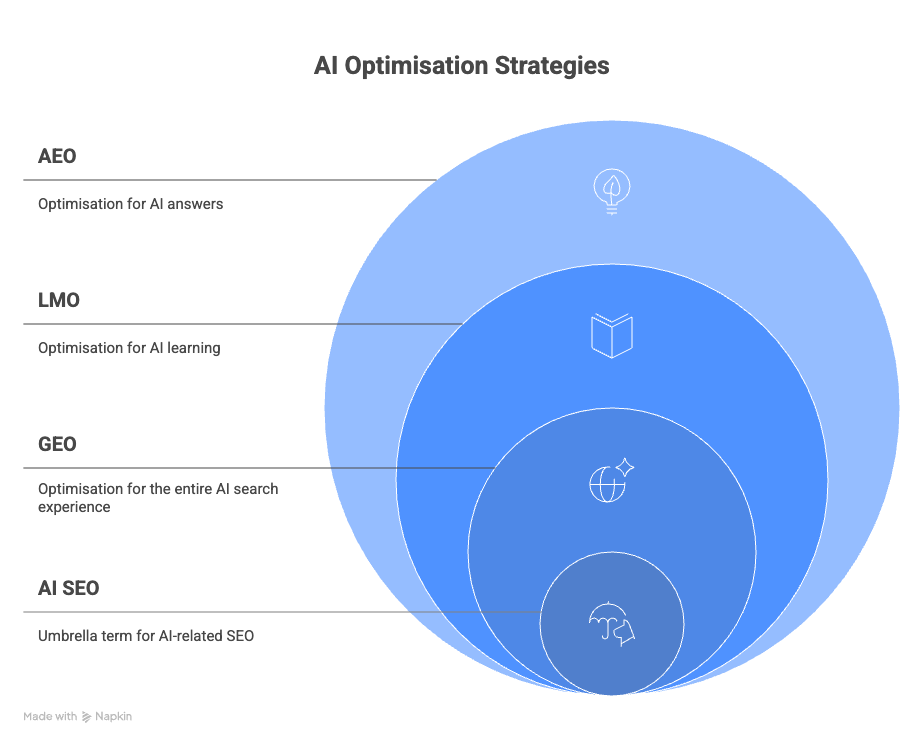
- AEO (Answer Engine Optimisation): optimising content to be cited in AI-generated summaries
- LMO (Language Model Optimisation): ensuring brand inclusion in LLM training data and outputs
- GEO (Generative Engine Optimisation): optimising for visibility within AI and generative search experiences
- AI SEO: the broader evolution of SEO to include AI systems, voice search and conversational interfaces
2. Core search engine usage statistics
2.1 Market share breakdown (2026)
The Australian search market remains Google-dominated, but the gap has narrowed measurably over the past year. Per Statcounter’s monthly tracking:
- January 2026: Google 90.7%, Bing 6.56%, Yahoo 1.35%, DuckDuckGo 0.89%, Yandex 0.21%, others ~0.3% (digitalzoop summary, March 2026)
- February 2026: Google 88.5%, Bing 8.57%, Yahoo 1.56% (Statcounter)
- June 2026: Google 88.04%, Bing 9%, Yahoo 1.55%, DuckDuckGo 0.94% (Statcounter, Australia)
The trend is real: Google has lost approximately 5 percentage points of Australian share over 12 months. Bing has captured most of the move, driven by Microsoft’s Copilot integration in Edge and Microsoft 365 defaults. DuckDuckGo’s privacy-focused position has held without expanding.
Australian search engine market share (May 2026)
Google still dominates, but at a meaningfully lower share than 2024. Bing has captured most of the recent move on the back of Copilot/Edge defaults. Source: Statcounter Global Stats, May 2026 via SerpSculpt's verified May 2026 country dataset.
Year-on-year trends (2023-2026)
Google’s Australian share eroded slowly through 2024, sitting in the low 93s by year end, then fell through 2025 and into 2026. Worth flagging one discontinuity rather than drawing a smooth line through it: the share dropped from 90.71% in January 2026 to 88.89% in February, a 1.82 point fall in a single month, while Bing jumped from 6.55% to 8.25%. A step that size in one month looks more like a Statcounter panel or measurement change than a real shift in behaviour, so treat it as a step rather than a trend. Bing’s gains map cleanly to Microsoft’s product strategy: Edge browser pre-installed on Windows 11, Copilot deeply integrated into Microsoft 365, and search defaults that nudge users toward Bing-powered results.
Google vs Bing market share trend in Australia (Statcounter, 2024-2026)
Google's Australian share has slipped roughly 6 points over 24 months while Bing has captured most of the move. The trend tracks Microsoft's Copilot/Edge default-search push. Source: Statcounter Global Stats, Australia.
Australia vs global averages
Australia has now fallen below the global Google share, which is the opposite of the historical pattern. Statcounter’s June 2026 figures put Google worldwide at 91.27% against 88.04% in Australia, a gap of just over three points the other way. Bing’s gains arrived faster here than globally, in a market where Microsoft 365 enterprise penetration is high, which includes Australia. The countries with highest Bing share globally now include Japan (36%), Germany (10%), the US (~10%), Canada (~9%), Mexico (~9%), Brazil (~9%), Australia (~9%) and South Africa (~8%) (SerpSculpt May 2026).
For Australian SEOs, the practical implication is that Bing has crossed the threshold where Microsoft Ads campaigns can deliver meaningful incremental reach, particularly in B2B and technology categories where Edge/Microsoft 365 usage skews high. See our SEO strategies for Perth businesses for how we now factor Bing into local search strategy.
2.2 Device and platform usage
Australia is mobile-heavy but, unlike most markets, not mobile-majority. Datareportal’s Digital 2026 Australia report shows 34.1 million mobile connections (126% of the population) and internet penetration at 97.1% (26.2 million online). The device gap is the most useful number in this whole report, and it is bigger than most people assume.
Device search share (2026)
- Desktop: 53.27%
- Mobile: 44.25%
- Tablet: 2.48%
Source: Statcounter platform market share, Australia, June 2026. Australia carries one of the higher desktop shares in the developed world, and that split is the reason Bing’s Australian numbers look the way they do. On mobile, Statcounter has Google at 97.48% and Bing at 0.5%. On desktop, Google is 79.79% and Bing 16.37%. Bing’s entire Australian position is a desktop position, and Australia’s desktop-weighted traffic mix is what converts it into a 9% all-device share.
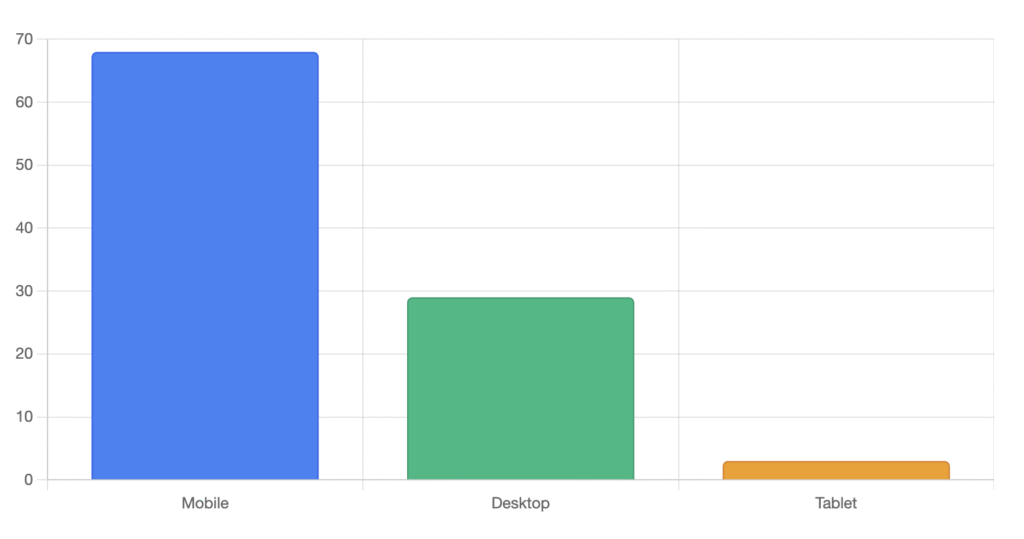
This mobile-first reality has the same implications it has had for years: shorter sessions, more local intent, higher voice search usage, more “near me” queries. What’s changed is the AI overlay on top: AI Overviews appear on mobile too, and the click-through impact (covered in section 4) is just as significant in mobile SERPs as on desktop. Local SEO has become more important as a result, not less. See our local SEO services overview for how we structure local-first SEO programs.
Browser market share impact
Browser choice is the structural driver of search engine market share, because most users never change the default. Statcounter’s browser data for Australia shows Chrome a little over half the market and Safari close to 30%, which matters because iOS defaults to Google inside Safari anyway. The share worth watching is Edge, which is where Bing’s desktop position comes from. Chrome sits at roughly two-thirds of the market, Safari about a fifth, and Edge/Firefox dividing most of the remainder.
Browser distribution in Australia (approximate, early 2026)
- Chrome: 55.64%
- Safari: 28.13%
- Edge: 8.24%
- Samsung Internet: 3.01%
- Firefox: 2.49%
- Opera: 1.04%
Source: Statcounter browser market share, Australia, June 2026.
Chrome reinforces Google’s position because it defaults to Google. Safari (particularly on iOS) is the segment where alternative engines have the most opportunity, via Apple’s search engine choice screen and Apple’s growing experimentation with AI-powered search alternatives.
Edge’s gains in Australia explain a chunk of Bing’s growth: when Microsoft makes Edge the Windows default and Edge defaults to Bing, the downstream impact on search share is structural. We set out what to actually do about Bing’s rise separately.
Demographic breakdown
Search engine preferences vary by age and geography. The numbers below are directional and synthesised from publicly available demographic studies; they’re useful for targeting decisions but should not be treated as census-grade.
Age-based preferences
- Young adults (18-34): highest adoption of AI search tools (ChatGPT, Gemini, Perplexity, Claude), with around 67% using at least one of these monthly per various industry surveys. Most experimentation with alternative engines also sits in this cohort. Google still commands a strong majority of their search activity.
- Middle-aged users (35-54): heavily Google-dependent. Voice search adoption is rising here for convenience, especially for local queries and quick facts.
- Older users (55+): strongest Google loyalty and the highest residual desktop usage, though mobile adoption continues to climb even in this cohort.
Regional variations
Metropolitan areas lead in AI search adoption and mobile-only usage. Regional Australia shows higher desktop usage and slower AI-tool adoption, reflecting connectivity, demographics and workplace technology. The implication for businesses targeting regional Australia: traditional SEO mechanics (keyword targeting, structured content, fast loading times) still carry more weight than the AI-first frame might suggest.
3. Search behaviour and user trends
3.1 Search frequency and patterns
Australians remain prolific searchers. Search is now embedded in enough daily workflows that per-user query volume keeps climbing, though no Australian per-user figure is published to a standard worth quoting (banking, navigation, shopping, government services).
Search intent distribution
Australians conduct billions of queries per year. Globally, Google has reported that roughly 15% of daily searches are queries the system has never seen before, which is one of the reasons the AI Overview layer has expanded so quickly: it’s a way to answer novel queries that don’t map cleanly to existing pages.
Query intent splits broadly follow global patterns, with informational (“know”) queries dominant, followed by navigational (“go”), transactional (“do”) and commercial investigation (“compare”). Informational and local-intent queries are the most exposed to zero-click and AI-driven answers.
Our estimated distribution for Australia:
- Informational: ~63%
- Navigational: ~22%
- Transactional: ~11%
- Commercial Investigation: ~4%
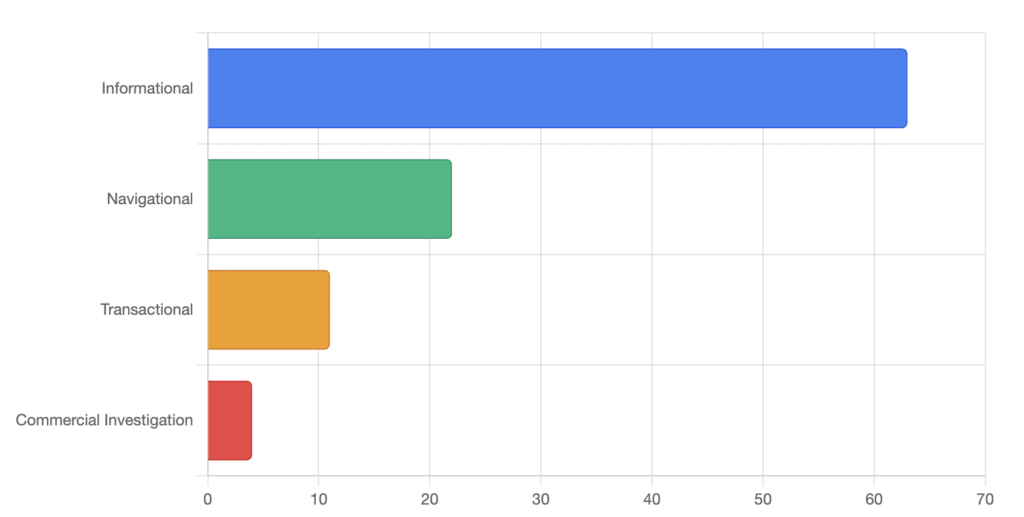
The dominance of informational queries is why zero-click rates keep rising: most informational queries are exactly the kind of thing AI Overviews or knowledge panels can answer directly without sending the user to a website.
Most Common Search Categories
Analysis of Australian search patterns reveals distinct preferences:
- News and Current Events (18% of searches): Australians heavily rely on search for news discovery, with peaks during major events
- Shopping and E-commerce (16%): Product research and price comparison dominate commercial searches
- Local Services (14%): “Near me” searches for restaurants, services, and businesses
- Entertainment (12%): Streaming services, movie times, and content discovery
- Health and Medical (10%): Symptom checking, medical information, and healthcare provider searches
- Travel and Navigation (8%): Maps, directions, and travel planning
- Education and Reference (7%): Academic research, how-to guides, and definitions
- Finance and Banking (6%): Banking access, financial information, and investment research
- Government Services (5%): Service access, information, and compliance
- Other (4%): Miscellaneous and emerging categories
3.2 Local and voice search
A meaningful share of Australian Google searches carry local intent. Be wary of the “40-46%” figure you will see quoted everywhere: it traces to a conference slide Google never published, so we do not cite it. The trend is more pronounced on mobile where location services enable highly relevant results, which is why optimising Google Business Profile remains the single highest-leverage local lever in 2026.
Local search behaviour patterns
The other pair you will see, that 76% of nearby searchers visit a business within a day and a quarter of those searches lead to a purchase, comes from a 2016 US study whose wording has drifted with each retelling. We do not cite it either. The underlying behavioural pattern has held: local intent converts fast.
Australian local searches concentrate in:
- Restaurants and cafés: ~32%
- Retail stores: ~21%
- Professional services: ~18%
- Health services: ~15%
- Home services: ~14%
Google Maps SEO is the work that turns that local intent into actual customers for businesses with a physical presence.
Voice search
Voice search in Australia has stabilised as a meaningful but not dominant behaviour. The most-quoted daily voice-search figure, 33%, comes via Local Digital but originates in Backlinko’s global industry study rather than Australian panel data, so read it as direction rather than measurement.
Voice query characteristics: voice searches average 6-10 words vs 2-3 for typed searches, reflecting natural speech. Question words (“what”, “where”, “how”, “when”) account for around 72% of voice queries.
Voice search use cases concentrate in:
- Local information (~38%): “where’s the nearest coffee shop?”
- Quick facts (~27%): “what’s the weather today?”
- Navigation (~19%): “how do I get to Sydney Airport?”
- General knowledge (~16%): “who won the AFL grand final?”
Younger users skew heavily on voice (millennials roughly 45% daily, over-55s ~17%). The practical implication for SEO is unchanged: voice and “answer engine” optimisation are now the same workstream, and the same content that wins featured snippets tends to win Siri “near me” and AI Overview citations.
3.4 Video search usage in Australia (2026)
Datareportal’s Digital 2026 Australia report continues to show YouTube as the second most visited website in Australia after Google. TikTok users in Australia spend roughly twice as long per month on the platform as YouTube users, making video the dominant mode of digital consumption on mobile.
Content Consumption Patterns
Video dominates content consumption. The two figures usually quoted here, 64% of digital content consumed and 89% of marketers naming video their best-performing format, are global (We Are Social and HubSpot respectively) rather than Australian, so treat them as directional. Short-form video (YouTube Shorts, TikTok, Instagram Reels) delivers the highest ROI and represents the fastest-growing format according to Story Machine and HubSpot analysis.
Over 70% of video content in Australia is now consumed on mobile devices, creating new opportunities for local businesses to reach audiences through video-first strategies.
Search Behaviour Evolution
YouTube has become the default search engine for “how-to” and product research queries among younger demographics, with video search increasingly used for local business discovery, reviews, and tutorials. This shift reflects the platform’s strength in demonstrating rather than describing solutions.
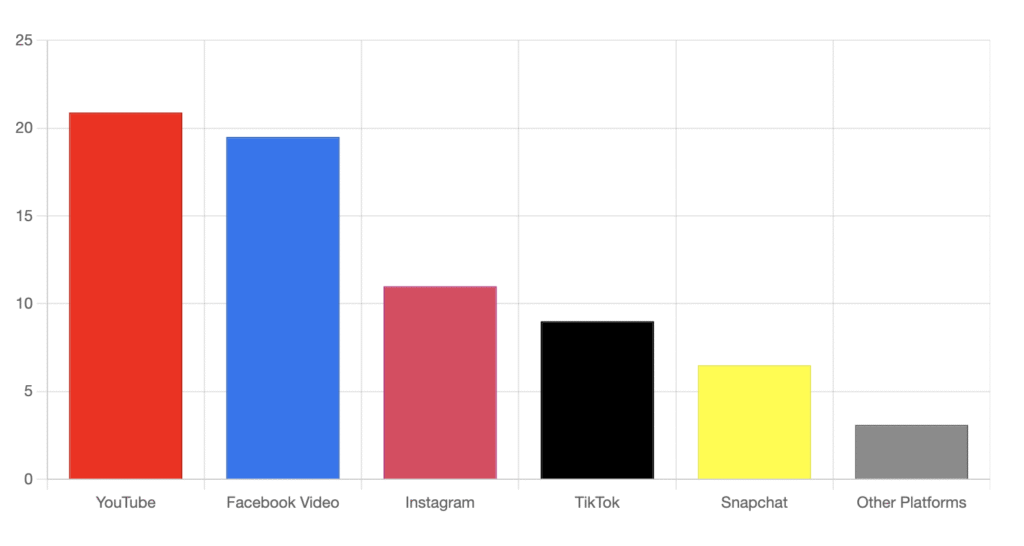
Key Statistics:
- YouTube users spend average 21 hours 36 minutes per month on platform
- TikTok users spend over 42 hours per month (double YouTube’s time)
- 63% of YouTube views come from mobile devices
- YouTube has nearly even gender split (50.7% female, 49.3% male)
- Video accounts for 64% of all digital content consumed in Australia
3.5 Organic vs paid search in Australia (2026)
Organic search remains the primary traffic driver, at around 68% of website visits per Local Digital, which sources the figure to Ahrefs’ global data. The remaining 32% is direct, referral, social, email and paid combined, not paid alone.
Click distribution and performance
The often-repeated “94% of clicks go to organic, 6% to paid” line should be retired: it traces to a WordStream post from September 2012, three SERP redesigns and one AI layer ago, and no current dataset supports it. Paid share is materially higher on commercial and transactional queries (high-intent terms).
Strategic value
Organic delivers long-term compounding ROI and higher user trust. Paid delivers immediate visibility, particularly valuable for new sites, competitive head terms, or shoulder-of-launch campaigns. Combined SEO + PPC programs reliably outperform either in isolation on lead volume and conversion quality.
Market adaptation
As AI Overviews and zero-click results expand, organic traffic faces pressure on informational queries first. Paid budgets are rising to offset organic declines, particularly in categories where AI Overviews are absorbing top-of-funnel queries. The integration of organic and paid into a single strategy is no longer optional for competitive verticals.
4. The impact of AI, LLMs and generative search
4.1 AI search adoption in Australia
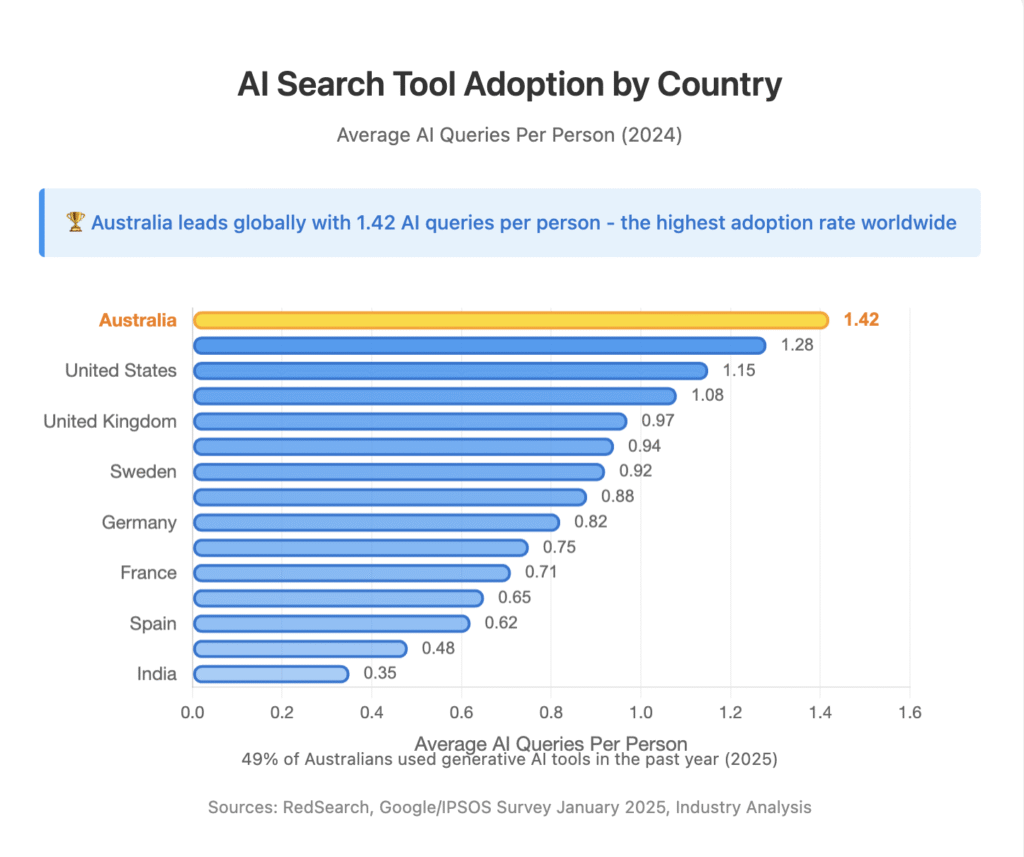
Generative AI is now mainstream in Australia. The Google/Ipsos AI adoption in Australia survey (January 2025) found 49% of Australians had used a generative AI tool in the past year, up from 38% in 2023. 74% of those users said they were using AI tools at work for writing, brainstorming, problem solving and digesting complex information.
Deloitte’s regional research puts the same figure at 38% of Australian employees using generative AI at work, up from 32% a year earlier.
The Stanford AI Index 2026 (released April 13, 2026) provides global context: 53% of the global population now uses generative AI regularly within three years of mass-market launch, faster than the PC or the internet reached comparable adoption. The US, despite hosting most leading labs, ranks 24th globally at 28.3%. Singapore (61%), UAE (64%) and several Southeast Asian markets lead. Australia sits in the upper-middle tier, with strong workplace adoption.
AI tool usage breakdown
Workplace integration in Australia is high. Among Australian AI users, the primary uses identified by Google/Ipsos are:
- Writing assistance: 75%
- Problem-solving: 70%
- Brainstorming and ideation: 69%
- Digesting long documents: 68%
- Understanding complex information: 60%
Daily AI search habits
ChatGPT processes tens of millions of searches per day globally. Australian users tend to engage in multi-turn conversations rather than single queries, which is why AI SEO consulting has become a legitimate service category rather than a buzzword.
The pattern that matters for SEO: AI search sessions involve more queries per session than traditional search (frequently 4-6 per session on substantive topics), and users tend to drill deeper into the same topic across a single conversation, which changes how content needs to be structured to win citations.
4.2 Zero-click and AI Overview trends
The rise of zero-click searches is the most consequential shift in search behaviour since mobile. SparkToro and Datos clickstream data shows around 58-60% of Google searches in the US and EU now end without a click to the open web.
Australia-specific zero-click figures at the same methodology are not publicly available. Given Australia’s heavy Google reliance and rapid AI rollout, local behaviour likely tracks within a few percentage points of the US/EU pattern. We’re not going to fixate on a specific Australian-only projection; the directional reality is what matters, and content strategies need to plan for a world where a large share of search visibility and value is captured upstream of the click.
AI Overview prevalence
Google’s AI Overviews have expanded materially in Australian SERPs. Independent sampling remains thin, and no Australian-specific measurement exists at a standard worth quoting. Earlier industry tracking (Semrush, Website Planet via Mediaweek) put AI Overview presence at around 39% of sampled US queries, a figure widely treated as conservative now that Gemini coverage has broadened.
Sundar Pichai’s May 2026 Google I/O announcement put AI Overviews at 2.5 billion monthly users globally and AI Mode in Google Search at 1 billion monthly users (Neowin coverage). For comparison, the Gemini app itself has since passed 1 billion monthly active users (Google, 11 August 2026).
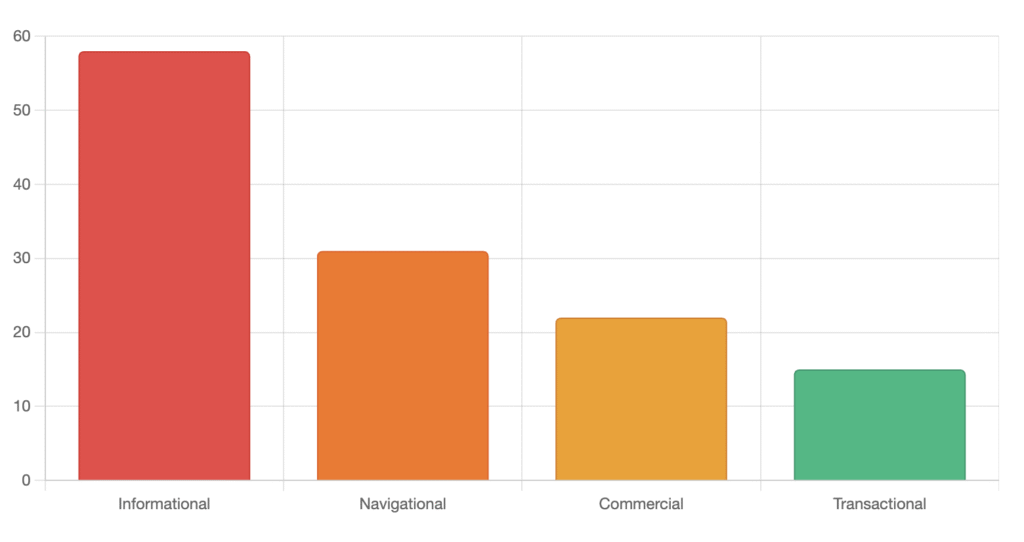
AI Overview frequency varies by query type:
- Informational queries: ~58% trigger AI Overviews
- Navigational queries: ~31% trigger AI Overviews
- Commercial queries: ~22% trigger AI Overviews
- Transactional queries: ~15% trigger AI Overviews
Click-through rate impact
Multiple studies converge on a significant CTR impact when AI Overviews appear:
- Seer Interactive’s 2025 study of 25.1M organic impressions found AI Overviews cut organic CTR by 61% and paid CTR by 68% on affected informational queries.
- Pew Research tracking 68,879 searches in March 2025 found that when an AI summary appeared, only about 8% of searches led to a click on a traditional result and under 1% clicked a link inside the AI box.
- Ahrefs’ 2026 update estimates AI Overviews now reduce clicks to top-ranking content by around 58% on average.
The paradox for content creators: impressions are often rising (as Google surfaces more content into AI Overviews) while actual traffic falls. Many Australian publishers are reporting impressions doubling while clicks drop 50% or more, particularly on informational content.
These studies use US/EU clickstream and behavioural data, but because Google serves the same AI Overview experience in Australia, they’re the best available proxy for local behaviour.
4.3 AEO, LMO, GEO, and AI SEO
The emergence of AI-powered search has necessitated entirely new optimisation disciplines. Traditional SEO, focused on ranking in blue links, is no longer sufficient. Australian businesses are rapidly adopting new frameworks:
Answer Engine Optimisation (AEO)
AEO focuses on structuring content to be easily extracted and cited by AI systems. This means writing with clarity, using definitive statements, and structuring information in easily digestible formats. Australian businesses implementing AEO report being cited 3x more often in AI overviews compared to traditional SEO-optimised content.
Key AEO strategies include:
- Creating concise, factual summaries at the beginning of content
- Using clear headings and subheadings that directly answer questions
- Implementing structured data markup to help AI understand context
- Writing in a neutral, authoritative tone that AI systems prefer to cite
Language Model Optimisation (LMO)
LMO takes a longer-term view, focusing on ensuring brand and content inclusion in the training data of large language models. This involves creating content that is likely to be crawled, indexed, and included in future model training.
Australian brands investing in LMO are seeing their products and services mentioned more frequently in AI-generated responses, even when not directly queried.
Generative Engine Optimisation (GEO)
GEO represents the most comprehensive approach, optimising for the entire generative search experience. According to Lumar and ResultFirst analysis, GEO involves:
- Semantic optimisation for concept understanding rather than keywords
- Creating comprehensive, interconnected content that provides full context
- Optimising for multi-modal search (text, voice, image)
- Building topical authority that AI systems recognise and trust
Australian businesses implementing GEO strategies report significant improvements in AI visibility. Case studies show brands achieving “preferred source” status in AI responses, where they’re consistently cited as authoritative sources in their industry.
5. Industry and business response
5.1 SEO investment and strategy
The Australian business community has responded with sustained investment in lead generation and search-adjacent marketing. SEO spending in Australia was estimated at around $1.5 billion in 2025 (LocalDigital), with a ~12% year-on-year growth rate. The nature of the spend has shifted faster than the total has grown.
Investment allocation shifts
Budget is shifting from traditional SEO tactics toward AI and LLM visibility work. We have not seen an Australian budget-split figure published to a standard worth citing, so treat the shares below as the shape of the shift rather than measured data:
- AI and LLM optimisation: ~25%
- Content creation and authority building: ~20%
- Technical infrastructure and site speed: ~10%
The reallocation tracks the reality that ranking first in traditional results matters less when AI Overviews cut CTR by 58-61% on affected queries.
AI-driven SEO tool adoption
Around 56% of Australian businesses now use AI-driven content optimisation tools (industry surveys, 2025-2026). These platforms have evolved beyond keyword research into semantic relationship mapping, AI citation prediction, and conversational query optimisation. Mainstream tools (SEMrush, Ahrefs, Sistrix) have added AI visibility tracking modules; specialised GEO/AEO platforms continue to launch.
Content strategy evolution
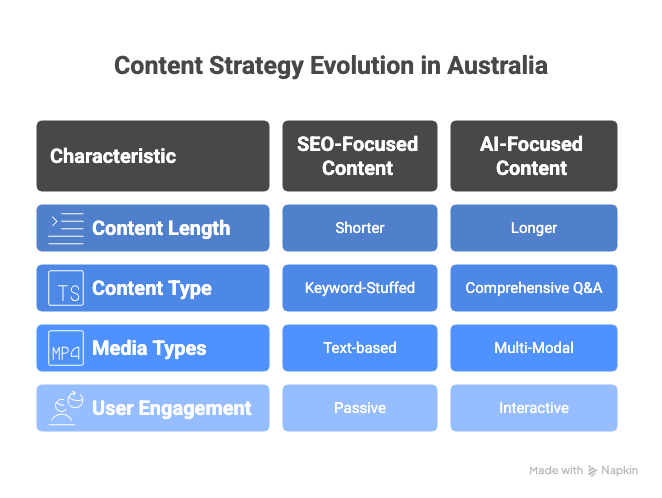
Australian businesses are moving away from keyword-stuffed content toward comprehensive, authoritative resources designed for AI consumption:
- Long-form content: average content length has risen materially. The sweet spot for informational content is around 2,500-3,500 words, deep enough for AI extraction while still readable for humans.
- FAQ and Q&A: extensive Q&A sections answering queries in natural language consistently win citations in AI Overviews and voice responses.
- Video and multi-modal content: around 34% of Australian businesses now include video transcripts, image alt text and audio descriptions as standard practice, ensuring content is accessible across AI interpretation methods.
- Interactive and tool-based content: calculators, configurators, assessment tools and quizzes hold their CTR better than text content because they can’t be fully summarised by AI. Investment in interactive assets has grown materially year on year.
5.2 Regulatory and privacy developments
Australia’s regulatory environment for search has shifted materially over the past six months. Two changes matter most: the eSafety Internet Search Engine Services Online Safety Code commenced on 27 December 2025, and the separate under-16 social media ban took effect on 10 December 2025.
Internet Search Engine Services Code: what’s actually live
The first tranche of the Age-Restricted Material Codes took effect 27 December 2025 for search engines (Google, Bing, DuckDuckGo, Yahoo), internet carriage services and hosting services. What’s now live in Australia:
- Default blurring of pornography and high-impact violence image results for users not logged into an age-verified account
- Automatic redirect to mental health support for searches related to self-harm, suicide and eating disorders
- Downranking of self-harm and similar harmful material with promotion of authoritative health information
- Prevention of autocomplete predictions that are sexually explicit or violent
- Advertising restrictions: pornography and self-harm-related ads cannot be served to identified child account holders
The second-stage requirement, age assurance for logged-in account holders, must be in place by 27 June 2026 (six months after code commencement). At that point, search providers must implement appropriate age-assurance for account holders and apply maximum safe-search settings by default to accounts identified as belonging to Australian children.
Important clarification (per the AAP Fact Check, January 2026): Australians do not need to upload government ID every time they search the web. Age assurance applies only to logged-in account holders, and the code outlines multiple methods (facial age estimation, credit card checks, digital ID wallets, parental confirmation, AI-based estimation, photo ID). Anonymous searching continues to work, with the blurring and redirect protections applied by default.
The code explicitly covers generative AI integrated into search, so Google’s Gemini-powered AI Overviews and Microsoft’s Copilot results fall under the same obligations. Standalone AI apps not integrated into search (the standalone ChatGPT app, for example) are excluded.
Penalties: up to $49.5 million per breach.
How this interacts with the under-16 social media ban
The separate Social Media Minimum Age (SMMA) obligations took effect on 10 December 2025. That ban covers ten platforms for users under 16: Facebook, Instagram, Threads, TikTok, Snapchat, YouTube, X, Twitch, Kick and Reddit, with the same $49.5M penalty cap. eSafety has moved into enforcement on all five platforms.
Privacy and data protection
The intersection of AI search and privacy is now a live regulatory issue. AI systems require large training datasets, but Australian privacy laws are tightening around data collection and use. Businesses building AI-adjacent products need to navigate:
- Consent requirements for AI processing of user data
- Right-to-be-forgotten provisions that complicate AI training and output management
- Transparency requirements for AI-generated content and recommendations
Business implications
Businesses with strong first-party data and direct customer relationships will have a structural advantage in the age-verified and consent-first environment now taking shape. Trust, transparency and clear data-handling practices have moved from compliance-line items to competitive differentiators.
6. What to track over the rest of 2026 and into 2027
Rather than fixate on speculative future percentages, the more useful question is which signals to actually watch. Based on current trajectories from SparkToro, Datos, Pew, Ahrefs and Stanford AI Index 2026, a few things deserve monitoring:
Zero-click and AI Overview expansion. US/EU clickstream is at 58-60% zero-click. Australia is likely tracking close, though local-only data isn’t published at the same rigour. Watch for further AI Overview rollout into commercial and transactional queries (currently at ~22% and ~15% respectively) as Google works out monetisation models for AI-summarised SERPs.
Bing’s continued gains. Statcounter shows Bing has roughly doubled its Australian share over 12 months, on Edge and Copilot defaults. If that trend continues, Bing could move from ~9% to mid-teens by end of 2026, which would change Microsoft Ads’ positioning in the Australian market materially.
AI search adoption and citation patterns. ChatGPT, Perplexity, Claude and Gemini each cite different source sets. Tracking which AI tools are sending Australian referral traffic (Perplexity is the most transparent; ChatGPT publishes least) is a useful proxy for which entity work is actually paying off.
How age assurance actually landed. The logged-in age-assurance requirement took effect on 27 June 2026. How Google, Bing and others have implemented it (facial estimation vs ID checks vs digital wallet) is what will shape Australian search behaviour for the rest of the year.
The evolving role of AI and LLMs in search
The integration of AI into search is shifting how Australian businesses need to think about visibility:
Conversational commerce: Search is moving from single-query response to multi-turn conversations. Users engage in dialogues with AI assistants that remember context and past interactions. The advantage goes to businesses that maintain consistent, authoritative presence across the kind of follow-up questions that build a conversation. Ecommerce search is evolving accordingly, into optimisation for AI-generated answers rather than for a list of blue links.
Predictive and proactive search: AI systems are starting to anticipate user needs before queries are typed. Based on context, behaviour and history, search surfaces information, products and services proactively. Australian businesses need to plan for a zero-click future where being discovered requires entity strength, structured data and citation-worthy content rather than just blue-link ranking.
Multi-modal integration: search increasingly blends text, voice, image and video inputs. Users photograph products to find alternatives, speak complex queries while viewing results on screens, and receive responses in their preferred format. Optimisation now has to account for all these modalities, including image search alt-text and structured data for video content.
Strategic recommendations for Australian businesses
Five practical shifts that pay back for the rest of 2026:
1. Treat AEO, GEO and LMO as core disciplines
Traditional SEO alone is no longer sufficient. Businesses must:
- Restructure content for AI extraction and citation
- Build semantic relationships between content pieces
- Create comprehensive topic clusters that establish authority
- Invest in structured data and semantic markup
2. Build Direct Audience Relationships
With organic search traffic declining, owned audiences become critical:
- Prioritise email list building and newsletter strategies
- Develop mobile apps for direct user engagement
- Create community platforms and forums
- Invest in customer retention over acquisition
3. Prepare for Paid AI Placements
As AI search monetises, new advertising opportunities will emerge:
- Budget for “sponsored answers” within AI responses
- Negotiate preferred partner status with AI platforms
- Develop AI-specific creative formats
- Track AI mention share as a key metric
4. Optimise for Brand Searches
As generic searches increasingly end at AI overviews, brand searches become vital:
- Invest in brand awareness campaigns
- Ensure consistent brand information across all platforms
- Create branded tools and resources
- Monitor and manage brand mentions in AI training data
5. Diversify Discovery Channels
Reducing dependence on search requires multi-channel strategies:
- Strengthen social media presence and social commerce
- Explore podcast and audio content opportunities
- Partner with complementary brands and platforms
- Invest in offline-to-online attribution
Conclusion
Australian search in 2026 has moved further in 12 months than it did in the previous five. Statcounter shows Google’s share in Australia has slipped from around 94% to ~88%, with Bing capturing most of the gain on Edge/Copilot defaults. AI Overviews are now in a meaningful share of SERPs, the eSafety Internet Search Engine Services Code is partially live (full age-assurance obligations land 27 June 2026), and zero-click behaviour in the US/EU is well past 58%.
For Australian businesses, the practical implication is the same as it was 12 months ago, just more urgent: traditional SEO still matters, but optimising for AI citation, entity strength and structured-data presence is now where the marginal effort returns the most. The mistake to avoid is treating AI search as a different channel; it’s the same channel, with a different result interface stacked on top.
For Australian businesses thinking through how to actually adapt their SEO program for the 2026 landscape, or drop us a line and we’ll come back with a scoped recommendation.
Glossary of Terms
AI Overview: Google’s AI-generated summary appearing at the top of search results
AEO: Answer Engine Optimisation, optimising for direct answers
CTR: Click-Through Rate, percentage of users who click a search result GEO: Generative Engine Optimisation, optimising for AI and generative search
LLM: Large Language Model, AI systems like ChatGPT and Gemini
LMO: Language Model Optimisation, ensuring inclusion in AI training data SERP: Search Engine Results Page
Zero-Click Search: Searches ending without clicking any result
References
- Statcounter Global Stats. “Search Engine Market Share Australia.” (May 2026)
- SerpSculpt. “Search Engine Statistics by Country 2026.” (May 2026)
- Datareportal. “Digital 2026: Australia.” (February 2026)
- Stanford HAI. “The 2026 AI Index Report.” (April 13, 2026)
- Google/Ipsos. “AI Adoption in Australia Survey.” (January 2025)
- eSafety Commissioner. “Accessing online porn and adult content FAQs.”
- eSafety Commissioner. “Guidance ahead of new codes coming into force.” (December 2025)
- AAP Fact Check. “Googling without ID is not banned under new regulations.” (January 2026)
- SBS News. “Why Australians will soon need to verify their age to log in to search tools.”
- Pew Research. “Google users are less likely to click on links when an AI summary appears.” (2025)
- Ahrefs. “AI Overviews reduce clicks update (2026).”
- SparkToro / Datos. “Zero-click search study.”
- Mediaweek. “AI Overviews Now Appear in 39% of Google Searches.”
- Neowin. “These 13 Google products now have more than 1 billion users each.” (May 2026)
- Digitalzoop. “Google Search Statistics 2026.” (March 2026)
- The Conversation. “Social media giants are not complying with under-16s social media ban.” (March 2026)
- LocalDigital. “Australian SEO and Content Marketing Statistics.”
- Digital Silk. “Organic vs Paid Search Statistics.”
- Deloitte Australia. “Generative AI: she’ll be right approach Australia.”
- Industry.gov.au. “Exploring AI Adoption Australian Businesses.”