
Optimising for Bing: What It Actually Does for AI SEO and Copilot Visibility
Bing's share of Australian search has climbed to around 9% on Copilot and Edge defaults, and Bing Webmaster Tools now reports AI citations directly. Here is what actually moves that needle.

Bing’s share of Australian search has climbed from around 3% to roughly 9% over the past two years, driven almost entirely by Copilot and Edge defaults rather than people actively choosing Bing over Google. We covered the full picture in our Australian search engine statistics report. The practical consequence: Bing is no longer the search engine you optimise for last, if you bother at all. It is also the search engine sitting directly underneath Microsoft Copilot, which means a page invisible to Bing is a page invisible to Copilot’s web-grounded answers too.
This is the Bing companion to our piece on optimising for Brave Search. Same approach: what Microsoft’s own documentation actually says, what we do about it for clients, and where we are being honest about the limits of what we know.
- Bing’s Australian share has roughly tripled since 2024, mostly from Copilot and Edge defaults, not organic preference. It is worth deliberate attention now.
- Bing Webmaster Tools has a feature called AI Performance, in public preview since February 2026, that reports citations inside Copilot and Bing’s AI summaries directly.
- IndexNow, not the older URL Submission API, is Microsoft’s own recommended primary method for telling Bing about new or changed content.
- Bing places more literal weight on keyword matching than Google does in places, but the fundamentals (crawlability, complete pages, entity trust, schema) are the same work that helps everywhere else.
- We also run secondary exact-match domains for some clients and have seen them do well in Bing specifically. That is our own observed pattern, not a documented Microsoft ranking factor, and we say so plainly to clients before recommending it.
Bing SEO and AI SEO are the same foundation, different outcome
Microsoft’s Copilot generates answers with visible source citations and links back to the pages it used. A site Bing can discover, understand, index, and rank has a real chance of being pulled into that evidence. A site Bing cannot see is not in the running at all.
| Objective | What you optimise | Outcome |
|---|---|---|
| Bing SEO | Crawlability, relevance, ranking | Organic visits from Bing |
| AI SEO / GEO | Citation-ready passages, entity evidence | Potential inclusion in Copilot and Bing AI answers |
| Shared foundation | Technical accessibility, original content, structured data | Better retrieval eligibility across both |
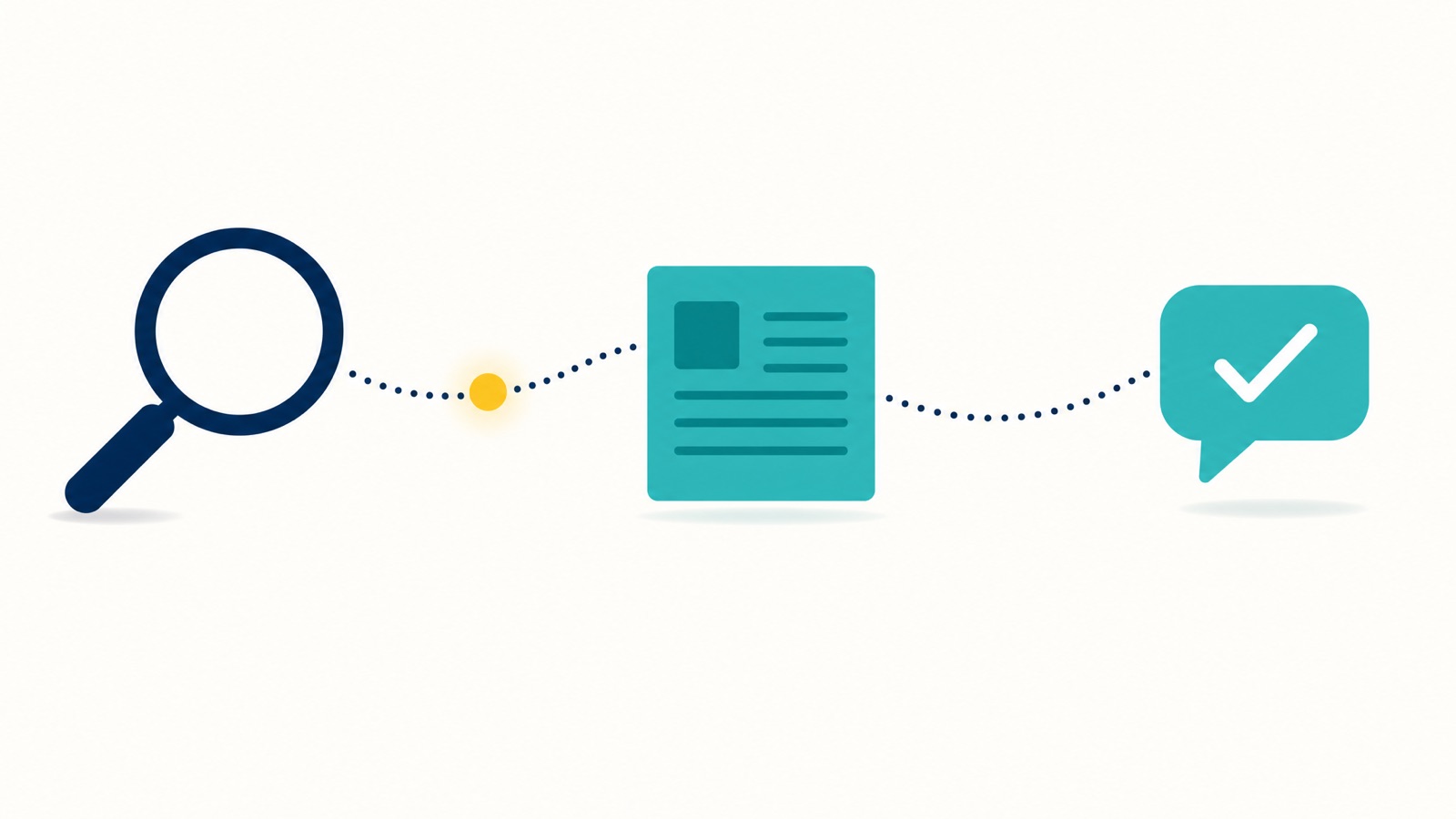
For a client, we frame this as Bing indexation plus answer-ready content. A generic service page might still rank. A page that directly answers the question, gives verifiable steps, states eligibility, and is honest about its limitations is far easier for Copilot to lift cleanly and cite accurately.
Bing SEO priorities that actually matter
Set up Bing Webmaster Tools properly. Verify the domain, import from Search Console if that saves time, submit an XML sitemap, and work through the crawl, index, and backlink reports. This is the same discipline as Google Search Console, and skipping it means flying blind on a search engine that now sits underneath an AI assistant.
Match the query more literally than you would for Google. Bing can weight straightforward keyword matching more heavily in places. Use the primary phrase naturally in the title, H1, opening answer, relevant headings, image alt text, and a readable URL. That is a nudge, not a licence to write repetitive exact-match copy.
Build complete pages, not templated variants. Answer the main question early, then support it with process, examples, real costs or variables, FAQs, and proof. Clear heading structure and descriptive metadata matter here as much as they do for Google.
Strengthen entity and trust signals. Publish identifiable business details, named authors, real contact information, and genuine case studies. Consistent NAP data and a clearly defined business entity matter for the same reason they matter everywhere else: an AI system faced with ambiguity picks a competitor it is more sure about.
Use structured data that matches what is actually on the page. LocalBusiness, Service, Product, Article, and review schema where genuinely applicable. Bing supports multiple structured-data vocabularies rather than favouring one, so match the schema to the content, do not force it.
Claim and complete a Bing Places profile. This is the Bing equivalent of a Google Business Profile, and we treat it the same way: mandatory setup, not an afterthought. We cover the process in our guide to claiming Bing Places.
Promote the business legitimately. Genuine editorial links, brand mentions, and real social visibility corroborate that a business exists and is credible. Spun syndication and mass-produced location pages do the opposite.
Getting Bing to actually index your pages
IndexNow is the highest-leverage action, and Microsoft says so directly
IndexNow lets a site notify participating search engines the moment a URL is created, meaningfully updated, or deleted, instead of waiting for the next crawl. Currently-participating engines include Bing, Yandex, Naver, Seznam.cz, and Yep, so this is not a Bing-only play. In its own February 2026 announcement of AI Performance in Bing Webmaster Tools, Microsoft dedicates a section specifically to keeping content fresh with IndexNow, framed as how publishers keep the content AI systems reference current.
We already have IndexNow wired into our own publishing workflow, submissions fire automatically when a client page goes live or gets substantially updated, and we check submission status in Bing Webmaster Tools the same way we check Google Search Console. That is standard process for us now, not something we reach for occasionally.
Send only meaningful changes: new pages, substantial content updates, price or availability changes, redirects, deletions. Not cosmetic edits pushed across thousands of URLs. A successful ping is a discovery signal, not a promise of indexation; Bing still makes its own crawl and quality decision on top.
The older URL Submission route still exists, but is no longer the primary method
Bing’s URL Submission API still works, with a standard quota of 10,000 URLs a day, and it is still worth using for the homepage, core commercial pages, and newly published high-value resources. But Microsoft’s own current guidance on that page now positions IndexNow as the recommended primary method for real-time submission, with URL Submission as the secondary route. If you are only going to build one integration, build IndexNow first.
Use URL Inspection on anything that stays absent after submission. Compare what Bing has indexed against what the live URL actually returns; this is how you catch a stray noindex, a robots rule, a response error, a rendering problem, a canonical conflict, a soft 404, or a Bingbot-specific firewall block. Fix it, then request indexing again.
Keep sitemaps clean and within Bing’s stated limits
Sitemaps should contain only canonical, indexable 200 URLs, no redirects, parameter variants, noindexed pages, or stale entries. Bing’s current published limits are 50,000 URLs and 50MB per sitemap file, use a sitemap index if you exceed that, and refresh actively-updated sitemaps at least daily with accurate lastmod values. Reference the sitemap in robots.txt and submit it directly in Bing Webmaster Tools, then use the sitemap index-coverage report to chase down listed URLs that are still not indexed.
Give important pages a reason to be crawled and kept
Bing will not index every URL you submit, particularly anything thin, duplicate, poorly linked, or unstable. Link every important page from at least one relevant crawlable hub. Keep canonical URLs stable and avoid conflicting canonical, pagination, and redirect directives. Make sure Bingbot gets a fast, stable 200 response with content available without client-side rendering. Consolidate near-duplicate or low-value programmatic pages rather than letting them dilute crawl budget.
An AI-ready page pattern, using one of our own pages as the example
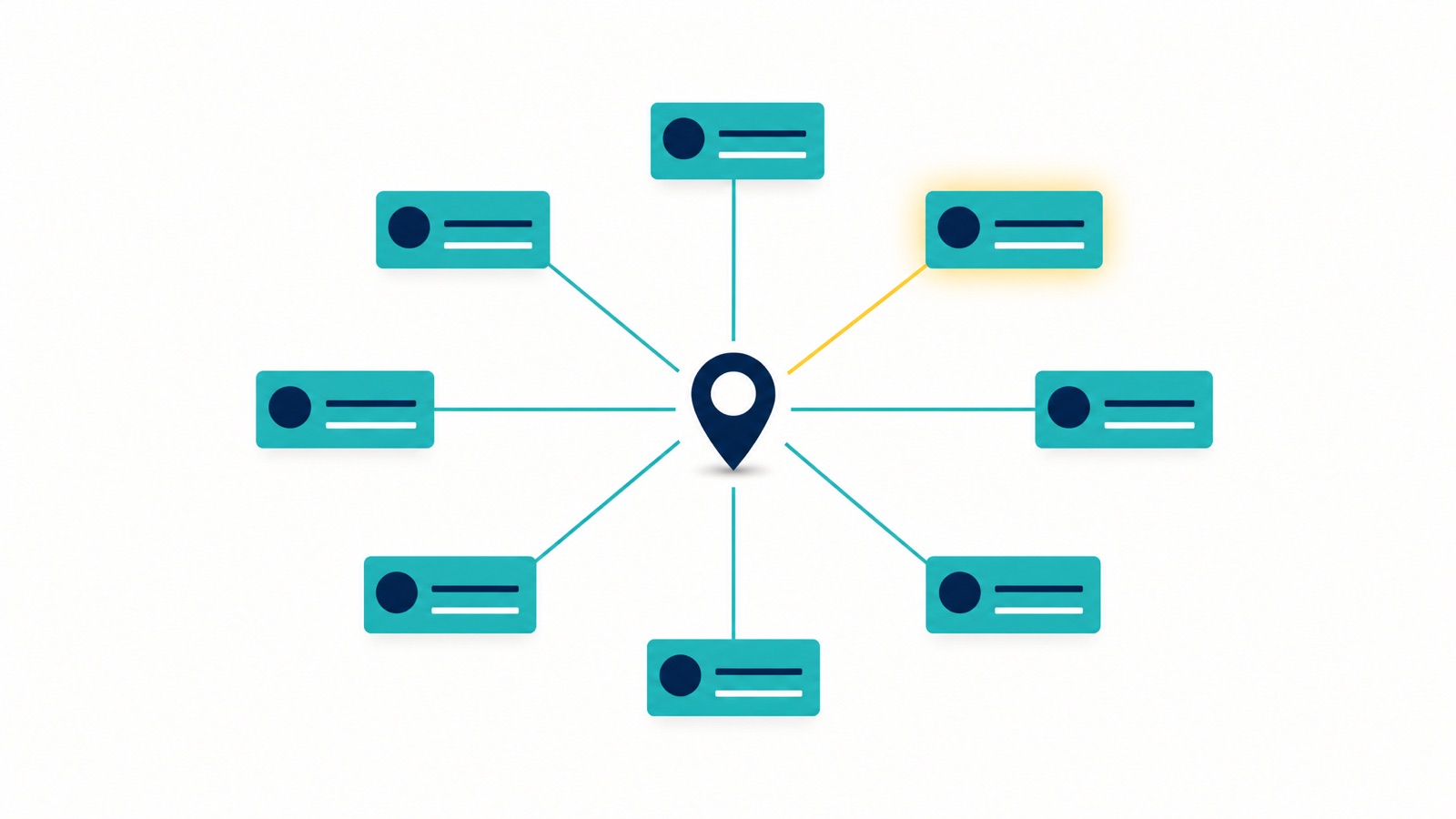
Rather than a hypothetical, here is the actual pattern on our Google Business Profile reinstatement page:
- A direct answer in the first few sentences: what the service is, who it is for, the price, and the guarantee.
- A diagnosis section covering the common suspension triggers, and what genuinely should not be appealed.
- A documented, Australia-specific evidence checklist.
- A transparent process with realistic timelines given as ranges, stated exclusions, and an honest note on when reinstatement is not possible.
- Credible proof: case context, a stated success rate, and concise FAQs.
That structure helps Bing map the page to literal searches, while giving Copilot discrete, well-qualified passages to retrieve instead of forcing it to infer context it does not have. That is the answerability layer our answer engine optimisation reference covers in detail.
Measuring it, including the part that is still in preview
Monitor Bing separately from Google: indexed-page counts, sitemap coverage, crawl errors, impressions and clicks, and which URLs actually generate Bing traffic. Check indexing status directly with a site: search on bing.com the same way you would on Google, not indexed is not mentioned, on any engine you have not bothered to check.
The AI Performance view in Bing Webmaster Tools is the newer piece worth watching. It is in public preview, reporting total citations, average cited pages, grounding queries, and page-level citation activity across Copilot and Bing’s AI summaries, with Intents, Topics, Citation Share, and Compare views layered on top. Use it to see which of your pages are actually getting cited, then put effort into strengthening those pages and their internal links rather than duplicating the pattern blindly across the site.
What we do differently, in our own words
Everything above is standard Bing practice we would tell any client to do. Two things go further than that, and we want to be direct about which is documented and which is our own experience.
We run the Bing side of a client’s presence with the same discipline we run the Google side: Bing Webmaster Tools verified and checked on a schedule, indexing monitored directly rather than assumed, and a completed Bing Places profile alongside the Google Business Profile, not instead of it.
The part that is genuinely our own observation, not Microsoft’s: for some clients, we launch a secondary exact-match domain alongside the primary site. Microsoft has never published domain naming as a ranking factor, and its own ranking factors guidance does not mention it. What we have seen across our own campaigns is that these secondary EMDs tend to gain visibility and ranking in Bing specifically more readily than the equivalent play does in Google, and in a handful of cases they have also picked up AI citations. We are telling you what we have observed, not claiming Microsoft confirms it, and it is a structural decision worth discussing case by case rather than a blanket recommendation for every client.
Frequently Asked Questions
Does ranking well in Google mean I will rank in Bing too?
Not automatically. Bing runs its own index and places more weight on literal keyword matching than Google does in some cases. A page that ranks in Google can still be thin in Bing’s eyes if it is not indexed cleanly or does not match the query as directly.
What is the single highest-leverage Bing-specific action?
IndexNow. Microsoft’s own documentation now positions it as the recommended primary method for telling Bing about new, updated, or deleted URLs, ahead of the older URL Submission API. It is free to implement and several platforms, including Cloudflare, can automate it.
Does Bing really favour exact-match domains?
Microsoft has never published EMDs as a ranking factor, and its own published ranking factors (relevance, quality and credibility, freshness, location and language, user engagement, page load time) do not mention domain naming. What we can say is from our own campaigns: secondary exact-match domains have performed well for us in Bing specifically, more than we would expect from the same play in Google. Treat that as our observed pattern, not a documented Microsoft ranking factor.
What does Bing Webmaster Tools show for AI citations?
A feature called AI Performance, currently in public preview. It reports total citations, average cited pages, grounding queries, and page-level citation activity across Copilot, Bing’s AI-generated summaries, and select partner integrations.
The limitation worth stating plainly
Indexation, relevance, extractable content, source credibility, and the specific query Copilot is answering all have to line up before a citation happens. Doing everything in this article correctly improves eligibility. It does not guarantee a citation, and nobody selling Bing or GEO services honestly can promise one.
If you want to know where your AI visibility actually stands across Google, Bing, and the AI assistants sitting on top of both, run it through our GEO checklist. Or and we will tell you plainly what is worth fixing first.