
Google Business Profile for Individual Practitioners: When a Second Profile Helps (2026)
Google allows Business Profiles for individual doctors, lawyers, planners and agents who meet 2 conditions. When a practitioner listing helps and when it backfires.

If your firm has several solicitors, dentists, doctors or advisers who each see their own clients, Google lets each of them have a Business Profile in their own name, alongside the firm’s profile. The person has to be public-facing, typically with their own clients, and contactable directly at the verified location during the hours on the profile. A practitioner who is the only public-facing professional at a branded location shares one profile with the business instead.
That’s the rule. Whether a second profile brings more enquiries is a separate question, and the honest answer is that nobody can promise it.
We set these up for health, financial and legal firms in Australia, from 1 extra profile for a small practice to 6 for a larger firm. Every one starts with an eligibility questionnaire, because the practitioner profiles that cause trouble are the ones that should never have been built. Below: what Google allows, which setup fits your firm, what goes wrong, and how we run it.
- Google allows a separate Business Profile for an individual practitioner: a public-facing professional, typically with their own customer base, who can be contacted directly at the verified location during stated hours.
- Google’s own examples of who can hold a practitioner profile are doctors, dentists, lawyers, financial planners, and insurance or real estate agents. Support staff and corporate sales associates do not qualify.
- A firm with several practitioners keeps its own profile and adds 1 per eligible practitioner, titled with the person’s name only. A sole practitioner at a branded location shares one profile named “[brand]: [practitioner name]”.
- Each practitioner gets 1 profile, not 1 per specialisation.
- Extra profiles are not extra Map Pack positions. In most of our setups they added a layer of exposure; in a few, Google merged them with the firm’s profile.
- Settle who owns each profile before it is built. The firm should keep ownership, with the practitioner added as a manager.
What Google means by an individual practitioner
A Google Business Profile (formerly Google My Business) is the listing that shows a business in Google Search and Google Maps. A practitioner profile is the same listing for one professional rather than the firm.
Google defines an individual practitioner as a public-facing professional, typically with their own customer base, in its Business Profile Help guidelines for representing your business on Google. The same guidelines name doctors, dentists, lawyers, financial planners, and insurance or real estate agents as examples, and allow a practitioner’s profile to carry a title or degree, such as Dr.
Google sets 2 conditions for a practitioner listing, and both have to be true:
- The person works in a public-facing role. Google says support staff should not create their own Business Profiles.
- The person can be contacted directly at the verified location during the stated hours. A name on the website isn’t enough. Clients have to be able to reach that person at that address in those hours.
Who qualifies and who doesn’t
Google also rules out sales associates and lead generation agents who work for corporations. They aren’t individual practitioners and aren’t eligible for a profile.
| Role at the firm | Practitioner profile? |
|---|---|
| Solicitor with their own clients, at the office during listed hours | Yes, in principle |
| Dentist or doctor seeing their own patients at the clinic | Yes, in principle |
| Financial planner advising their own clients from the office | Yes, in principle |
| Receptionist, paralegal or practice manager | No: support staff |
| Corporate sales rep or lead generation agent | No: excluded by Google |
| Professional who never sees clients at that address | No: not contactable at the verified location |
Google’s list is a set of examples, not a closed list. Mortgage brokers, physiotherapists, psychologists and accountants are not named. Some of them meet both conditions on the facts of how they work and some do not. You will also find blog lists that add hairdressers, tutors and personal trainers; those are someone’s reading of the rules, not Google’s text. We assess each person against Google’s 2 conditions, not against their job title.
One profile or two? Which setup fits your firm
The right practitioner profile setup depends on 3 things: how many public-facing practitioners work at the location, how many specialisations each one has, and where they actually see clients. Google’s rules produce 4 common cases.
| Your situation | What Google’s rules point to |
|---|---|
| Several public-facing practitioners at one location | The firm keeps its own Business Profile. Each eligible practitioner can have one, titled with their name only, never the firm’s name |
| One public-facing practitioner at a branded location | One shared profile, named “[brand/company]: [practitioner name]“ |
| One practitioner with several specialisations | One profile. Google says a practitioner shouldn’t have several profiles to cover each specialisation |
| One practitioner seeing clients at two locations | A profile at a location only where they can be contacted directly during the stated hours |
The sole-practitioner format is Google’s own: its example is “Allstate: Joe Miller”, for an insurance agent who is the only public-facing practitioner at an Allstate-branded location. In Australian terms, a single-solicitor firm or a one-dentist practice usually belongs in this row, and a second profile for the same person at the same address adds risk rather than reach.
The 4th row is our reading, not Google’s wording. The guidelines don’t deal with a practitioner who works at two addresses, but the contactable-at-location condition applies wherever a profile sits. A practitioner who runs regular clinics at a second office can qualify there. One who visits it twice a year cannot.
A worked example: a 5-solicitor firm
Take a firm with 5 solicitors in 1 office, each with their own clients: family law, personal injury, conveyancing, commercial and estate planning. If all 5 meet both of Google’s conditions, the firm could hold 6 legitimate Business Profiles at 1 address: its own, plus 1 practitioner profile per solicitor.
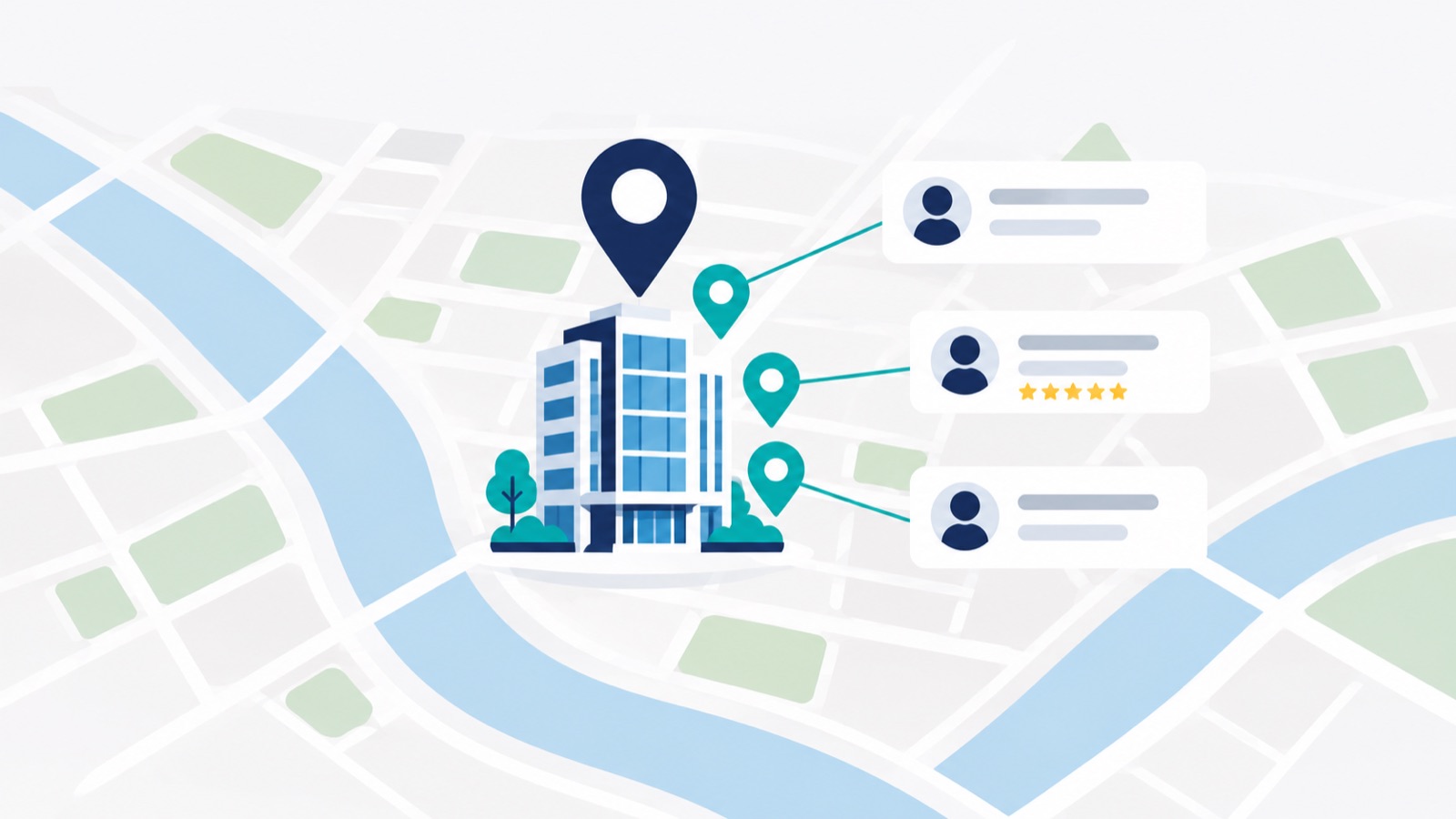
Those 6 profiles are not 6 positions in the Map Pack. Google decides which listings to show in the search results for each query, and look-alike listings at the same address compete with each other. The firm’s chance of extra visibility rises with how different each solicitor’s work genuinely is, which is why the estate planning solicitor’s profile has a clearer job than a second “lawyer” profile sitting next to the firm’s.
Do practitioner profiles bring more enquiries?
A practitioner profile can bring extra enquiries, but it is not a guaranteed extra slot in Google Maps, and no one can tell you in advance which way a given firm will go.
Most guides sell practitioner listings as extra Map Pack real estate. That is the upside case. In our setups, which range from 1 to 6 practitioner profiles per firm, most have added a layer of exposure the firm did not have before. That exposure comes from searches on the practitioner’s name, and from searches for a specialisation the firm’s own profile was not showing for. Some firms have seen more enquiries from it. In a few cases, Google merged the practitioner profile and its performance with the firm’s. We could not have predicted which firms would land where before the profiles were live, which is why we never sell practitioner profiles as guaranteed extra visibility.
The downside case is documented too. Sterling Sky published a case in March 2025 where an orthodontist’s practice profile sat in position 6 and the practitioner’s own profile in position 10. They deleted the practitioner listing and the practice profile’s rankings rose (Sterling Sky, 17 March 2025).
Why look-alike profiles get filtered
Both outcomes come from the same mechanism. The 2 profiles, firm and practitioner, sit at exactly the same distance from every searcher, so Google Maps proximity ranking gives neither an edge. Relevance and prominence decide which one shows in local search, and when both carry the same primary category, Google tends to show one and filter the other.
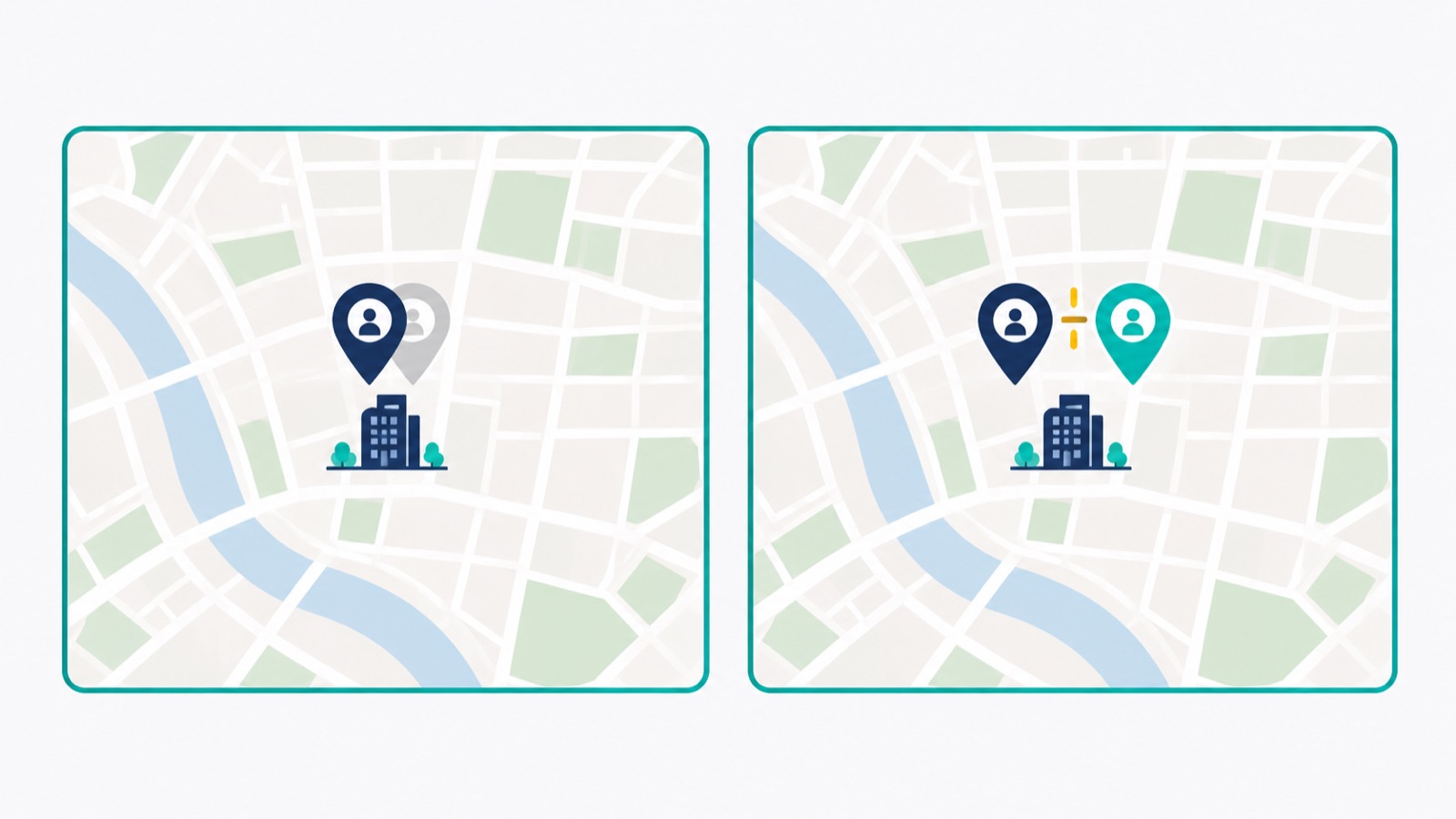
A practitioner profile earns its place when it is genuinely different from the firm’s:
- A different primary category that describes the practitioner’s own work. Whitespark’s Darren Shaw makes the same point with dentistry: a general dentist at a general dental practice competes with the practice, while an orthodontist or a dentist working with children has a category of their own (Whitespark).
- A specialisation the firm’s profile does not already cover. If the practitioner does exactly what the firm does, the second profile mostly duplicates the first.
- A name people search for. Senior practitioners with referral networks and repeat clients get searched by name. That search already exists; the profile gives it somewhere to land.
Practitioner profiles have a second benefit when a firm qualifies: in our experience they tend to spread the risk. A firm whose Maps enquiries all arrive through one Business Profile depends entirely on that one listing. Eligible practitioner profiles give enquiries more than one way in.
Why the main profile’s history decides the risk
The firm’s own Business Profile sets the risk for everything built around it. In our setups, where the eligibility and build work were done properly, the practitioner profiles have not run into suspension or verification problems. What changes the risk is the main business: its history, and how compliant its existing profile already is. The best time to add practitioner profiles is when the firm’s profile is in good shape.
Our reinstatement case log points the same way. Of the 300 Australian suspension cases we handled between 1 February 2025 and 31 July 2026, 86 (28.7%) were triggered by business information and guideline compliance problems, and on audit those problems were the most significant underlying issue in 142 (47.3%). Duplicate listings triggered another 36 (12.0%), and that is the risk a poorly set-up practitioner profile at the firm’s address runs: Google can read it as a duplicate. The full breakdown is in our Google Business Profile suspension data.
So before anything is built, we check the firm’s own profile:
- The business name matches the signage and the registered name, with nothing added.
- The business address is a real, staffed location where clients are seen.
- The categories describe the core business.
- There is no suspension history and no unresolved duplicate at the address.
If the main profile has problems, fix those first. Adding 5 new profiles to an address Google already treats with suspicion multiplies the exposure. And if the firm’s profile is already suspended, that is a Google Business Profile reinstatement job, and the practitioner profiles wait.
How we set up a practitioner listing
Setting up a practitioner profile properly takes 7 steps, and step 1 decides whether the other 6 happen.
1. Run the eligibility check before touching Google
Our process starts with a questionnaire we send to the business owner. Whatever form yours takes, it has to answer these questions for each person before anything is created:
- Do they see their own clients, or support someone else’s?
- Are they at this address during set hours, and which hours?
- Can a client reach them directly at this location?
- What are they registered as, and with which body?
- What do they specialise in, and is it different from what the firm’s profile already covers?
- Who will own the profile, and who will manage it?
A person who fails any of the first 3 questions stops here. This is the cheapest place for a bad profile to stop.
2. Check for a listing that already exists
Search Google Maps for each practitioner’s name and the firm’s address. Practitioner listings sometimes already exist, set up by the practitioner years ago or by a previous agency. Claim the existing listing rather than creating a duplicate. If someone else owns it, Google’s request ownership process notifies the current owner, who has 3 days to respond.
3. Name the profile as the person
The business name on a practitioner profile is the practitioner’s name, with a title or degree if you want one, and nothing else. For a practitioner at a location with several practitioners, Google’s rule is explicit: the profile title includes only the practitioner’s name, not the organisation’s. Leave out the suburb, the specialisation and any keywords.
4. Choose a primary category that is genuinely theirs
Google asks for the fewest categories that describe the core business, chosen to be as specific as possible. For a practitioner, that means the category that describes their actual work, ideally one the firm’s profile does not use as its primary. If no category separates them from the firm, treat that as a warning sign about whether the listing is worth building. Write the business description the same way: about this person’s work, in plain words, with no list of keywords.
5. Point the phone number and website at the person
Google requires a phone number that connects to the individual location and is under the business’s direct control, and it rules out numbers that redirect or refer people to landing pages. For a practitioner profile, that means a direct line or extension that reaches the practitioner at that office.
For the website field, link to the practitioner’s own bio page on the firm’s site, not the homepage, and add UTM tags so visits from that listing show up separately in Google Analytics. That separation is what lets you judge the profile on enquiries rather than impressions; our guide to local conversion tracking covers the setup.
6. List the hours they actually see clients
The business hours on a practitioner listing are the hours that person actually sees clients there. A practitioner who works Tuesdays and Thursdays shows Tuesday and Thursday hours. Hours nobody keeps fail the contactable-at-location condition, and they frustrate the clients who turn up.
7. Verify the profile
Verification works the same way as for any Business Profile, and Google chooses which methods to offer. Our guide on how to verify a Google Business Profile covers the current options and the evidence worth having ready. Once it is a verified profile, check that the name, category and hours went through exactly as you entered them.
Make the practitioner a real entity
A practitioner profile is more credible to Google and to clients when the same person, with the same details, shows up on the firm’s website, on their professional register and in the firm’s structured data. This is the part most practitioner guides skip, and it is where Australian firms have an advantage: the registers are public.
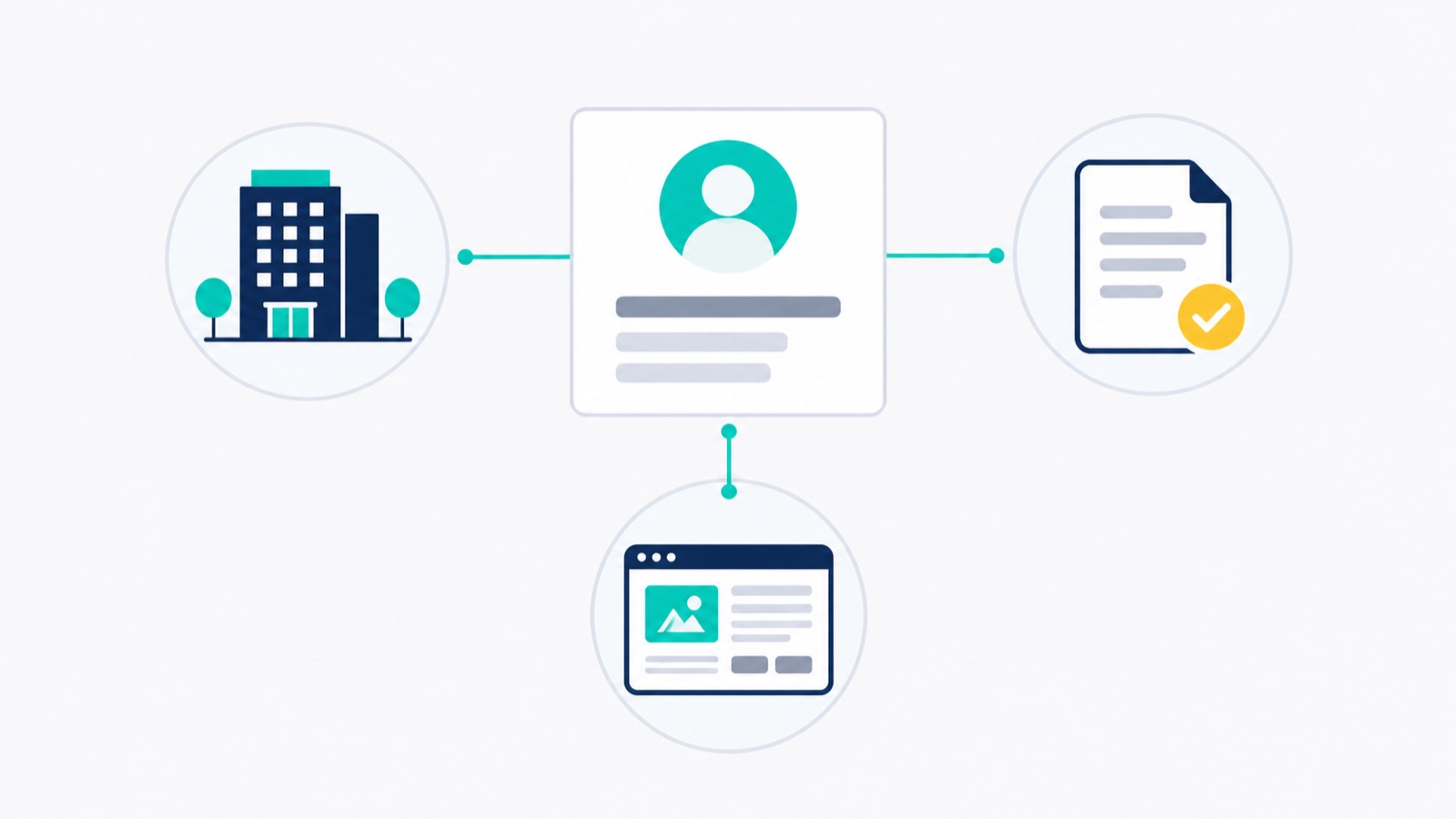
What the practitioner’s bio page needs
Every practitioner profile needs a bio page on the firm’s website to link to. The bio page should carry 7 things:
- Their full name, as it appears on their professional register
- Their role, qualifications and, where their profession publishes one, their registration number
- What they specialise in, linked to the firm’s matching service or practice area pages
- The location and the days they are there
- Professional memberships
- A real photo
- A direct way to book or enquire with them
Australian registers that confirm who they are
Most professions eligible for a practitioner profile have a public register in Australia. These 4 cover the health, financial and legal practitioners we set up most often, and the name, firm and location on each should match the profile and the bio page:
- Health practitioners: the Ahpra Register of practitioners lists registered practitioners and publishes any conditions that limit what they can do.
- Financial advisers: ASIC’s Financial Advisers Register shows where an adviser has worked, their qualifications and training, their professional memberships and the product types they can advise on.
- Mortgage brokers: ASIC’s professional registers search covers credit licensees and credit representatives, with registration status and address.
- Lawyers: each state publishes its own. In Western Australia, the Legal Practice Board’s Find a Lawyer database shows a lawyer’s practising status, practising certificate category and conditions, and their primary law practice.
A practitioner whose register still shows a previous firm, while their new Business Profile shows yours, is a mismatch worth correcting through the right body before launch. These registers are how clients check a professional, and how entities in local SEO get confirmed: the same person, the same firm, the same place, from sources the firm does not control.
Schema that connects the person to the firm
On the bio page, Person structured data with a worksFor property pointing to the firm’s Organization markup describes the relationship in a form machines can read. Schema.org defines worksFor as the organisations a person works for, and the firm itself can use a more specific type such as LegalService or Dentist.
Google says Organization structured data helps it understand an organisation’s administrative details and disambiguate it, and that it does not guarantee features that use structured data will appear. Treat it as an accurate description of who works where, not as a ranking lever. Our guide to local schema markup covers the firm-level markup.
Profession directories before generic citations
For a named professional, we put the profession’s own directories first: the law society or professional association listing, the booking platform the clinic already uses, the broker’s aggregator profile. Generic business directories say little about whether a person holds the qualifications they claim; the places their clients would actually check say a lot more.
Reviews, departures and who owns the profile
Ownership is the question to settle before the first practitioner profile is created, because it is the one that turns into an argument later.
Reviews stay where they land
Google reviews left on a practitioner profile stay on that profile and do not roll up to the firm’s; practitioner guides from Meticulosity and V Digital Services report the same. Decide which profile you want each review to build before anyone starts asking for them.
The rules for asking don’t change because the profile belongs to a person. Google’s Maps content policy prohibits offering incentives for reviews and selectively asking only happy clients, and treats content based on a conflict of interest, including current or former employment, as manipulation. So ask every client, offer nothing for it, and don’t let colleagues review each other.
Health practices carry an extra rule. Ahpra’s advertising guidelines explain that the National Law prohibits using testimonials about the clinical aspects of care to advertise a regulated health service. Patients posting reviews on Google is not affected; reproducing those reviews in the practice’s own advertising is where the rule bites.
When a practitioner leaves
A practitioner leaving is the objection we hear from owners, and it is a fair one. Some owners are not keen on practitioner profiles at all, because a well-reviewed profile in a solicitor’s or broker’s own name looks like an asset they could take with them if they go out on their own.
The worry is grounded. Whitespark’s Darren Shaw describes how hard it is for a firm to regain control of a departed practitioner’s listing once that person has claimed it. His explanation: Google sees a listing about a person as belonging to that person, not to the firm. The answer is 3 pieces of structure, set up on day one:
- Create each practitioner profile in the firm’s own Google account, not the practitioner’s personal one. The firm is the owner; the practitioner is added as a manager so they can respond to reviews and post updates.
- Write down what happens when someone leaves: what happens to the profile, who keeps the phone line, and what happens to the bio page URL. Agree it with the practitioner before launch, not at their farewell drinks.
- Keep your agency honest. Google requires anyone managing a profile on a business’s behalf to transfer ownership to the business owner immediately on request (Google). Google’s third-party policies also say end customers must keep ownership or co-ownership of their profiles at all times. Our guide to Google Business Profile access covers how to set owners and managers safely.
6 mistakes that undo practitioner profiles
Each of these 6 practitioner profile mistakes breaks one of Google’s rules or a point above, and each is easy to avoid at setup and expensive to unwind later:
- Building a profile for someone who is not public-facing. Practice managers, paralegals and support staff do not qualify, however senior they are.
- Putting the firm’s name, suburb or a keyword in the practitioner’s profile name. At a multi-practitioner location, the name is the person’s and nothing else.
- Creating one profile per specialisation. One person gets one profile per location where they qualify.
- Copying the firm’s primary category onto every practitioner. That sets the profiles up to compete with the firm’s own, and with each other.
- Letting the practitioner create the profile in their personal Google account. The firm then owns nothing it has paid to build.
- Launching every eligible practitioner at once. If Google filters or merges them, you will not know which profile caused it. Launching 1 or 2 at a time tells you far more.
Is a practitioner profile worth it for your firm?
A practitioner profile is worth testing when most of these are true:
- Several practitioners meet both of Google’s conditions.
- They have distinct specialisations, or clients already search for them by name.
- The firm’s own profile is clean, with no suspension history.
- The owner and the practitioners have agreed ownership in writing.
- You can track enquiries from each profile separately.
A practitioner profile is usually not worth it in 3 situations: the practitioner is the only public-facing professional at the location, so the combined profile is already the right setup; every practitioner does the same work under the same category as the firm; or nobody will maintain the profiles once they exist.
How we run practitioner profiles
We treat practitioner profiles as part of a firm’s Google Business Profile work, not as a standalone product. It starts with the eligibility questionnaire and a check of the main profile. Then we launch 1 or 2 practitioner profiles, not 10 at once, and measure them against the firm’s own profile using geo-grid rank tracking and tracked enquiries. More get added only if the first ones earn it. Rankings are a supporting measure; enquiries and the work they turn into are what justify the effort.
If you run a law firm, the same profile thinking sits inside our local SEO for lawyers, and for clinics, inside local SEO for dentists. For firms that want the profiles looked after month to month, it is part of our Google Business Profile management.
If your firm has several practitioners and you want to know which of them qualify, and whether a test is worth running, . We look at your firm’s own profile first, then tell you plainly whether practitioner profiles are likely to help.
Frequently asked questions
Does a practitioner’s Google Business Profile cost anything?
No. Google does not charge for a Business Profile, for a firm or for an individual practitioner. The cost is the time to set it up properly and keep it accurate.
Can a practitioner have a profile without an office?
Not under the practitioner rules. A practitioner profile needs a verified location where the person can be contacted directly during the stated hours. A professional who never sees clients at an address does not meet that condition.
Can a practitioner’s profile use the firm’s name?
Not at a location with several practitioners: Google says the practitioner’s profile title includes only their name. The exception is a sole practitioner at a branded location, who shares one profile with the firm using the “[brand]: [practitioner name]” format.
Can one practitioner have a profile for each specialisation?
No. Google says a practitioner shouldn’t have multiple Business Profiles to cover all of their specialisations. One person, one profile per location where they qualify.
Can several people manage a practitioner’s profile?
Yes. A Business Profile can have an owner and several managers. For practitioner profiles we recommend the firm as owner and the practitioner as a manager, so the firm keeps control and the practitioner can still respond to reviews.
What happens to reviews when a practitioner leaves?
The reviews stay on the profile they were left on. Who controls that profile after the practitioner leaves depends on who owns it, which is why ownership and an exit agreement belong in the setup, not in the resignation conversation.