
Google Business Profile review extortion scams: What changed, How to report, and How to fight back
Learn how to tackle review extortion with Google's new reporting channel and protect your local business reputation effectively.

If you run a local business, you know how a few bad stars can hurt. The nasty twist is when those 1 and 2 star hits show up, then someone emails or messages you asking for money to make them disappear.
That is a review extortion scam. It is not random spam; it is organised, international, and increasingly aggressive. Google has finally published a dedicated help page and opened a reporting channel for this exact problem, which is a real sign they are taking it seriously. I’ll show you what the new process is, how to use it properly, and what to do in the hours and days after an attack so you protect your reputation without feeding the scammers.
I’ll also share what not to do, the common mistakes that get reports rejected, and a simple prevention plan that actually holds up when things get ugly. This is written for owners, marketers, and agencies who need clear steps, not fluff.
What changed today and why it matters
Google has shipped a specific help document titled Report negative review extortion scams on your Business Profile. Two things matter here. First, Google clearly defines the pattern it wants you to report: a sudden spike in low-star reviews followed by a demand for money, goods, or services to remove them.
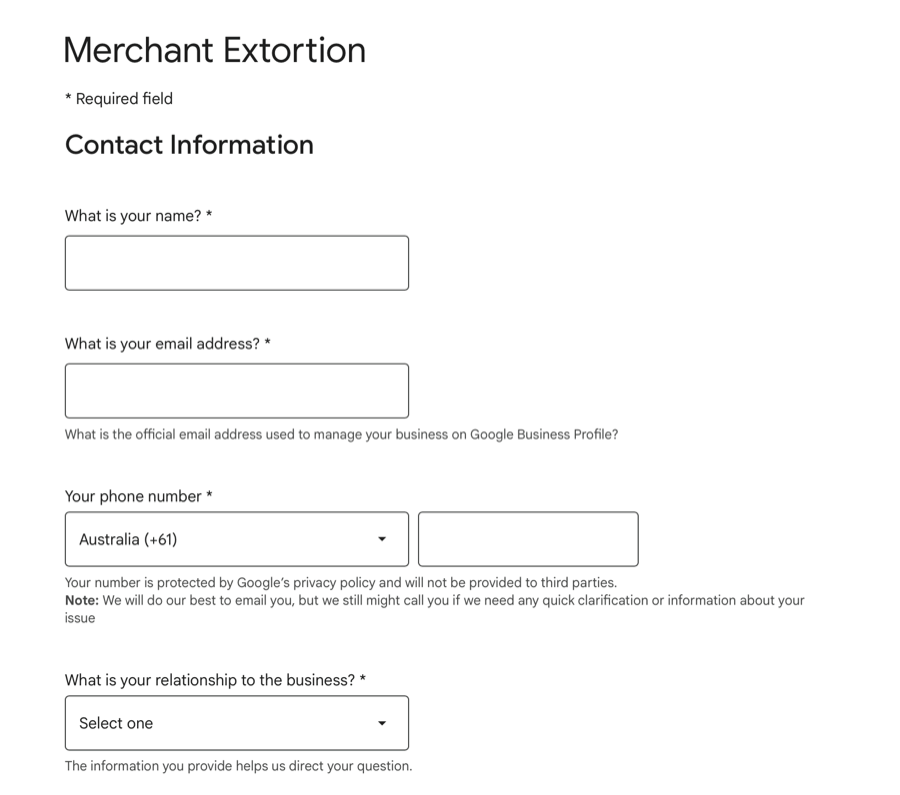
Second, Google now points you to a dedicated “merchant extortion” form, separate from normal review flagging. That indicates the issue is big enough to warrant its own intake and internal workflow. Google Help Centre
Industry press picked this up quickly, which is usually a sign the channel is real and live. The coverage notes the page explains what these scams are, how to report them, what evidence to include, and what not to do, like paying anyone who threatens you. That public attention helps because your customers and staff may already be seeing headlines about fake reviews and new enforcement. Search Engine Roundtable
This sits inside a wider clampdown. Google says it removed or blocked over 170 million policy-violating reviews in 2023 and more than 240 million in 2024 as detection improved. So your report is now entering a system that is actively hunting this stuff, not sleeping on it.
What is a Google review extortion scam?
Google’s description is plain: a burst of 1 and 2 star reviews on your Business Profile, then a message demanding money or favours to remove them. That might show up via email, WhatsApp, Telegram, SMS, or social DMs. The pattern matters because it signals coordination, not genuine customer feedback. Google calls this a serious policy violation and asks merchants to remain vigilant. Google Help Centre
Scammers have been running versions of this for years. Forum threads show owners getting hit with waves of one-star reviews, then phone calls or messages asking for a payment to “fix” the damage. It is not a grey area. It is shakedown behaviour and it sits alongside fake engagement schemes Google has been suing and restricting. If you see the combination of sudden low-star volume and a payment demand, treat it as an attack, not a customer-service dispute.
The international criminal-network context
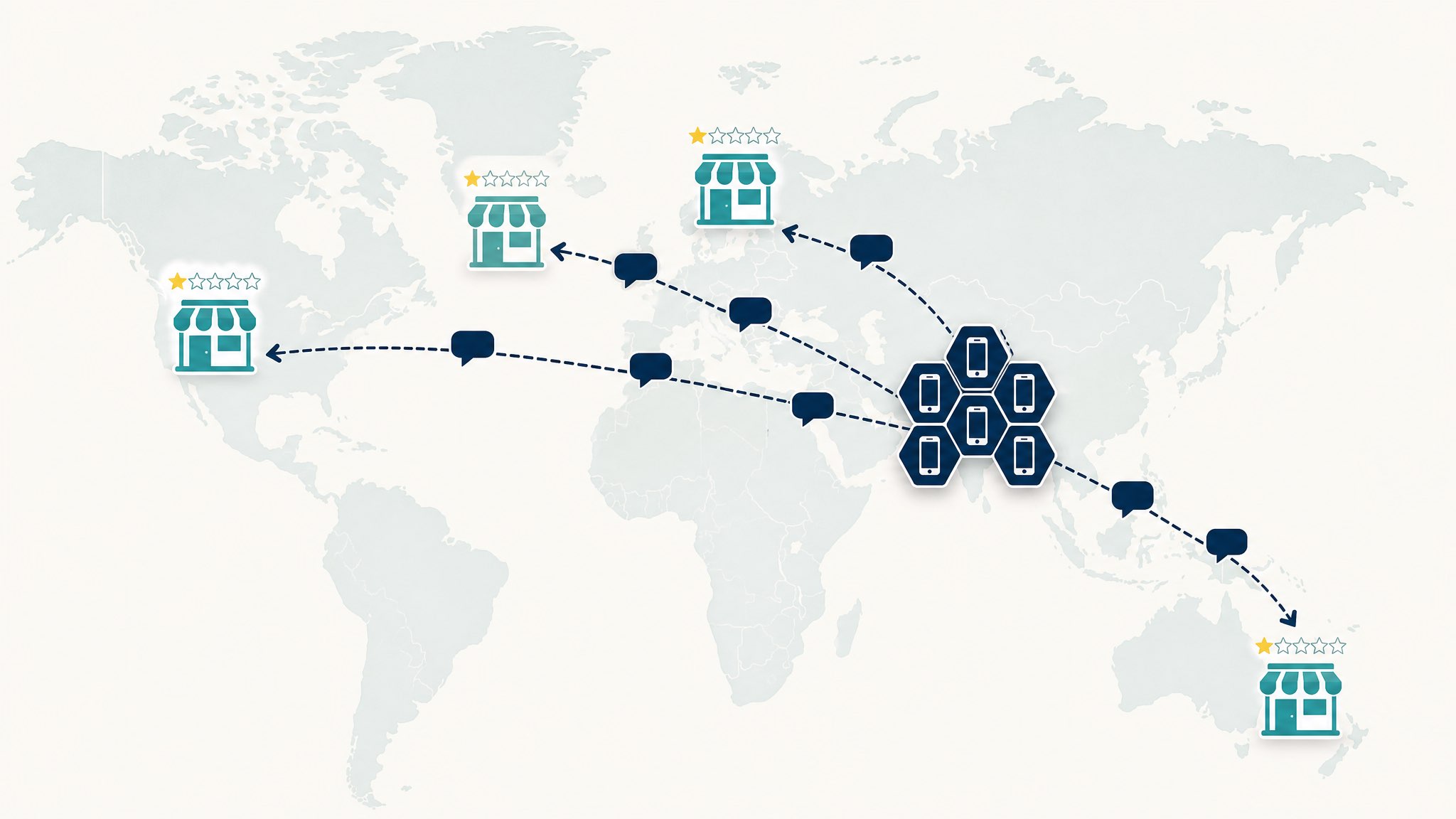
This is not local kids playing pranks. Documented cases trace the operations to organised networks running out of Pakistan, Bangladesh and parts of Eastern Europe. The same handful of WhatsApp numbers turn up week after week, hitting businesses across the US, the Netherlands, Australia and the UK.
One Dutch case logged 18 affected companies (construction, locksmiths, rental) tied to the same threat actor. A Florida business received 39 follow-up reviews over two days after refusing to pay (Cybernews coverage of the Dutch cases).
Typical ransom demands are small, often no more than a couple of hundred dollars, deliberately low enough to make paying feel like a “just to make it go away” option. It is the same logic as a small-amount IT-support scam: low ticket size, high volume, repeat targets.
A Bangladesh-Australia connection on the record
The Australian angle is sharper than most reporting has acknowledged. A Current Affair on Channel 9 ran an exclusive interview in November 2025 with a Bangladesh-based fraudster running the attacks.
She confirmed she works for “a dangerous person” based in Australia, and that she charges USD 50 per review removed. The featured AU victims, Theresa and Daniel Ferretti who run a kitchen renovation business, were hit with multiple one-star reviews and a USD 200 ransom demand. They refused to pay.
That interview is the clearest evidence yet that this is not “scammers overseas hitting random businesses”. It is a global ring with on-shore coordinators.
The threat templates are recycled across continents. From a Tennessee wedding photographer’s case in January 2026 (WSMV investigation):
“I CAN’T STOP MY TEAM. THEY ARE GOING TO DO MORE NEGATIVE … YOU DIDN’T PAY ME … IF YOU ARE SMART, I AM TOO.”
If you receive a message close enough to that wording to be uncomfortable, you are not the first to see it and you will not be the last.
Who tends to get hit
The targeting is not random. Service businesses that do not collect many reviews on a normal week are the favourite targets, because a burst of one-star reviews moves the average fastest. The patterns we and other practitioners keep seeing:
- Home services: contractors, roofers, plumbers, electricians
- Moving companies, local and interstate
- Security services: locksmiths, alarm installers
- Automotive: mechanics, towing
- Professional services: legal, accounting, consulting practices outside major firm brands
- Hospitality at the smaller end: independent hotels, restaurants, event venues
If your business sits in any of these and your normal review pace is one or two a month, you are exactly the profile a scammer wants to hit.
Why this is escalating
Two reasons. The first is AI: language models let one operator generate dozens of distinct, plausible-sounding one-star reviews in minutes, with believable names, profile photos and history. The second is platform speed: even with Google’s improved detection, the gap between “the reviews are live” and “Google removes them” still gives an attacker leverage. The recent surge is the result of both forces compounding.
A legal backdrop in three jurisdictions
- United States: the FTC’s 2024 rule on deceptive reviews authorises civil penalties of up to USD 51,744 per fake review and explicitly covers using fake negatives to intimidate businesses (Reuters).
- Australia: the ACCC pursues fake-review schemes under misleading and deceptive conduct provisions; the Citymove case secured an AUD 30,600 penalty for fraudulent testimonials (ACCC Citymove case).
- European Union: the Omnibus Directive prohibits fake reviews, and French law provides administrative fines up to EUR 375,000 for companies that breach online-review disclosure rules.
The legal risk for the attacker is real. The legal recourse for the victim is slower than Google’s removal flow, which is why the report-and-document path below is usually the right first move.
The anatomy of a typical attack
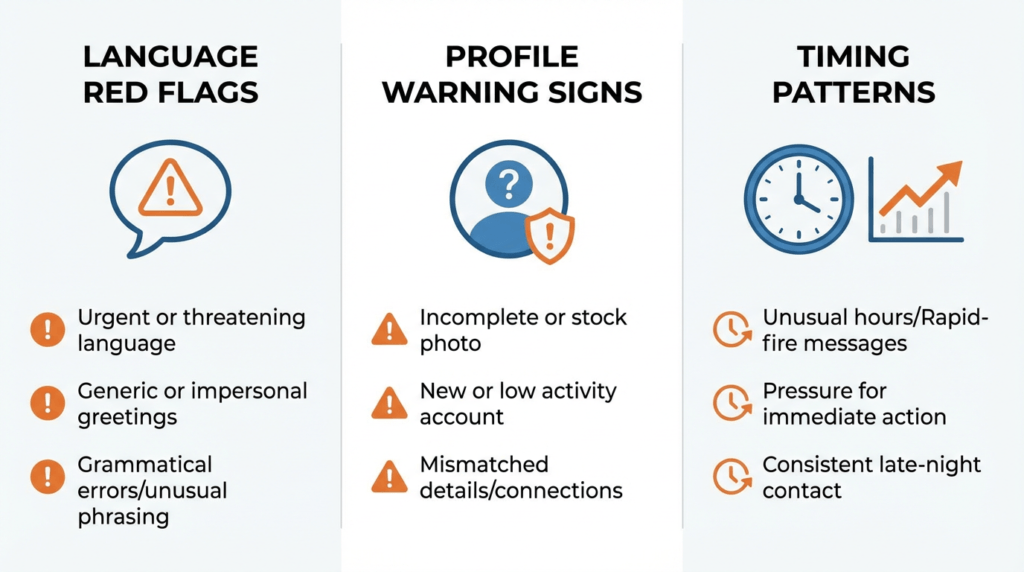
Knowing the shape of the playbook helps you spot it early. The five-stage pattern that comes up over and over in documented cases:
- Hour 0, the blitz: 20 to 40 one-star reviews land on the profile inside minutes, dropping the rating from something like 4.8 stars to 3.5 or 3.6 overnight.
- Hour 0 to day 1, the demand: a WhatsApp, Telegram, SMS or email message arrives. The phone number is often international (Pakistan or Bangladesh country codes are common). The message is direct: “I was paid to post negative reviews on your business. Pay me USD 100 and I will remove them and stop.”
- Days 1 to 7, the escalation if you refuse: another wave of 10 to 40 reviews, often with more aggressive language, threatening “another 100 reviews” and a longer campaign.
- Week 2, the multi-platform spread: the same threat actor expands to Yelp, Facebook, and industry-specific platforms (TripAdvisor for hospitality, HealthEngine for clinics, ProductReview.com.au for AU services).
- Aftermath, the slow recovery: even after Google removes the bad reviews, the rating dip lingers in cached snippets and customer screenshots. The real cost is the leads you lost during the rating drop, not the reviews themselves.
The single most important thing to know about this timeline is that paying at stage 2 does not end it. Documented cases show the same victims get hit again within weeks because they signalled they were willing to pay.
Step-by-step playbook to report an extortion attack fast
Here’s the short version of what Google wants you to do. I’ll keep it tight so you can act quickly.
- Do not engage or pay. Google says paying encourages more attempts and does not guarantee removal. Shut down all contact, keep everything in writing if possible, and never offer discounts or freebies to make reviews disappear. Google Help Centre
- Gather clean evidence. Take timestamped screenshots of the threats, keep the sender identifiers visible, and copy direct links to the suspicious reviews. Save any emails, phone numbers, usernames, and chat handles connected to the demand.
- File the dedicated report. Use Google’s “merchant extortion” reporting flow, then supply your contact details, the exact Business Profile URL, links to the reviews, and your proof of the extortion demand. Attach the files and submit.
- Keep your normal flags going. If any individual review also violates policy on its face, off-topic, profanity, hate, doxxing, clear fake engagement, flag it through the Reviews tool as usual. This runs in parallel. The step-by-step is in our guide to removing a Google review in Australia.
- Prepare for limited feedback. Google will investigate and notify you of an outcome, but it will not share deep investigative detail for privacy and safety reasons. That is normal, not a sign they ignored you.
A few extra tips that help. In your report, spell out the timing. Note the moment you first saw the star drop, the time the extortion note landed, and any earlier history of similar threats. Keep the tone factual. You are not venting. You are showing a pattern that matches Google’s definition to speed up a correct decision.
How fast does the form actually work?
Practitioner-reported outcomes since the form launched in late 2025 are encouraging. Documented cases include:
- A five-fake-one-star attack from November 2025 on Local Search Forum: all five fake reviews removed after submitting the form, without paying.
- A Spanish practitioner case from December 2025: 15 fake reviews removed in under 16 hours after a clean evidence dossier was attached to a single support case.
- An agency case study from December 2025: all seven fake reviews removed within 24 hours of submitting through the dedicated merchant-extortion form.
- Sterling Sky publicly documented a case where all eleven fake reviews from a single attack were removed in under 24 hours.
The pattern in successful cases is identical to what Google asks for: a clear demand-for-payment screenshot, direct links to every offending review, and a clean timeline.
The form lands you in the Trust & Safety queue rather than the automated content-review queue. That is why the turnaround is so much faster than a regular review flag (typically 48 hours and often returning a “no policy violation” automated decision on first pass).
How does the new extortion form compare to other options?
Normal review flagging is for single reviews that clearly break content rules. It is the right tool for one-off slander, doxxing, or off-topic rants. It is not designed to capture a coordinated shakedown pattern across multiple accounts. That is why many owners felt stuck before.
The Redressal Complaint form is aimed at spammy listings, impersonation, and larger profile abuse. In practice, agencies use it for broad spam cleanups. It still has a place, but it is not tailored to extortion where the key signal is the sequence: sudden ratings drop plus a payment demand. The extortion channel exists to pull those facts together so the right reviewers see it.
Public policy has shifted as well. Google now uses warning labels and temporary review freezes for profiles caught using fake engagement. That is aimed at bad actors gaming ratings, but it shows the direction of travel. The platform is more willing to take forceful action both to remove bad reviews and to label abuse when it finds it. The Verge
If you are weighing where to start, use the extortion form when there is a clear quid pro quo demand attached to the reviews. Use normal flags for individual policy breaches. Consider Redressal if you are also dealing with copycat listings or wider spam around your brand.
What should you do while waiting for Google’s decision?
A counter-intuitive tactic: do not reply to the fake reviews first
One practitioner who successfully ran the form on a real attack flagged a non-obvious tactic worth knowing (Local Search Forum, November 2025):
“Despite online advice to the contrary, I think it’s best not to reply to the fake reviews until you’ve gone through the removal process. The scammer receives notification of any reply and that tells him that you care, and wish for the review to be removed: his cue to offer to ‘help remove them’. IMO it’s better to appear un-bothered initially.”
The notification mechanic is the key insight. Every reply you post on a review pings the reviewer’s Google account.
For a fake reviewer who is also the extortionist (or works for one), that ping is the signal the attack is landing. It is the prompt for the “I can help remove these for a fee” message.
Filing the extortion form first, silently, denies the attacker that confirmation. Reply to any surviving genuine-customer reviews only after Google has acted.
Expect limited back-and-forth. Google says it cannot share investigative details, only a result. During that time, your job is to steady the ship without inflaming the situation.
Reply to the fake-looking reviews carefully, once, and only for the benefit of future customers. Keep it short, calm, and factual. Do not accuse anyone by name. Do not mention the extortion, that can invite more abuse. Something like: “We cannot match this to a real customer record. Please contact us at [direct email] so we can resolve this.” If the attacker keeps posting, stop replying and let your evidence do the talking.
Keep legitimate review generation going, but stay inside the rules. No incentives, no selective requests only to happy customers. Google’s Fake Engagement policy and its general guidance are very clear about that. Ask all recent customers for honest feedback across a mix of platforms so one attack does not define your rating.
Document everything. If you receive phone calls, move the conversation to email so you can capture proof. If the extorter threatens harm or impersonation beyond reviews, talk to law enforcement. The FTC’s review rule helps define the behaviour, but your local police handle criminal threats.
Are the reviews fake or real customers asking for refunds?
Good question, because this is where many reports fail. Extortion is a demand to remove negative reviews in exchange for money or favours. A real customer who asks for a refund after a bad experience is not automatically a scammer even if their review stings. Your evidence needs to show the removal-for-payment demand, not just “this review is unfair.” Use screenshots of the actual demand and direct links to the related reviews. If you cannot tie the demand to specific reviews, your case is weak. Google Help Centre
If the reviews look real but the demand still landed, separate the two tracks. Handle the customer service issue in your normal process and log it. Then report the demand itself through the extortion form with the proof. The form is for the shakedown, not for relitigating a service dispute.
One more edge case. Competitors sometimes hide behind “agencies” that sell review removal services. If your evidence shows a third party asking for payment to “clean up” reviews they just placed, include that detail. Google is very familiar with that pattern and has sued networks that mass-create fake listings and reviews. The Verge
Why might Google deny my report and how do I fix it?
The most common reasons are simple. First, you did not supply enough evidence. If there is no screenshot showing the demand to remove reviews for payment, it looks like a normal complaint. Fix that by re-filing with full screenshots that show sender identity, date, time, and the connection to specific review links.
Second, you mixed in policy arguments that belong in the standard flagging tool. If a review is off-topic, personal, or contains slurs, flag it individually in the Reviews tool. Do not rely on the extortion channel to do all jobs at once. Use both routes in parallel and keep each report tight.
Third, you engaged the attacker. Paying or bargaining can muddy the record and encourage repeat hits. Google explicitly tells you not to engage. If you already did, stop, gather what you have, and file it anyway. You can still get relief if the pattern is obvious and you show a clean timeline.
If you have already filed, been denied, and the reviews are still sitting on your profile, that is the point where the case needs building rather than re-filing. That is what our service to remove a fake Google review is for, and you are invoiced only once a review actually comes down.
Prevention that actually works
You cannot stop bad actors from trying, but you can blunt the damage and recover faster.
Make your public footprint boring for scammers and clear for customers. Keep your Business Profile fully verified and active. Keep business details consistent across your website, invoices, email footers, and directories so it is easy for reviewers to match you to the right entity and harder for copycat listings to confuse people. That consistency is the same thing a local SEO retainer spends its first month on. Keep a single, monitored contact point for complaints so upset customers have somewhere real to go before they rage-post.
Build a steady stream of honest reviews across multiple sites. Most consumers still read reviews, and a wide base of genuine feedback is your insurance policy. BrightLocal’s 2026 Local Consumer Review Survey found 97% of consumers read reviews for local businesses and the majority use two or more platforms when checking one out. Google is the biggest, but it is not the only place customers form an opinion about you, and a profile that lives only on Google is a profile with a single point of failure.
Watch for waves. Set simple alerts for rating drops or unusual volume. When you see a cluster, pause and collect facts before firing off replies. In the UK, regulators pushed Google to add stronger anti-fake-review measures, including temporary warnings and review freezes for abusers. That tells you platforms are willing to act when shown clear signals. Your job is to package those signals cleanly. The Verge
Quick answers to common questions
How long will this take? Google says it will investigate and notify you of the result but will not share investigative details. That is normal. Keep your file tidy and your responses calm while you wait.
Can I ask happy customers for reviews to offset the damage? Yes, but do not offer incentives or cherry-pick only the happiest customers. Keep it fair and consistent.
Should I post the extorter’s phone number or email publicly? No. Do not dox anyone. Keep it in your evidence file and out of your replies.
What if the same network hits me again? Re-file with the new evidence and link the prior case if you have it. Google has been cranking up enforcement, including lawsuits against scam networks. Persistence helps when your facts are tight.
Key takeaways and next step
You now have an official path for review extortion cases. Do not pay. Capture proof. Use the extortion form and the normal flags together. Keep replies brief and professional for future customers, then let your evidence work.
Finally, build a review engine that is steady, honest and spread across more than one platform so one attack cannot define your rating.
If you are under attack right now and want help working through the report and the response without making things worse, that is exactly what our online reputation management service handles. or start the onboarding form and we will tell you what is recoverable, what is not, and what to do in the next 24 hours.
Sources
Google: Report negative review extortion scams on your Business Profile. Google Help Centre
SERoundtable coverage of the new help page and reporting channel. Search Engine Roundtable
BrightLocal Local Consumer Review Survey 2026. BrightLocal
FTC rule on deceptive reviews and intimidation. Reuters
Google actions and enforcement trends against fake reviews and fake listings. blog.google