
AI Citations vs Recommendations: What Our Perth Study Found
An AI citation is a source link. An AI recommendation is a business put forward as the one to use. Our Perth study of Google's AI shows how often they line up, and what to do.

- An AI citation is a source link in an AI answer. An AI recommendation is a business the answer puts forward as one to use. You can get one without the other.
- In our Perth study, Google AI Mode usually recommended businesses without linking to their own website. Many of those answers referenced the business’s Google listing instead.
- Whether a cited business was also recommended varied with the question: rarely on information questions, usually on “who should I use” questions.
- Recommendations changed from one day to the next. Check more than once, track recommendations and citations separately, and keep your Google Business Profile and reviews in good shape. None of it is a guarantee.
If someone has told you your business “is being cited by AI”, it is fair to ask what that is worth. AI citations and AI recommendations are not the same thing, and in Google’s AI search they often don’t come together. When Google AI Mode recommended a Perth business in our study, it usually didn’t link to that business’s website. And whether a business the AI used as a source also got recommended varied mostly with what the customer asked.
I ran the study for AI SEO Perth, the research publication Search Scope publishes, and released it on 14 November 2026 with its method and data. This is the plain-English version: what we found, what it means if you run a business, and what I’d do about it.
What is the difference between an AI citation and an AI recommendation?
An AI citation is a source link shown with an AI answer. When an AI tool cites a page, it is showing you where the answer came from. An AI recommendation is a business the answer puts forward as one to use: on a business card, in a list of providers, or named in the text as a choice. A plain mention is weaker again. Your name appears, but nobody is pointing a customer at you.
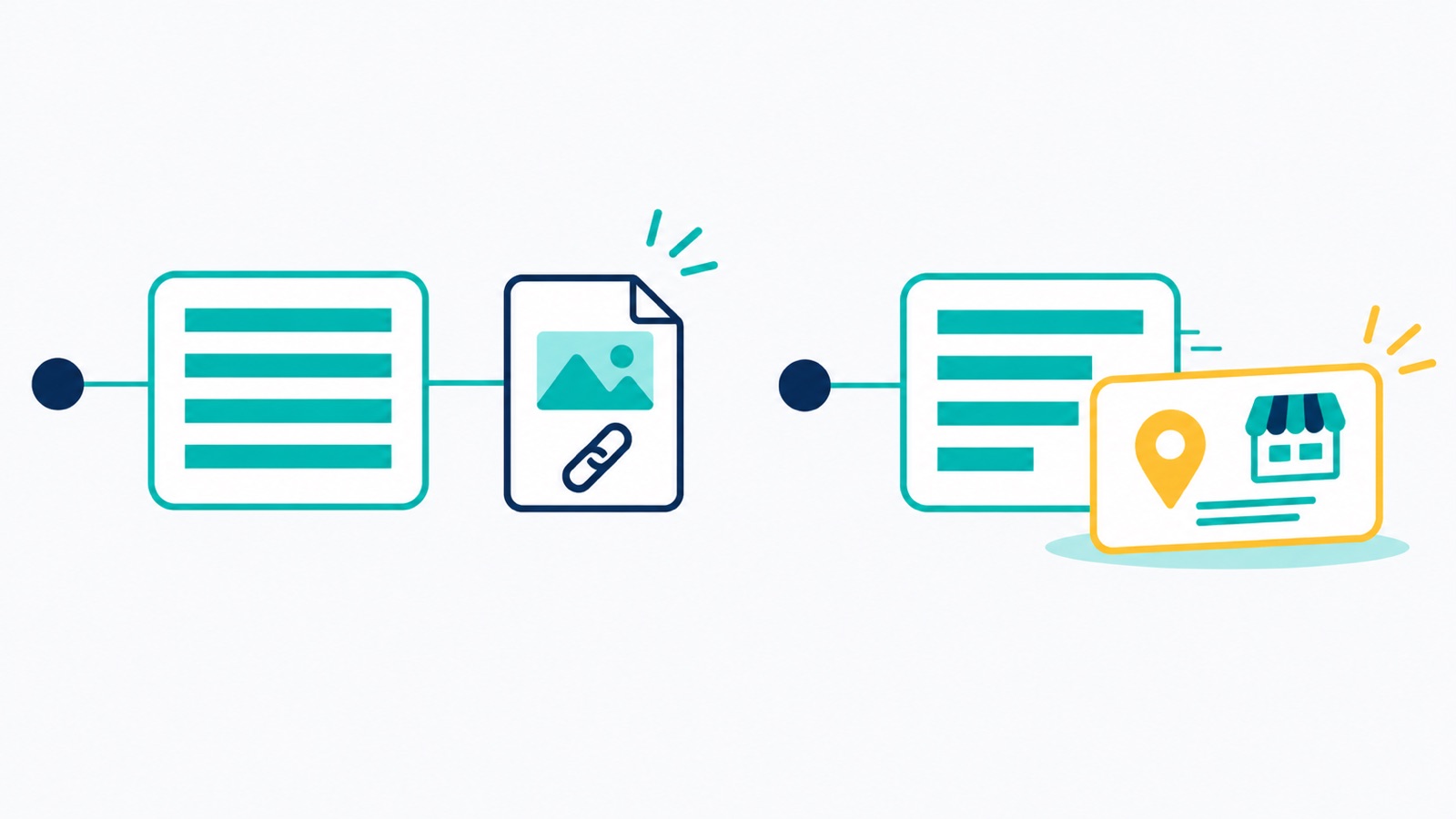
They are different wins. A citation can mean the AI used your page to explain something. A recommendation means it suggested your business to someone looking for a provider. That is why we track recommendations as their own number, which we call recommendation share.
The studies we read on this topic reported the gap between the two as a single figure. Our data shows the gap changes with the question being asked.
What our Perth study found
From 9 to 13 November 2026, I sent 200 questions about 20 Perth industries to Google AI Overviews and Google AI Mode, once a day for 5 days, which gave 1,942 answers. The full numbers, method and data are in our AI Citation-Recommendation Gap study. Every finding below is an association: the study records what appeared together in answers, not what caused it.
AI Mode rarely linked to recommended businesses’ websites
In our Perth study, of 2,120 business recommendations in Google AI Mode answers, counted once per answer, 1,932 (91.1%) had no top-level citation to the business’s own website in the same answer. In AI Overviews it was 1,442 of 2,084 (69.2%). The extraction rules miss some recommendations, so the 91.1% is slightly higher than it should be.
Many of those AI Mode answers referenced Google’s own listing instead. Counting Google-hosted references to the business, such as a Maps listing, as citations, the AI Mode share falls to between 34.1% and 42.7%, depending on how strictly those references are matched to businesses. That shows a reference was present in the same answer, not that it supported the recommendation.
Cited businesses: recommended or not, by question type
In our Perth study, a business cited in an answer was rarely recommended in that same answer on informational questions, and usually recommended on commercial discovery questions.
| Type of question | Example from the study | Cited business also recommended in the same answer |
|---|---|---|
| Informational | ”What affects the monthly cost of SEO for a small business in WA?“ | 7.0% in AI Overviews, 5.2% in AI Mode |
| Commercial discovery | ”What accounting firms in Perth handle tax and BAS for small businesses?“ | 88.8% in AI Overviews, 84.5% in AI Mode |
Both shares are on the low side, because the extraction rules miss some recommendations.
AI recommendations moved from day to day
In our Perth study, more than half of the business-and-question combinations recommended at least once were recommended in 1 round only, and fewer than 1 in 10 recurred in every round. Each round was 1 day.
Being a source went with being recommended
In our Perth study, businesses cited on an informational question were recommended on commercial questions in the same industry more often than other businesses, on small samples. The separation we expected showed up for roughly 3 in 10 cited sources. It was not the rule.
Review count went with recommendation; star rating less clear
In our Perth study, among businesses with a Google Maps listing, review count was associated with recommendation, including recommendations written in the answer text. Star rating was associated only when business cards were counted.
Our own sites were not cited
Search Scope is my SEO consultancy, and SEO agencies were one of the 20 industries in our Perth study. Across 1,942 answers, our sites were cited 0 times. Search Scope appeared once, as a listing in a Google places panel in 1 AI Mode answer, not as a recommendation.
Google’s AI recommends businesses without linking their websites
In plain terms: an AI recommendation from Google AI Mode often comes without a link to your website. When it told someone which business to use, it usually didn’t send them to that business’s site, and many of those answers pointed to Google’s own listing for the business instead.
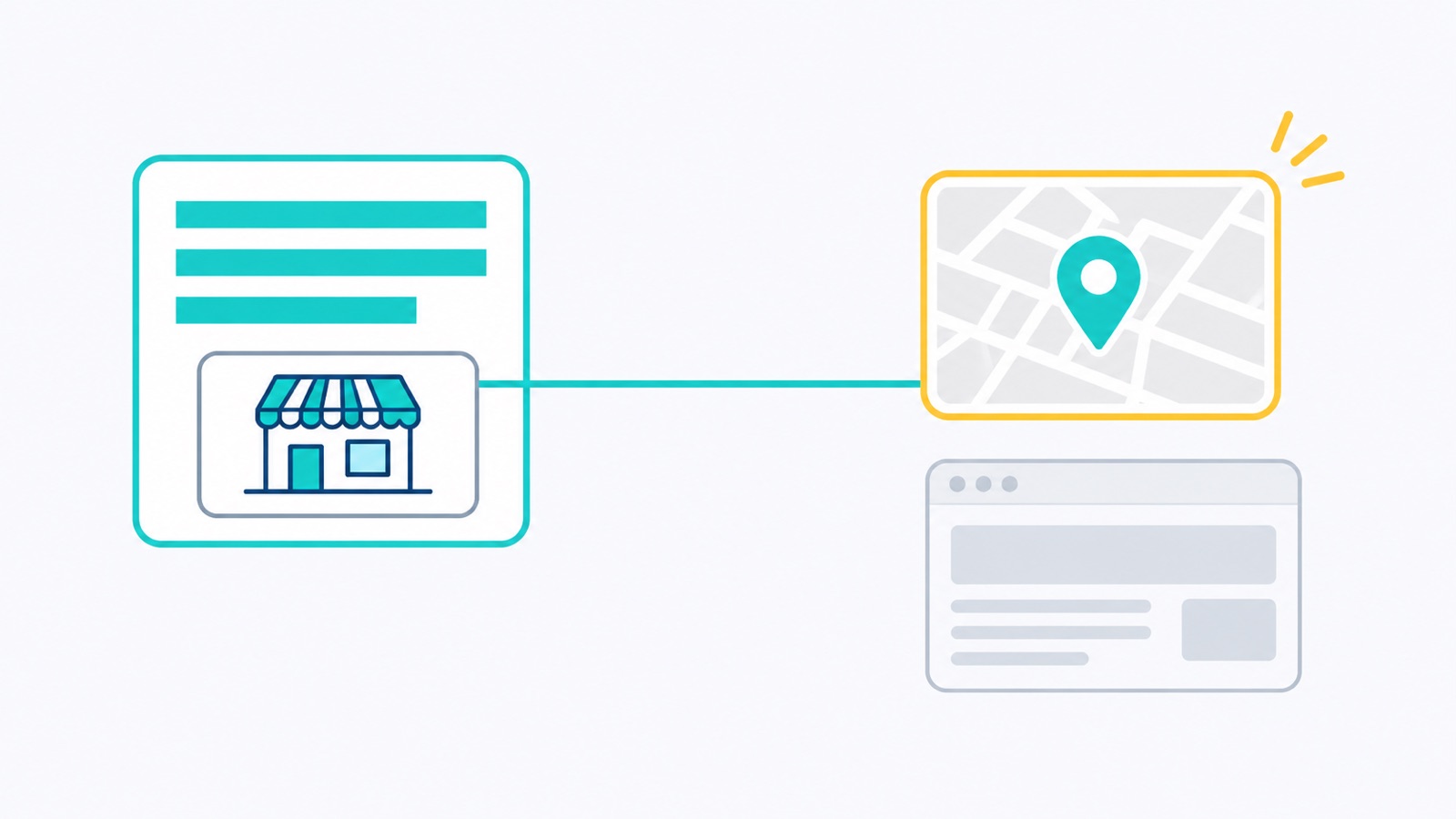
That has 2 consequences if you run a business. First, your Google Maps listing, which is your Google Business Profile, is part of how these answers present you. It is not a side project to look at once a year. If the name, category, services, hours or service area are wrong there, that wrong listing is what can sit beside your name in the answer. Our Google Business Profile optimisation guide covers what to get right.
Second, don’t measure AI visibility by counting website citations alone. A report that only counts citations of your domain would have missed most of AI Mode’s recommendations in our data. You would look invisible while being recommended.
None of this means your website doesn’t matter. The study recorded what appeared in each answer. It can’t show what Google read before writing the answer, so it can’t show your website played no part.
Why AI can cite you without recommending you
AI citations and AI recommendations split most often on information questions. Take 2 customers. One asks Google what affects the cost of a renovation in Perth. The other asks which builders in Perth do home extensions.
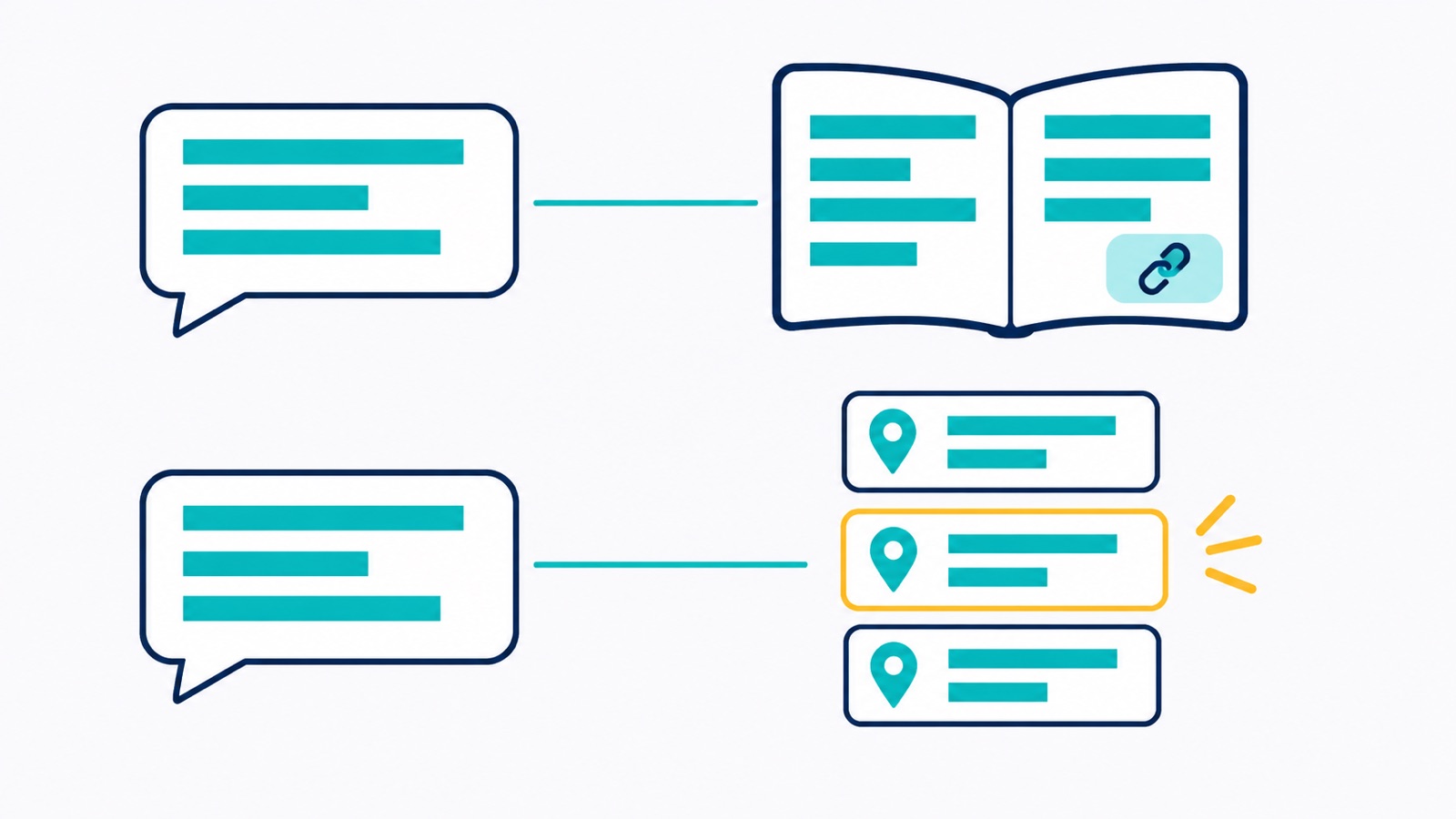
The first is an information question. The AI uses pages to explain prices, steps and rules, and in our data it rarely recommended the businesses whose pages it cited in that same answer. The second is a “who should I use” question. There, a business whose website was cited was usually also one of the businesses recommended.
So “cited but not recommended” mostly happens on information questions, and to a lesser extent on questions that compare or check providers. If Google’s AI quotes your guide on what a job costs, and you don’t appear when someone asks who to call, those are two separate results. Read them apart, and don’t treat a citation on an information question as proof you are on the shortlist.
Sources were more often recommended, not less
My own expectation about AI citations and AI recommendations was wrong here. I started the study expecting to show that AI keeps “source of information” and “recommended provider” apart, so a business could do the explaining while a competitor got the work.
The data pointed the other way. Businesses that Google’s AI used as a source on an information question were more often the ones it recommended when customers asked who to use in that industry. A minority were sources and never recommended, which is the case that started the study, but it wasn’t the pattern.
That does not prove that publishing helpful content gets you recommended. It is an association across 5 days of answers, and the businesses that publish useful answers may also be the ones with more reviews, better listings and stronger websites. What it does show is that, in this data, being a useful source did not mean being passed over. Becoming the source an AI answer draws from is the work of generative engine optimisation.
How to check and improve your AI visibility
No step below guarantees an AI recommendation, and none works overnight. They follow from what we measured, and from what we do for clients.
- Ask both kinds of question. Write down a short list of questions your customers actually ask. Here are 2 from our study’s plumbing set: “What does a plumber do during a hot water system replacement in a Perth home?” and “Who can send a plumber to my Perth home this morning for a burst pipe?” Type each query into Google the way a customer would, check whether an AI Overview appears, then ask the same question in AI Mode.
- Record recommendations and citations separately. For each answer, note whether your business was recommended, whether the answer cited your website, and whether your Google listing appeared. Those are 3 different results. Our guide to measuring AI search visibility sets out the method.
- Check more than once. One answer on one day is a snapshot, and in our data the recommendations moved daily. Repeat the same questions over several days before you decide anything. It is also why AI visibility tools can miss the full picture.
- Keep your Google Business Profile accurate and complete. Right category, services, hours, service areas and photos, and the same name, address and phone number everywhere your business is listed.
- Keep earning genuine reviews. Ask every customer, steadily, not in bursts. Google’s review rules don’t allow offering incentives for reviews or only asking happy customers. Review count went with being recommended in our data; star rating was less clearly connected. More on how reviews help local SEO.
- Keep your ordinary SEO and your answers in good shape. Ranking well in Google’s normal results still matters, though it guarantees neither a citation nor a recommendation. Publish pages that answer one customer question each, with the answer up front, and say plainly who you serve and where. Most guides on this topic also put independent mentions, such as local press, industry bodies and directories, near the top of what AI answers rely on, and that work is part of how we look after clients. This study didn’t test those, so read that as common advice and our practice, not as a finding.
What the study can’t tell you
What the data does not cover:
- Why anything was cited or recommended. Every result is an association.
- Which source an answer relied on for a given recommendation.
- Anything about ChatGPT, Gemini or Perplexity. We measured Google AI Overviews and Google AI Mode only, and those other tools work differently.
- Logged-in or personalised results. The answers were collected logged out, on desktop, with Perth as the location.
- Long-term behaviour. Collection ran on 5 consecutive days, which shows short-term movement, not the trend over a year.
- Other industries, cities or questions than the ones we tested.
Why I ran the study, and what it changed
I have worked in SEO since 2013, and the study started with something I had seen in our own results: our pages cited by Google’s AI without Search Scope being recommended. I wanted to know whether that was the rule. So I wrote and registered the protocol, froze the questions before any of the 5 rounds ran, and published the data and analysis code with the results.
In this data, our own case didn’t come up again. And the data contradicted something on our website. Until 14 November 2026, our AI SEO page said that “citation means the AI is actively pointing users at you as the answer”. For information questions, that is not what we found, so I changed the page before the study went live.
Get a free AI visibility check for your business
I’ll run a free AI visibility check on your business on a 30-minute call. We’ll ask the questions your customers ask, see whether Google’s AI recommends you, cites you or does neither, and work out what is worth fixing first. You get a straight answer, and there is no lock-in contract if we work together.