
What Is Generative Engine Optimisation (GEO)?
Generative Engine Optimisation (GEO) is the term the industry settled on for 1 shift: search systems that used to rank documents can now retrieve several sources and write an answer. The fundamentals that got a page retrieved have not disappeared. The last mile changed. This page defines the term, separates what is documented from what agencies repeat, and explains what actually affects whether a generated answer uses you.
Written by Dorian Menard, Founder at Search Scope. Executing SEO since 2013.
Generative Engine Optimisation, defined
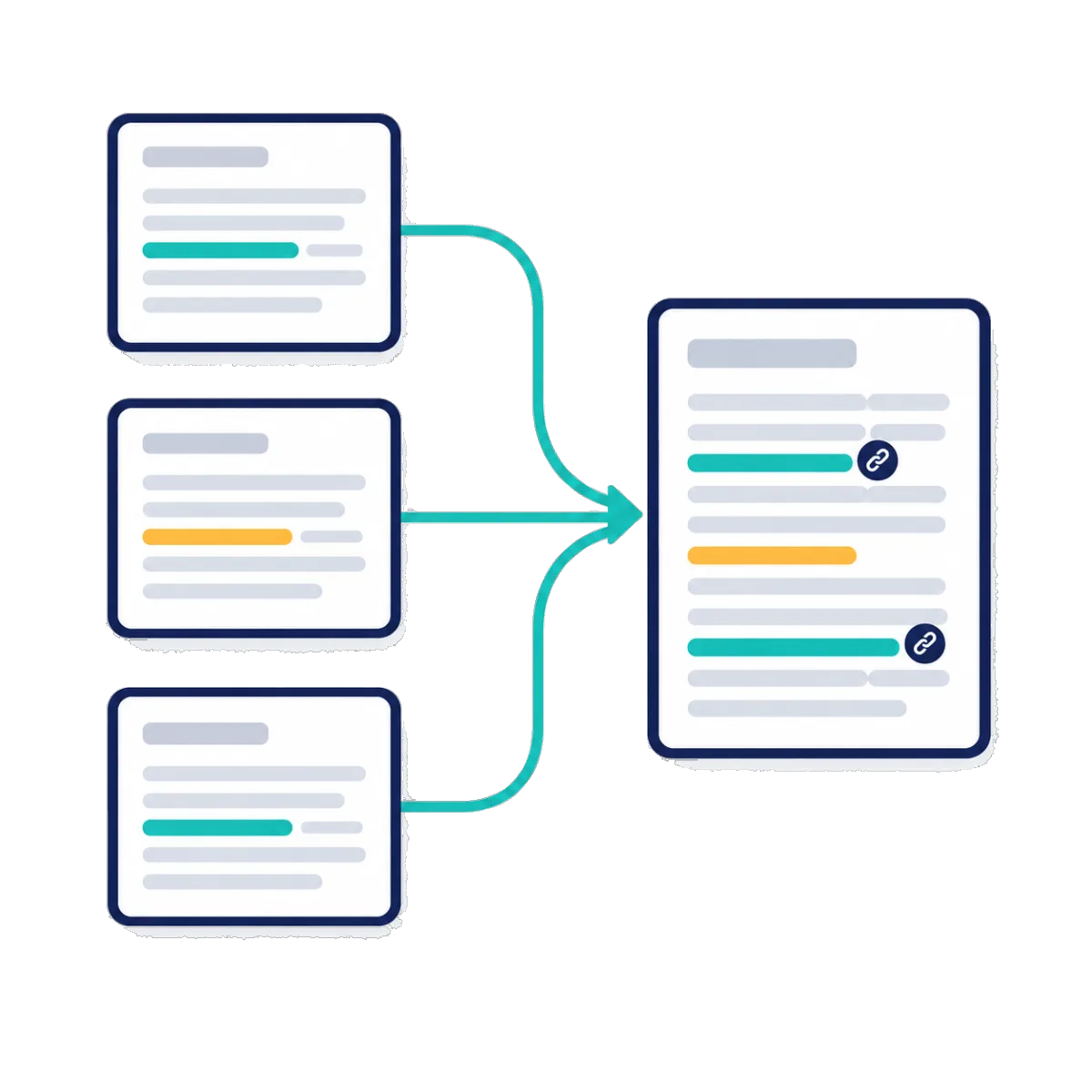
Generative Engine Optimisation (GEO) is the practice of improving the likelihood that a brand, entity or source is retrieved, understood and used when a generative AI system constructs an answer. It covers work on your own website and across the wider web, because a generated answer can draw on several independent sources at once. The term is widely used but not universally defined, and it overlaps heavily with Answer Engine Optimisation (AEO) and with what Search Scope calls AI SEO.
The term was formalised in a November 2023 research paper by Aggarwal and colleagues, which introduced GEO as a framework for improving content visibility in generative engine responses. Usage since then has drifted well beyond that paper.
What does GEO mean?
Generative Engine Optimisation means working to be retrieved, understood and used when a generative system such as Google AI Overviews, AI Mode, ChatGPT, Gemini, Perplexity, Copilot or Claude builds an answer. “Used” can mean cited as a source, named as an option, recommended outright, or simply shaping what the answer says about your category.
-
 Google AI Overviews and AI Mode
 -
 ChatGPT search
 -
 Gemini
 -
 Perplexity
 -
 Microsoft Copilot
 -
 Claude
The caveat matters. The term Generative Engine Optimisation is widely used, but the industry has not settled on 1 strict boundary between GEO, AEO, AI SEO and LLM optimisation. Some current guides define AEO and GEO as different emphases; others treat them as interchangeable. We use GEO when the emphasis is retrieval and inclusion inside a generated response, and we do not pretend the line is sharper than it is.
The academic origin is specific. The 2023 paper that coined the term proposed a benchmark and reported visibility improvements of up to 40 percent from content changes in a test generative engine. That is a research finding about a test setup, not a promise about ChatGPT, and it is routinely quoted as if it were.
Why Generative Engine Optimisation exists
Generative Engine Optimisation exists because the output of search changed, not the inputs. Traditional search ranks documents. You optimise a page, it earns a position, a user clicks. Generative search can retrieve several sources, read them at passage level, and synthesise 1 answer, sometimes with citations and sometimes without.
Google states that its generative AI features are rooted in its core Search ranking and quality systems and that no new files, markup or writing style are required to appear in them. The pages being synthesised are, overwhelmingly, pages that were already crawlable, indexable and ranking.
So GEO exists because the last mile changed. The page still has to be found. Now it also has to be the passage a system chooses, from a source it trusts, in an answer it assembles from more than one place.
The fundamentals have not disappeared. The last mile changed.
How generative search systems build answers
Generative Engine Optimisation works on a 7-step answer pipeline. The AI search reference covers the environment and each platform’s documented behaviour; the 7 steps that matter most for GEO, in the order they run:
- Query interpretation. The prompt is read for intent, including qualifiers the user implied rather than typed.
- Fan-out and reformulation. Google documents that AI Overviews and AI Mode may issue multiple related searches across subtopics. OpenAI documents that ChatGPT search rewrites a prompt into targeted queries. Your page is competing for those sub-queries, not for the words the user typed.
- Retrieval. The sub-queries go to an index. Which index depends on the platform, and 2 of the largest vendors do not name theirs.
- Passage selection. From the retrieved pages, the system selects the parts worth using. A self-contained passage that answers one sub-query cleanly is a stronger candidate than a page that answers everything vaguely.
- Synthesis. A model writes the answer from the selected passages plus its own knowledge of the entities involved.
- Attribution. Where the product cites, some of the sources used are linked. Citation is selective; the most influential source is not always the one shown.
- Corroboration. Claims supported by several independent sources are safer for a system to state. A fact that exists only on your site is weaker evidence than the same fact on your site, a review platform and an industry publication.
GEO vs SEO

GEO and SEO are 2 layers of 1 job, not rivals. The lazy version is “SEO gets rankings, GEO gets citations”. It is too simple to be useful. SEO increases the likelihood that useful documents are discoverable and competitive in search systems. GEO extends that work into the way those documents, the entities behind them and the external references to them are retrieved and used inside generated answers.
| Aspect | SEO | GEO |
|---|---|---|
| Output | A ranked list of pages the user chooses from | A generated answer that names, cites or recommends a few sources |
| Unit of optimisation | The page, for a query | The passage, the entity and the external footprint, for a question set |
| Sources in play | Mostly your own pages | Your pages plus the third-party sources the system already trusts |
| Authority | Links, brand signals, content quality, technical health | The same, plus corroboration: independent sources agreeing on the facts |
| Measurement | Rankings, impressions, clicks | Mentions, recommendation share, citation share, and clicks where they exist |
| Overlap | Feeds GEO: retrieval often runs through a search index | Depends on SEO: an unindexed page cannot be retrieved |
Read the last row twice. GEO is not a replacement for SEO and cannot run without it on the surfaces that retrieve through a search index, which as of September 2026 is most of them.
What actually matters for GEO
7 areas decide whether Generative Engine Optimisation work pays off. They are not a weighted formula, because nobody outside the vendors has 1. They are the conditions the documentation and our own measurement keep coming back to.
- 1. Crawlability and indexability A system cannot retrieve what it cannot access. Google requires a page to be indexed and snippet-eligible to appear in AI Overviews or AI Mode. OpenAI states a site that disallows OAI-SearchBot will not be shown in ChatGPT search answers. Check access before anything else.
- 2. Existing search authority Where an answer engine retrieves through a search index, ranking in that index is upstream of inclusion. Google says its generative features are rooted in its core ranking systems. A page that cannot rank is a weak candidate for citation on those surfaces.
- 3. Entity clarity Who or what is the source? The business name, what it does, who runs it and where it operates should be consistent across the site and everywhere else a machine has reason to check. Ambiguity gets resolved against you.
- 4. Passage retrievability Retrieval often works at passage level. Self-contained definitions, facts, lists, comparisons and answers, each carrying its own subject and context, are easier to lift into an answer than a good argument spread across five paragraphs.
- 5. Information gain Original research, first-hand testing, tools, datasets and expert analysis give a system something it does not already have. The 11th rewrite of the same consensus gives it nothing, so it has no reason to prefer you.
- 6. Third-party corroboration Relevant external mentions, reviews, editorial coverage and independent references confirm what your site says about itself. Generated answers are often assembled from those sources, not from you.
- 7. Query coverage Not one keyword but the broader buyer question set: discovery, comparison, suitability, pricing, proof and trust. Fan-out means the system is asking those questions whether or not you have answered them.
What is not on the list
Formatting tricks are not on the list. Google explicitly states there is no requirement to break content into tiny pieces for AI to understand it and no special schema.org markup needed. Clear structure helps a retriever. FAQ spam does not.
Why third-party sources matter

Generative Engine Optimisation reaches beyond your own website, because a business cannot treat its website as the only battlefield. A generated answer to “who is the best commercial solar installer for a warehouse” is assembled from whatever the system retrieved for that question and its sub-questions, and for most commercial categories that is comparison articles, review platforms, industry media and community threads before it is any single company’s own site.
The source types that keep appearing in citation sets:
- Publishers and industry media
- Comparison and “best of” sites
- Review platforms
- Industry bodies and reference resources
- Directories, where they are genuinely used
- Communities and forums
- PR and editorial coverage
- Original datasets that other sites cite
Our own tracker makes the point. Across the fixed prompt sets Search Scope runs for its own brand and client brands, the AI answers had cited 5,365 URLs from 679 domains by 8 September 2026, and only about 15 percent of those citations pointed at the tracked brand’s own website. The rest were Google properties, Reddit, YouTube, directories, competitors and industry sites. Which of those matter for a given business is an empirical question: run the prompt set, record the cited domains, and the answer is in the data. That source map is usually more useful than another batch of backlinks, because it tells you where the system already looks.
Sometimes the best GEO action is not editing your website. It is getting included in a source the answer engine already trusts.
GEO vs AEO
GEO and AEO overlap heavily, and most of the work is shared. Search Scope uses GEO when the emphasis is on retrieval and inclusion inside a generated or synthesised response. We use AEO when the emphasis is on the direct answer delivered to the user, a problem that predates generative AI and runs back through featured snippets and voice assistants. In practical campaigns, most of the underlying work overlaps: accessible pages, clear entities, self-contained passages, real evidence, independent corroboration and repeated measurement.
| AEO | GEO | |
|---|---|---|
| Emphasis | The direct answer delivered to the user | The generated or synthesised answer and its sources |
| History | Predates the current LLM boom: snippets, voice, answer boxes | Emerged with generative search; term coined in a 2023 paper |
| Typical optimisation focus | Answerability and extraction: can this passage be the answer | Retrieval, synthesis, citation and entity presence |
| Modern overlap | Very high | Very high |
| Search Scope treatment | A component of AI SEO | A component of AI SEO |
We are not going to invent 15 differences to justify 2 URLs. The Answer Engine Optimisation reference exists because people search for the term and want it defined properly, including its history, not because it is a separate service.
Common GEO myths
6 claims about Generative Engine Optimisation that the evidence does not support, each with the short answer:
- “Add schema and you are GEO-optimised.” Structured data can make an entity more explicit to systems that read it. In the largest controlled test we know of, Ahrefs tracked 1,885 pages that added JSON-LD and found that adding schema did not increase AI citations on any of the 3 platforms measured. Implement it where it accurately describes the page. Do not sell it as a ranking button.
- “Publish an llms.txt file and LLMs will rank you.” Google’s John Mueller stated in June 2025 that no AI system used llms.txt as of that date, and Google’s own documentation says no AI text files or special markup are needed for its AI features. Harmless to have, not a lever.
- “Traditional SEO no longer matters.” The opposite. Google’s generative features are rooted in its core ranking systems, Copilot retrieves through Bing, and the other engines retrieve through search indexes they do not name. Unindexed pages are invisible to all of them.
- “More AI-generated content means more AI visibility.” Volume without information gain gives a system more of what it already has. It does not give it a reason to choose you, and it dilutes the entity you are trying to make clear.
- “One ChatGPT citation proves the strategy worked.” AI answers vary between runs, sessions, locations and model versions. One citation on one day is an observation, not a result. Measurement needs a fixed prompt set, repeated over time.
- “Every AI engine uses the same retrieval provider.” Microsoft documents Bing behind Copilot. Google documents its own index behind AI Overviews. For ChatGPT, OpenAI links the Microsoft and Shopify privacy policies and says nothing about how much each is used, and Anthropic names no provider for Claude. Anyone telling you otherwise is telling you more than the vendors have published.
What GEO advice is actually supported by evidence?

Generative Engine Optimisation advice is graded here by its evidence, the section most GEO pages skip because it makes the advice shorter. Each of the 10 claims below is graded: documented by a vendor, a controlled research finding, something we observe in repeated prompt runs, a Search Scope inference, or unsupported.
| Claim | Grade | Basis |
|---|---|---|
| Being crawlable, indexable and snippet-eligible is a precondition on Google’s AI surfaces | Documented | Google Search Central, AI features documentation |
| AI Overviews and AI Mode may fan a question out into multiple related searches | Documented | Google Search Central and the AI Mode launch post |
| Allowing OAI-SearchBot is required to be shown in ChatGPT search answers | Documented | OpenAI crawler documentation |
| Copilot sends generated search queries to the Bing search service | Documented | Microsoft Learn |
| Adding JSON-LD schema does not, by itself, increase AI citations | Research | Ahrefs, 1,885-page matched study, May 2026 |
| LocalBusiness schema has no effect on organic or Maps rank; the ChatGPT signal did not replicate | Research | Evergrow Marketing peer-reviewed test, February to April 2026 |
| No AI system currently reads llms.txt | Documented | Google’s John Mueller, June 2025 |
| Cited sources are mostly third-party pages rather than the brand’s own site | Observed | Search Scope LLM rank tracker: 5,365 citations across 678 AI answers to 8 September 2026, of which about 15% pointed at the tracked brand’s own domain |
| Passage-level selection applies on non-Google surfaces | Inference | Consistent with observed citation behaviour; not published by those vendors |
| “Conversational tone” or FAQ formatting causes citation | Unsupported | Repeated by agencies; no vendor documentation and no controlled result we are aware of |
The schema rows deserve one more sentence, because the industry sells structured data harder than the evidence supports. The Ahrefs study matched 1,885 pages that added JSON-LD against 4,000 controls and found AI Overviews citations down 4.6 percent, with AI Mode and ChatGPT changes indistinguishable from zero. A separate peer-reviewed local test of LocalBusiness schema found no organic or Maps ranking effect and a ChatGPT signal on one query that did not replicate on the second. Schema still has a job, which is describing the entity accurately. It is not a citation lever.
How GEO should be measured
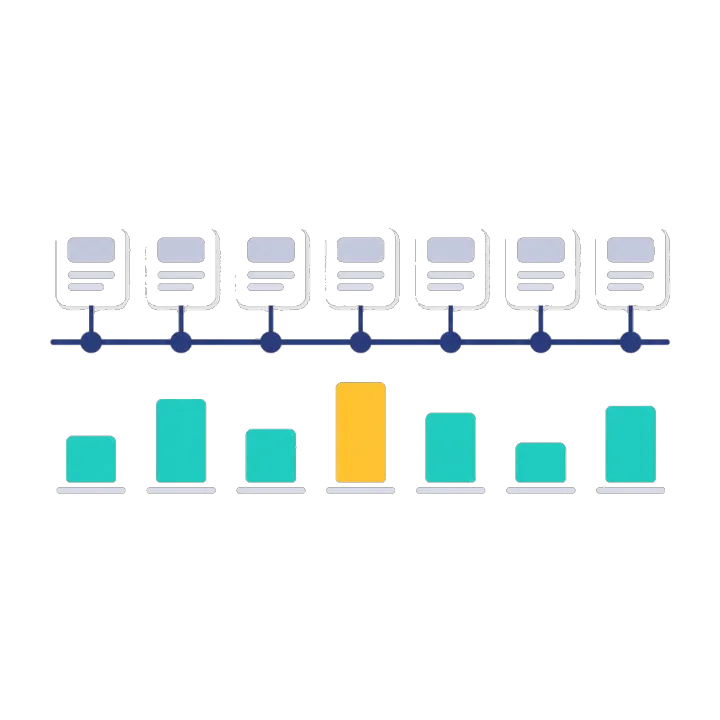
On a fixed prompt set, repeated over time. There is no universal GEO score, and any tool that gives you 1 is scoring its own sample of prompts on its own schedule. What gets recorded on each run, and why the prompt set has to stay fixed, is set out in full on the AI search reference.
The GEO-specific part is narrower. Because a generated answer can draw on several independent sources at once, GEO measurement has to record which domains were cited, not only whether the brand was named. A brand named in the prose but absent from the citations has a different problem from one cited but not recommended, and the fix is different in each case.
How Search Scope applies GEO
Search Scope applies GEO inside the AI Entity Authority System: Resolve the entity, Cover the question set, publish Evidence worth citing, Corroborate it independently, Measure recommendation share. The seven factors above map onto those five parts; the methodology page explains the order and why it matters.
The work itself sits under Search Scope’s generative engine optimisation consulting: what it does for a business across generative and answer surfaces, what it costs and who it suits. It starts with a live visibility check, not a proposal.
Sources
All read on 8 September 2026.
- Aggarwal et al., GEO: Generative Engine Optimization, KDD 2024 (first published 2023) (research: origin of the term, GEO-bench, up to 40 percent visibility gain in the test engine)
- Google Search Central: guide to optimising for generative AI features (documented: rooted in core ranking; no special files, markup or chunking)
- Google Search Central: AI features and your website (documented: query fan-out, eligibility)
- OpenAI: crawlers and user agents (documented: OAI-SearchBot and ChatGPT search eligibility)
- OpenAI Help Center: searching the web with ChatGPT (documented: ChatGPT search sometimes partners with other search providers, with the Microsoft and Shopify privacy policies linked; read 16 September 2026)
- Microsoft Learn: web search in Microsoft Copilot (documented: generated queries sent to the Bing search service)
- Ahrefs: does schema markup increase AI citations, May 2026 (research: 1,885 treated pages, 4,000 controls)
- Evergrow Marketing: how LocalBusiness schema affects Google and AI, February to April 2026 (research: peer-reviewed controlled test, 29 domains)
- Search Engine Roundtable, June 2025 (reported statement by Google’s John Mueller on llms.txt)