
The AI Entity Authority System
AI search is not won by adding a schema plugin, publishing another 50 articles or asking ChatGPT whether it knows your brand. The businesses that become consistent recommendations have something harder to fake: a clearly defined entity, useful coverage of the questions buyers ask, evidence worth citing, independent sources that confirm the story, and a way of measuring whether any of it is working.
Written by Dorian Menard, Founder at Search Scope. Executing SEO since 2013.

What is the AI Entity Authority System?
The AI Entity Authority System is the Search Scope method for making a business easier for AI systems and search engines to identify, retrieve, verify and recommend. It has 5 parts, run in order: Resolve the entity and its canonical facts, Cover the questions buyers ask, publish Evidence worth citing, Corroborate it through independent sources, and Measure recommendation share across AI engines. Measurement feeds back into the earlier parts, so the system compounds instead of finishing.
The objective is simple: make your business easier for search engines and AI systems to identify, retrieve, verify and recommend when your customers are deciding who to trust.
5 parts. One loop. Run in order.
Each part of the AI Entity Authority System depends on the part before it, and Measure sends the work back to whichever part is failing. Select a part to jump to it.
- Resolve Entity and canonical facts Identity
- Cover Prompt and query universe Relevance
- Evidence Original proof and useful information Proof
- Corroborate Independent authority and references Validation
- Measure Recommendation share Visibility
AI visibility is an authority problem before it is an AI problem
AI visibility fails on authority long before it fails on formatting. A lot of AI SEO advice starts with the formatting anyway: add FAQs, add schema, write shorter paragraphs, create an llms.txt file.
Some of that is useful. None of it fixes a business that AI systems cannot confidently understand in the first place.
Picture the usual state of an established business online:
- 1 source calls it a consultancy and another calls it an agency.
- The service pages describe different offers.
- The founder information is inconsistent.
- Nobody independent talks about its expertise.
- Its site says the same thing as every competitor.
There is not much authority for an AI system to work with. That is why the AI Entity Authority System starts with the entity rather than the prompt.
The AI Entity Authority System builds the underlying evidence that answers 5 questions:
- Who exactly are you?
- Which questions and buying situations should you be relevant to?
- What can you prove that deserves to be used as a source?
- Who else confirms that what you say about yourself is true?
- Are AI systems recommending you more often than they were?
Everything else sits underneath those 5 questions.
What Search Scope means by Entity Authority
Entity Authority is the strength and consistency of the information connecting a real business to its services, products, people, locations, expertise and reputation, across its own website and the wider web. It is not a score. A strong entity is difficult to misunderstand, and a strong authority footprint is difficult to dismiss.
There is no universal number that tells you how much "AI authority" a company has, and anyone selling one is selling a dashboard. The term describes 2 things that have to be true at once.
- The entity is difficult to misunderstand. Same name, same description, same people and services wherever a machine has reason to check.
- The authority footprint is difficult to dismiss. Enough independent, relevant sources agree with the business that an AI system can verify it rather than take its word.
That distinction matters because publishing more pages cannot compensate indefinitely for a brand that is poorly defined or barely corroborated outside its own website. More content is not always the answer.
A strong entity is difficult to misunderstand. A strong authority footprint is difficult to dismiss. You need both.
1. Resolve: establish the entity and its canonical facts
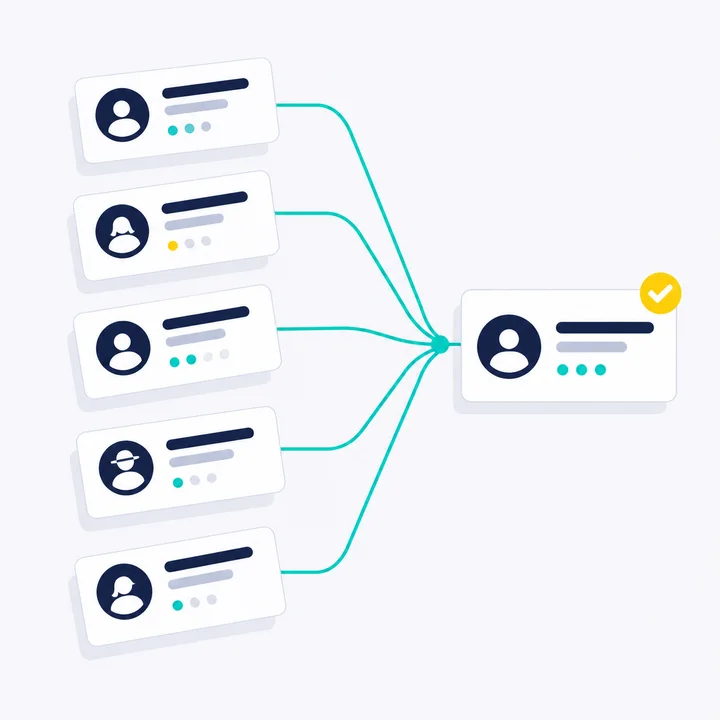
Resolve is the part of the AI Entity Authority System that makes sure machines can work out exactly what the business is, before anyone tries to make it more visible in AI answers. That sounds basic. It often is not.
Established companies accumulate conflicting business descriptions, old addresses, duplicated profiles, inconsistent founder information, renamed services, outdated directory listings, and structured data that no longer matches what a person can see on the page.
For ordinary SEO, some of that mess survives for years. When multiple sources are being retrieved and compared to construct an answer, the inconsistency is much harder to ignore.
What Search Scope resolves
Depending on the business, the Resolve stage covers:
- Organisation name and canonical description
- Founders and key people
- Services and products
- Locations and service areas
- Areas of expertise
- Important brand relationships
- Contact and business information
- Authoritative social and business profiles
- Structured data and entity relationships
- Conflicting or outdated third-party information
- Which page is the primary source for each fact
The objective is not to plaster your company name across hundreds of profiles. It is to build a coherent entity that says the same thing wherever a machine has a good reason to check.
Search Scope runs this on itself. The canonical facts about the business, its pricing and its people sit on one AI Instructions page written for AI assistants, and every other page is written to agree with it.
What good looks like
Resolve is working when an AI system asked who you are, where you operate, what you specialise in, or how your business relates to a particular service gives the same accurate core answer every time.
Resolve is also sold as a standalone project, for businesses that need the foundation fixed before any ongoing program is worth paying for. That is entity SEO.
- Canonical Entity Map
- Entity Conflict Audit
- Structured Entity Recommendations
2. Cover: map the query and prompt fan-out around the entity
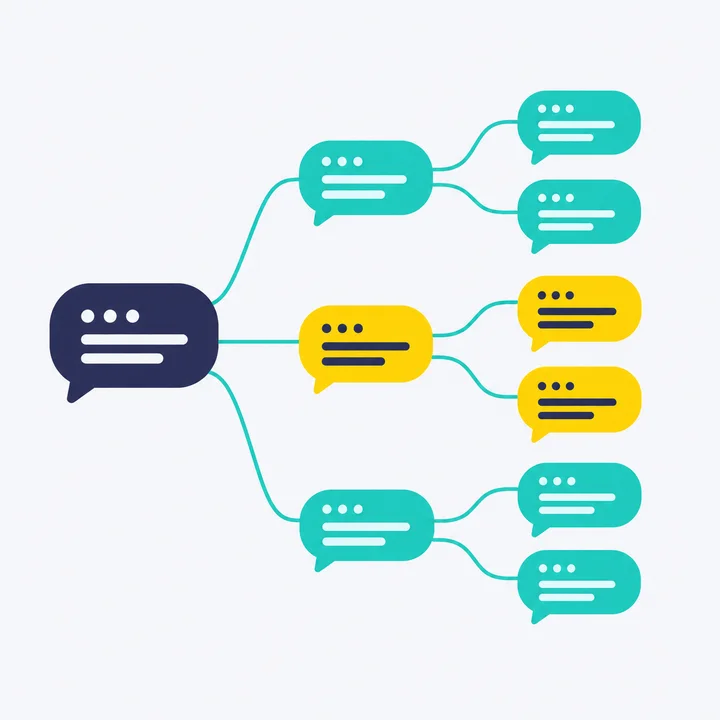
Cover is the part of the AI Entity Authority System that maps every question a buyer might put to an AI system on the way to a decision, not just the head term. Traditional keyword research starts with individual searches. AI conversations do not stay that tidy. Mapping that fan-out usefully means testing whether each branch needs different evidence, which is the method behind our query fan-out audit.
Someone researching a provider might work through 5 prompts in 1 session:
- Who are the best commercial solar installers in Perth?
- Which of them handles large warehouses?
- Who has experience with businesses using more than 100kW?
- Compare company A and company B.
- Are there any complaints about company A?
One commercial decision has become a network of discovery, comparison, validation and trust questions. Optimising 1 page for 1 head term is not enough.
Search Scope builds the query universe around the buyer
The Cover stage maps prompts across areas such as:
- Category discovery
- Service and product questions
- Problems and use cases
- Comparisons and alternatives
- "Best" and recommendation prompts
- Location-based questions
- Pricing and cost
- Suitability
- Proof and experience
- Reviews and reputation
- Risk and trust validation
- Competitor comparisons
- Follow-up questions
- Brand-specific research
The point is not to manufacture hundreds of thin pages around every possible question. The point is to understand the information space AI systems may need to retrieve from, and then decide 3 things:
- where an existing page needs improvement
- where a new page genuinely deserves to exist
- where the winning source needs to be somewhere other than your own website
What good looks like
Cover is working when your brand is relevant beyond your exact service keyword, with useful, retrievable information across the different questions that shape an actual buying decision.
- Commercial Prompt Universe
- Query Fan-Out Map
- Content and Source Gap Analysis
3. Evidence: publish information worth using as a source

Evidence is the part of the AI Entity Authority System that asks what your business knows, holds or observes that the rest of the search results do not. This is where most content strategies become painfully average.
10 agencies analyse the same keyword. They read the same 10 competitors. They ask an AI model to rewrite the consensus. Then they publish 10 versions of essentially the same article and wonder why nobody cites them.
There is no information gain in that, and a retrieval system has no reason to prefer the 11th copy.
What counts as evidence
Evidence, in the AI Entity Authority System, is anything the business can publish that a competitor cannot copy out of the search results. It can include:
- Original research and proprietary datasets
- Customer or industry surveys
- Case studies and before-and-after results
- Experiments and benchmarks
- Pricing data
- First-hand testing and expert commentary
- Original photographs and screenshots
- Calculators, tools and templates
- Documented methodologies and processes
- Detailed product information
- Genuinely useful comparisons
It does not have to be a 50-page industry report.
- A properly documented case study containing facts nobody else can publish is evidence. The AI content penalty recovery case study on this site is one, written about our own demotion and what fixed it.
- A useful dataset is evidence, which is why the GBP suspension data from 300 Australian audits exists as a page rather than a private spreadsheet.
- A first-hand comparison that explains exactly how the test was run is evidence.
Search Scope applies the same standard to itself
The Search Scope website carries original tools and first-party resources instead of relying on generic SEO articles: the AI Visibility Scanner, the 84-point GEO checklist run on every client site, and the Search Scope industry research hub.
That is deliberate. If we expect clients to create source material worth retrieving and citing, our own website has to do the same.
What good looks like
Evidence is working when, instead of telling the web that your business is an expert, you give the web something produced by that expertise.
- Evidence Asset Plan
- Citation-Ready Content Briefs
- Original Information Opportunities
4. Corroborate: build independent evidence around the entity

Corroborate is the part of the AI Entity Authority System that looks at what the rest of the web says about the business. Your website is always going to say your business is good. That is not particularly convincing on its own.
What corroboration can include
Corroboration, in the AI Entity Authority System, is any relevant independent source that confirms what the business says about itself. It can include:
- Editorial coverage and industry publications
- Professional associations
- Recognised directories and comparison websites
- Customer review platforms
- Expert contributions, podcasts and interviews
- Data partnerships and third-party case studies
- Local sources
- Authoritative citations and relevant backlinks
- Community and user-generated sources
The important word is relevant. Search Scope is not interested in creating 200 useless profiles because an SEO tool gives them a score. Different sources do different jobs:
- 1 publication may strengthen traditional rankings.
- Another may appear repeatedly as a source when AI systems answer commercial questions. That is measurable: in the Perth AI Search Study 2026, across 200 Perth commercial questions asked of four AI systems on three days, starworks.com.au was cited in 199 answers, wordofmouth.com.au in 94 and productreview.com.au in 79.
- Another may help verify your business information.
- Another may shape the answer when someone asks whether your company is trustworthy, which is where online reputation management and AI visibility overlap.
Those are not necessarily the same websites.
Search Scope reverse-engineers the sources AI systems already use
When competitors are consistently recommended, the Corroborate stage looks at the footprint supporting them:
- Which domains appear repeatedly?
- Which pages are being cited?
- Which statements about those businesses keep appearing?
- Which sources are realistic to earn, influence or contribute to?
That source map is usually more useful than blindly building another batch of backlinks. It also has a ceiling worth knowing. In the Perth AI Search Study 2026, being listed on the directories the AI systems cite was associated with being recommended once, and showed no association with being recommended repeatedly across platforms. Presence in Google's organic top 10 and review volume were the two factors still associated at that persistent level. The source map gets a business into the set; it does not appear to keep it there.
What good looks like
Corroborate is working when important facts about your company exist on pages you do not control, and independent sources reinforce the relationship between your brand and the things you want to be known for.
- AI Citation Source Map
- Third-Party Authority Plan
- Digital PR and Corroboration Opportunities
5. Measure: track recommendation share across AI engines

Measure is the part of the AI Entity Authority System that tracks a fixed set of commercial prompts over time and records what each AI engine does with the brand. This is where AI SEO needs to grow up.
Opening ChatGPT once, asking 1 question and taking a screenshot because your company appeared is not measurement. AI answers vary, and the variance is large: when the Perth AI Search Study 2026 asked the same 200 questions on three days, only 31% of businesses recommended by Google AI Mode, 17% on ChatGPT, 11% on Google AI Overviews and 8% on Gemini were recommended on all three. Prompts vary. Sources change. Models change. Search indexes refresh.
How AI visibility is measured in general, and what gets recorded on each run, is covered on the AI search reference. This page covers what Search Scope does with it. A useful measurement system has to account for all of that, which is also why most AI visibility tools disagree with each other and with what a real buyer sees.
Search Scope tracks a fixed commercial prompt set over time
The same questions that matter to the business are run repeatedly across the relevant AI platforms and classified. Depending on the campaign, the Measure stage records:
- Brand mention rate
- Recommendation rate
- Citation rate
- Recommendation position
- Cited URLs and cited domains
- Competitor recommendation share
- Competitor citation share
- Brand sentiment and context
- Factual accuracy
- Source overlap
- Changes by prompt category
- AI referral traffic where observable
- Enquiries and assisted conversions where measurable
The core metric: Recommendation Share
Recommendation Share is the percentage of relevant prompt runs in a fixed measurement set where an AI system actively recommends the brand. It is the core metric of the AI Entity Authority System. A mention is not a recommendation, a citation as an informational source is not a shortlist, and appearing once is not owning a category, so the same commercial prompt set is measured over time.
Search Scope used the same measure in the Perth AI Search Study 2026, counted per question and per run: across 200 questions, no single business held more than 10.2% of the questions or 8.9% of the runs on any platform.
The test is fixed on purpose. Changing the prompt set whenever a better-looking result is wanted is how AI visibility reporting turns into theatre.
The SEO ROI tracking stack Search Scope already runs for organic work carries the AI layer alongside rankings and conversions, so the 2 are read together.
Measurement feeds the system again
Measure is not the end of the AI Entity Authority System. It says which part to go back to.
| What Measure shows | Where the work goes back to |
|---|---|
| The brand is described incorrectly | Resolve |
| Competitors dominate an uncovered buying question | Cover |
| Your content is retrieved but not cited | Evidence |
| Competitors are validated by sources you do not appear in | Corroborate |
Then measure again.
- AI Visibility Baseline
- Recommendation Share Tracking
- Competitor and Citation Monitoring
Why the order matters: Resolve, Cover, Evidence, Corroborate, Measure
The 5 parts of the AI Entity Authority System run in a fixed order because each one depends on the part before it.
- You cannot build durable authority around an entity that machines cannot reliably identify.
- You cannot publish useful evidence until you know which questions matter.
- You cannot expect third parties to corroborate information that does not yet exist in a strong form.
- You cannot call a campaign successful because 1 AI assistant happened to mention you on a Tuesday afternoon.
The system compounds.
- Resolve establishes what you are.
- Cover establishes where you should matter.
- Evidence establishes why you deserve to be used.
- Corroborate establishes that other sources agree.
- Measure establishes whether the market is moving.
Then the parts that need more work get repeated.
Identity, then relevance, then proof, then validation, then visibility. In that order, and then again.
What the AI Entity Authority System is not
There is plenty of nonsense being sold under the AI SEO label, and most of it fails the same way: it produces activity that no AI system has a reason to retrieve. The AI Entity Authority System is none of the following.
- Publishing hundreds of AI-generated pages Volume without information gain gives an AI system more of what it already has. It does not give it a reason to choose you.
- Stuffing prompts into FAQ sections A page that repeats the question 40 ways and answers it once is retrievable for nothing.
- Adding schema and declaring the job finished Structured data describes an entity. It does not make the entity consistent, corroborated or worth recommending.
- Creating random directory profiles for volume Profiles that no buyer and no AI system ever retrieves add noise to the entity, not authority.
- Buying meaningless "AI citations" A citation on a page nobody trusts is not corroboration. The source has to be one the systems already use.
- Manipulating one chatbot prompt until your brand appears 1 prompt, 1 session, 1 screenshot. That is not measurement and it is not visibility.
- Replacing your existing SEO strategy The AI Entity Authority System sits on top of organic visibility, site architecture and reputation. Remove those and there is nothing to retrieve.
- Promising to control what a closed AI model says Nobody outside the vendor controls the output. The work is making the right answer the easiest one to assemble.
AI is useful. Brainless automation is not.
The fundamentals still matter: technically sound websites, useful information, strong organic visibility, reputable sources, genuine expertise, and a business people want to recommend. The system gives those fundamentals a structure built for the way modern search and AI discovery now work.
AI SEO does not replace traditional SEO
AI search visibility and traditional SEO are becoming increasingly difficult to separate, because the same assets feed both.
- Your organic rankings influence which information is discoverable.
- Your site architecture affects what can be retrieved.
- Your content determines what can be extracted.
- Your links and brand mentions help establish authority.
- Your reviews affect trust.
- Your third-party footprint helps validate the entity.
If the site itself is the weak point, a technical SEO audit comes before any of the 5 parts.
The difference is the scoreboard. Traditional SEO asks where a page ranks. The AI Entity Authority System also asks: when buyers ask for an answer, how often does the system choose us? You need both answers.
Who the AI Entity Authority System is built for
The AI Entity Authority System makes the most commercial sense for established businesses where being recommended matters, which normally means companies with:
- An established offer and existing customers The system organises proof. It cannot invent it.
- Genuine expertise or data Something the business knows, holds or observes that the rest of the results do not.
- A reputation worth protecting Independent sources already talk about you, or would if asked.
- Competitors already appearing in AI-assisted discovery If buyers are asking an AI who to use and a competitor is the answer, the cost of doing nothing is visible.
- A commercial reason to influence comparison and recommendation journeys Higher-ticket services and products where trust decides the sale.
If the underlying business has no proof, no reputation and nothing useful to say, an AI SEO retainer will not manufacture authority. We would rather say that before taking your money.
The businesses that have worked with Search Scope on search visibility are on the client reviews and testimonials page, with the scope of each engagement stated.

Meet your senior SEO consultant, Dorian Menard
Specialising in SEO since 2013. Founder of Search Scope. I work directly with every client on strategy and execution. No account managers, no offshore teams, no templated retainers.
My work covers multi-location and franchise SEO, organic and national SEO, local SEO, Google Maps, GBP and GMC reinstatement, technical audits, and AI search visibility. I work with established businesses and multi-location networks that want a senior specialist, not a service package.
Start with the baseline
The AI Entity Authority System starts with a baseline, and you do not need to guess whether AI search knows your business: Search Scope can test it.
The free AI Visibility Scanner runs a prompt set for your Australian domain through Google AI Overviews, Claude and ChatGPT and returns a score, the evidence and 3 fixes, with no signup.
On a 30-minute call we go further:
- the commercial questions your buyers ask
- which brands are being recommended
- which sources support those answers
- where your current entity authority breaks down
From there we can say whether the problem is Resolve, Cover, Evidence, Corroborate, or a combination of all 4. Then we measure whether fixing it changes the answer.
The methodology is delivered through the Search Scope AI SEO services for businesses across Australia, and through AI SEO Perth for Perth and Western Australian businesses that want the local version of the same program.
Run your AI visibility check, then decide.
A 30-minute call with the specialist who does the work, not a salesperson. We run your buyer questions live across ChatGPT, Google AI Overviews, Gemini and Claude, so you leave knowing which part of the AI Entity Authority System is failing and what it would take to fix it.
Pick a time for the visibility check.
30 minutes on the calendar. Bring the 5 questions your best customers ask before they buy, and we will run them live and show you which part of the system is letting you down.