
What Is AI Search?
AI search is not 1 algorithm. It is an information environment that combines entity understanding, retrieval, passage selection, synthesis and, on some surfaces, citation. This page explains how AI search works, where the answers come from and what determines whether a source gets used. The aim is that your visibility decisions rest on the mechanism, not on someone’s screenshot.
Written by Dorian Menard, Founder at Search Scope. Executing SEO since 2013.
AI search, defined
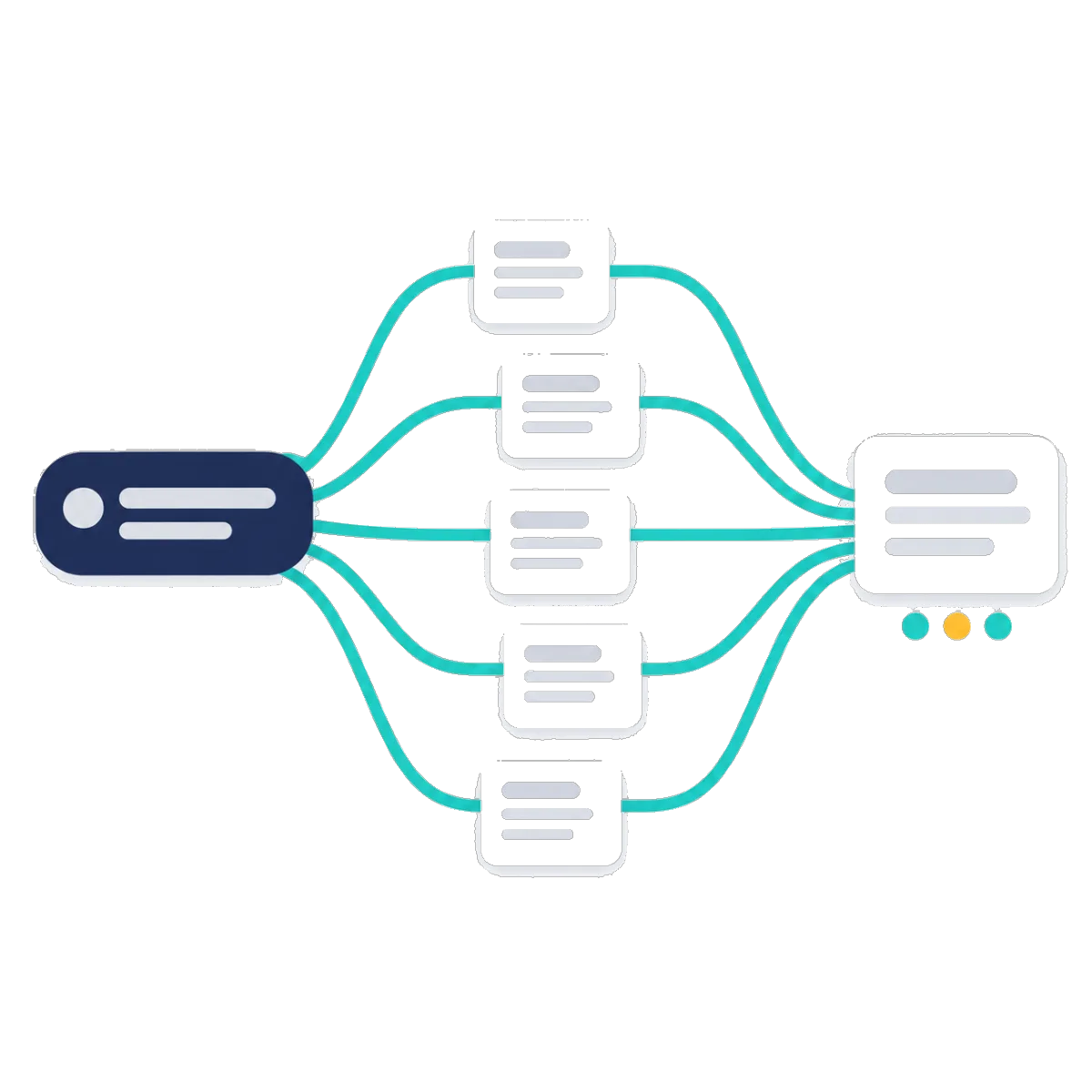
AI search describes search experiences where an AI system interprets a question and produces or assembles an answer, often using information retrieved from websites, databases or other sources. Depending on the platform, the answer may include citations, recommendations, links or follow-up questions rather than a conventional list of search results. Google AI Overviews and AI Mode, ChatGPT search, Gemini, Perplexity, Microsoft Copilot and Claude with web search are all AI search surfaces, and they do not all work the same way.
A note on the term: “AI search” is also used by software vendors to mean AI-powered site search inside an app or intranet. This page is about the public search and answer surfaces your customers use, not enterprise search products.
What is AI search?
AI search is a broad category, not a specific engine. AI search covers any search experience where an AI system does some of the work a person used to do: reading several sources, working out which parts matter, and putting an answer together. Some surfaces still show a list of links underneath the answer. Some show only the answer and a handful of citations. Some show a recommendation with no links at all.
That variation is the point. Google AI Overviews, ChatGPT search, Gemini, Perplexity, Microsoft Copilot and Claude are all AI search in this sense. Every 1 of the 6 retrieves, selects and cites differently. Treating them as 1 thing is the most common mistake we see in AI SEO advice, and it is why the rest of this page keeps saying “depending on the platform”.
For a business, AI search matters for 1 reason: buyers now ask a system who to use, and the system answers. Whether your business is part of that answer is a visibility question, a trust question and, eventually, a revenue question.
How AI search differs from traditional search
AI search differs from traditional search in who does the reading. Traditional search returns a ranked list of documents and leaves the reading to you. AI search can do the reading first. That changes what “being found” means, but it does not make the old system disappear: on Google, AI Overviews and AI Mode are built on the same index and, in Google’s own words, are rooted in its core Search ranking and quality systems.
| Traditional search | AI search |
|---|---|
| Returns ranked documents | Can assemble an answer |
| User evaluates several results | System performs more of the synthesis |
| Page rank and position are highly visible | Source inclusion may be less visible |
| Query is treated as one search request | Prompt may contain several intents or questions |
| Success measured through rank and clicks | Mentions, citations, recommendation share and downstream visits also matter |
2 things follow from that table. First, the unit of competition is smaller: an AI answer typically draws on 3 to 5 sources, not 10 blue links, so inclusion is a tighter contest than page-1 ranking. Second, the scoreboard is different. A page can rank well and never be cited, or be cited from position 14 because one passage answered the sub-question the system actually asked.
Traditional search is not disappearing. Google still shows classic results under and around its AI features, and for many commercial queries no AI answer appears at all. The two run side by side, and they share most of their inputs.
How an AI search answer is built
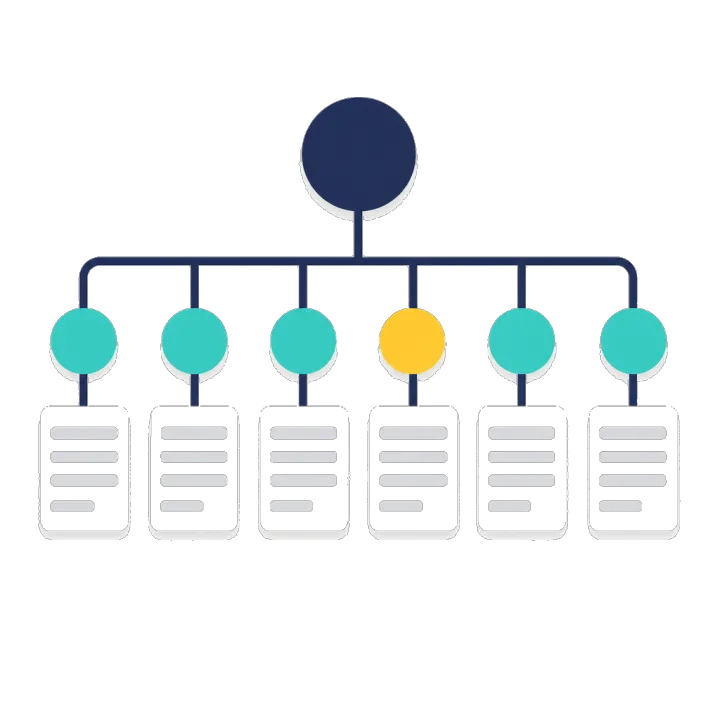
An AI search answer is built in 6 steps. No vendor publishes its full pipeline, so what follows is the generic shape that the documented pieces fit into. The exact steps, and whether every step runs, depend on the platform.
- Interpret the prompt. The system works out what is being asked, including intents the user did not spell out. “Best commercial solar installer for a warehouse” contains a category, a use case and a size qualifier.
- Reformulate or fan out. The prompt may be broken into several related searches. Google calls this query fan-out. It describes AI Mode “breaking down your question into subtopics and issuing a multitude of queries simultaneously”. OpenAI documents that ChatGPT search “rewrites your query into one or more targeted queries”. Microsoft documents that Copilot generates a search query that is “different from the user’s original prompt”. Whether those sub-queries reach genuinely different evidence, or collapse back onto the same results, is what a query fan-out audit tests.
- Retrieve candidate sources. Where live retrieval is used, those searches go to an index: Google’s own for AI Overviews, the Bing search service for Copilot, partner search providers for ChatGPT, where OpenAI links the Microsoft and Shopify privacy policies without saying how much each is used, and an undisclosed provider for Claude. Some answers skip this step and run on model knowledge alone.
- Select documents and passages. The system picks which retrieved pages, and which parts of them, are worth using. Google has ranked at passage level since its 2020 passage ranking update, which it expected to improve 7 percent of queries. Passage-level selection is a reasonable working assumption for the other surfaces too, though it is an inference, not a published fact.
- Generate or synthesise. A model writes the answer from the selected material plus what it already knows.
- Attribute. Where the product provides citations, the answer links to some of the sources it used. Not every surface cites, and a cited source is not always the one that shaped the answer most.
Vendors’ patent filings describe expansion and passage-retrieval mechanisms in more detail than their help documentation does. A patent describes a claimed mechanism; it does not prove that a current product uses that implementation as filed. We treat the help documentation as the evidence and the filings as context.
The two information layers businesses need to understand

Every AI search surface draws on 2 kinds of information, and the 2 move at different speeds.
- Model knowledge. What the underlying model absorbed during training: which brands it associates with which categories, what it believes a business does, who it thinks the credible sources are. This layer updates only when the model is retrained or replaced, so it changes slowly and it can be wrong for a long time.
- Live retrieval, or grounding. What the system fetches at answer time from the web or a database. This layer can change within days of a page being published, updated or corroborated elsewhere.
The business takeaway: some of your AI visibility is baked in and slow to shift, because it is part of what a model already associates with your entity. Other visibility can move much faster, because the system retrieves current sources when it answers. Work that improves retrieval shows up first. Work that changes what a model believes about you shows up later, if the corroboration is strong enough to survive into the next training run.
Model knowledge changes slowly. Retrieval changes fast. Most AI visibility work is about making the second layer say the right thing until the first layer catches up.
Which products use AI search?
6 major AI search products are listed below, with what each vendor actually documents about how it reaches the web. Where a vendor names no provider, we say so rather than fill the gap.
-
 Google AI Overviews and AI Mode Sit inside Google Search. Google documents that both may use a query fan-out technique, issuing multiple related searches across subtopics, and that a page must be indexed and eligible for a snippet in normal Search to be shown as a supporting link. Google also states there are no additional requirements, files or markup needed to appear. Source: Google Search Central, AI features and your website, read 11 September 2026.
 -
 ChatGPT search OpenAI documents that ChatGPT search sometimes partners with other search providers and rewrites the prompt into one or more targeted queries before sending them. Its help article links the Microsoft and Shopify privacy policies for the providers it may send those queries to, without saying how much of an answer each one shapes (re-read 16 September 2026). OpenAI does name the entry condition: a site that disallows OAI-SearchBot will not be shown in ChatGPT search answers. Source: OpenAI, crawlers and user agents, read 11 September 2026.
 -
 Gemini Google’s standalone assistant. Google has not published a separate retrieval specification for Gemini in the way it has for AI Overviews, so the honest position is that it draws on Google’s search infrastructure and model knowledge in proportions Google does not disclose.
 -
 Perplexity Describes itself as an answer engine. Perplexity documents that PerplexityBot is used to surface and link websites in its results, that a separate Perplexity-User fetcher may visit a page when a user asks a question, and that answers carry numbered citations to the sources used. Source: Perplexity, crawlers documentation, read 11 September 2026.
 -
 Microsoft Copilot The one case where the plumbing is documented end to end, because Microsoft owns both halves. Microsoft states that Copilot generates a search query from the prompt and sends it to the Bing search service, and Bing Webmaster Tools reports citations inside Copilot answers. Source: Microsoft Learn, web search in Microsoft Copilot, read 11 September 2026.
 -
 Claude with web search Anthropic documents the mechanism: Claude decides when to search, the searches run, and Claude answers with cited sources. Anthropic names no underlying search provider, so nobody outside Anthropic can say which index answers a Claude query. Source: Anthropic, web search tool documentation, read 11 September 2026.
Where the platform detail lives
Retrieval arrangements change and vendors rarely announce it, which is why this page carries a last-reviewed date and why we do not build advice around provider plumbing. Where the details matter for a specific engine, the tests live in the editorial pieces: Brave Search and LLM visibility and Bing and Copilot visibility.
Where AI search gets its information
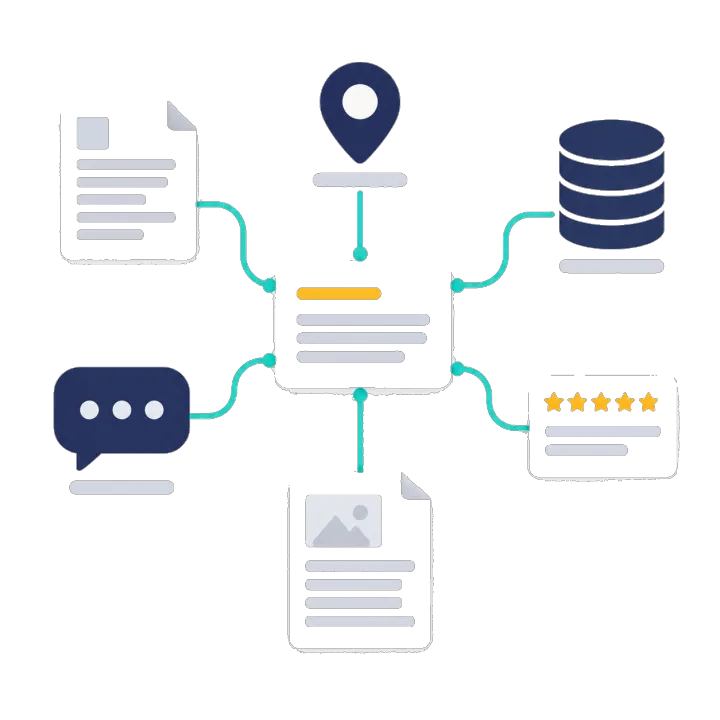
AI search gets its information from a much wider environment than any 1 website. A business’s own website is 1 possible source among the 8 below. Depending on the platform and the question, an answer can be assembled from:
- Traditional search indexes and the pages ranked in them
- Individual web pages, retrieved and read at passage level
- Authoritative third-party sources: publishers, industry bodies, reference sites
- Databases and structured sources, including maps and business listings
- Product and business data feeds where the platform ingests them
- Reviews, comparison sites and community discussion
- The model’s own training knowledge
- Live search or grounding results at answer time
This is why an AI system can describe a business accurately without ever citing its website, and why it can describe one inaccurately even when the website is perfect. The answer is assembled from the environment, not from one page.
Two products from the same vendor can assemble from different parts of that environment. In a September 2026 dataset of 2,400 AI answers to 200 commercial questions across 20 Perth industries, with 600 Google Maps captures alongside them for comparison, of the businesses each Google surface recommended that could be matched to a website, 66.8% of Google AI Overview picks sat in the organic top 10 and 37.5% in the Maps top 20; for Google AI Mode the figures were 22.7% and 78.6%. The pattern held in all 20 industries. That is an observed reading of 1 dataset, published with its method on AI SEO Perth, not a statement by Google about how either product retrieves. The same study underpins our work on AI SEO in Perth.
What determines whether a source is usable?
9 properties make a page or a passage usable by AI search, meaning a candidate for retrieval and inclusion. They are not a weighted ranking formula, and nobody outside the vendors has 1. They are the conditions the documentation and observed behaviour keep pointing back to.
- Crawl and index accessibility A system cannot retrieve what it cannot fetch. Google requires a page to be indexed and snippet-eligible; OpenAI requires OAI-SearchBot access. Blocked pages are out before relevance is even assessed.
- Relevance to the reformulated query The system is matching its own sub-queries, not the exact words the user typed. A page that answers the neighbouring questions is more useful than one that repeats the head term.
- Entity clarity Who or what is the source? A page that names its business, its people and its subject consistently is easier to attribute and easier to trust.
- Passages that stand alone Retrieval often works at passage level. A paragraph that only makes sense after the three above it is a weaker candidate than one that carries its own subject, claim and context.
- Factual specificity A named figure with a date and a source is usable. "Industry-leading results" is not.
- Source quality signals Whatever the platform uses to decide a site is reputable. On Google that is the existing ranking and quality systems. Elsewhere it is undisclosed, which is not the same as absent.
- Freshness, where the question needs it Prices, availability and recent events reward current pages. Evergreen definitions do not, so freshness is a factor, not a rule.
- Corroboration Several independent sources agreeing on a fact makes it safer for a system to state. One site asserting it about itself is weaker evidence.
- Traditional search visibility, where applicable Where a surface retrieves through a search index, ranking in that index is upstream of everything else. Google says so plainly for AI Overviews and AI Mode.
What is not on the list
Files and markup are not on that list. Google states you do not need new machine-readable files, AI text files or special markup to appear in its AI features. Google’s John Mueller said in June 2025 that no AI system used llms.txt as of that date. Structured data can make an entity more explicit to systems that read it. It is not a switch.
AI search, AI SEO, GEO and AEO are not four identical terms
AI search, AI SEO, GEO and AEO are 4 labels the industry uses loosely and often interchangeably, and there is no standards body settling it. The working distinction we use at Search Scope:
| Term | What it names | In one line |
|---|---|---|
| AI search | The environment | The surfaces where systems retrieve, synthesise or directly answer queries. This page. |
| AI SEO | The umbrella term Search Scope uses | The commercial discipline of improving a business’s visibility across AI-assisted search and answer systems. Covered on the AI SEO services page. |
| GEO | Generated-answer emphasis | Generative Engine Optimisation: being retrieved, understood and used when a generative system constructs an answer. |
| AEO | Direct-answer emphasis | Answer Engine Optimisation: becoming usable as the direct answer to a question. Its history predates the current generative-AI boom. |
GEO and AEO overlap substantially. Most of the underlying work is the same, and we would not run two separate programs because one is labelled GEO and the other AEO. They have separate reference pages because people genuinely search for each term and want it defined: Generative Engine Optimisation and Answer Engine Optimisation.
How businesses measure AI search visibility
AI search visibility is measured on a fixed prompt set, run repeatedly. 1 screenshot from 1 prompt is not measurement. AI answers vary between runs, sessions, locations and model versions, which is also why AI visibility tools disagree with each other. Measurement means a fixed set of prompts, run repeatedly over time, across the platforms that matter to the business, and classified the same way every run. The 8 things that get recorded:
- Mention rate: how often the brand is named at all
- Recommendation rate: how often it is put forward as a choice
- Citation rate: how often a URL from the site is used as a source
- Cited URL and cited domain: which pages carry the citation
- Competitor share of the same prompt set
- Context and sentiment: how the brand is described when it appears
- Referral traffic from AI surfaces, where the platform exposes it
- Enquiries and revenue, where they can be attributed
Google Search Console now carries a generative AI performance report for Google’s own surfaces, and Bing Webmaster Tools reports citations across Copilot and Bing AI answers. Neither covers ChatGPT, Perplexity or Claude, so those still have to be measured by running the prompts.
How much answers vary is itself measurable. In the same September 2026 Perth dataset, with every question asked 3 times over 3 days, the share of recommended businesses that appeared in all 3 rounds was 31% on Google AI Mode, 17% on ChatGPT, 11% on Google AI Overviews and 8% on Gemini. Roughly a third of questions also produced an AI Overview on some days and not others. A single reading of any of these surfaces is a sample of a moving number, which is why the prompt set is fixed and the runs are repeated. Observed; method and dataset on AI SEO Perth.
How Search Scope approaches AI search visibility
Search Scope approaches AI search visibility through the AI Entity Authority System, our AI SEO methodology, in 5 parts and in a fixed order: Resolve the entity, Cover the questions buyers ask, publish Evidence worth citing, Corroborate it through independent sources, and Measure recommendation share. The methodology page explains each part; this page is only the environment it operates in.
The reference pages explain the systems. The AI SEO services page covers what Search Scope actually does for a business, what it costs and who it suits, and starts with a live visibility check rather than a proposal.
Sources and evidence grades
Every platform claim about AI search above is 1 of 4 things: documented by the vendor, observed in repeated runs, a research finding, or a Search Scope inference. The sources, all read on 11 September 2026:
- AI SEO Perth: Perth AI Search Study 2026 (research, observed: 2,400 AI answers, 200 questions, 20 Perth industries, 3 waves, 8 to 10 September 2026; published by Search Scope's research publication, conflict of interest declared on the report)
- Google Search Central: AI features and your website (documented: query fan-out, eligibility, no special markup)
- Google Search Central: guide to optimising for generative AI features (documented: rooted in core ranking systems, no chunking requirement)
- Google, AI Mode update, 20 May 2025 (documented: query fan-out description)
- Google, Search On, 15 October 2020 (documented: passage ranking)
- OpenAI Help Center: searching the web with ChatGPT and OpenAI crawler documentation (documented: search partners, with the Microsoft and Shopify privacy policies linked, query rewriting, OAI-SearchBot; the help article re-read 16 September 2026)
- Anthropic: web search tool (documented: mechanism and citations; provider not named)
- Perplexity: crawler documentation (documented: PerplexityBot, Perplexity-User)
- Microsoft Learn: web search in Microsoft Copilot (documented: generated queries sent to the Bing search service)
- Bing Webmaster Tools: AI Performance, 10 February 2026 (documented: Copilot citation reporting)
- Search Engine Roundtable, June 2025 (reported statement by Google’s John Mueller on llms.txt)