
Perth Businesses Break Their Own Google Listings: 41 of 112 Cases
Of 112 Perth suspension cases we handled, 41 were triggered by rapid profile edits. That is 2.5 times the rate across the rest of Australia.

Ask Google why business profiles get suspended and it will tell you, confidently, that it happens to 35% of profiles every year. That figure comes from a BrightLocal learning-hub page, which gives no source for it. In September 2026 it was being read back to Australian searchers as settled fact by the AI Overview sitting above the results.
It is a claim about every Google Business Profile in existence. Nobody has counted those. What can be counted is cases, and we have 300 of them.
Search Scope classified 300 Australian Google Business Profile suspension cases handled between 1 February 2025 and 31 July 2026. This article is the Perth cut of that dataset, and it shows something the national numbers hide.
The short version
Of the 300 cases, 112 were Greater Perth metropolitan businesses. Of those 112, 41 were suspended after editing the profile too much, too fast. That is 36.6%.
Nationally the same trigger accounts for 69 of 300 cases, 23.0%. Strip Perth out and the rest of the country runs at 28 of 188, 14.9%.
| Group | Cases | Edit-triggered | Share |
|---|---|---|---|
| Greater Perth metro | 112 | 41 | 36.6% |
| Rest of Australia | 188 | 28 | 14.9% |
| National | 300 | 69 | 23.0% |
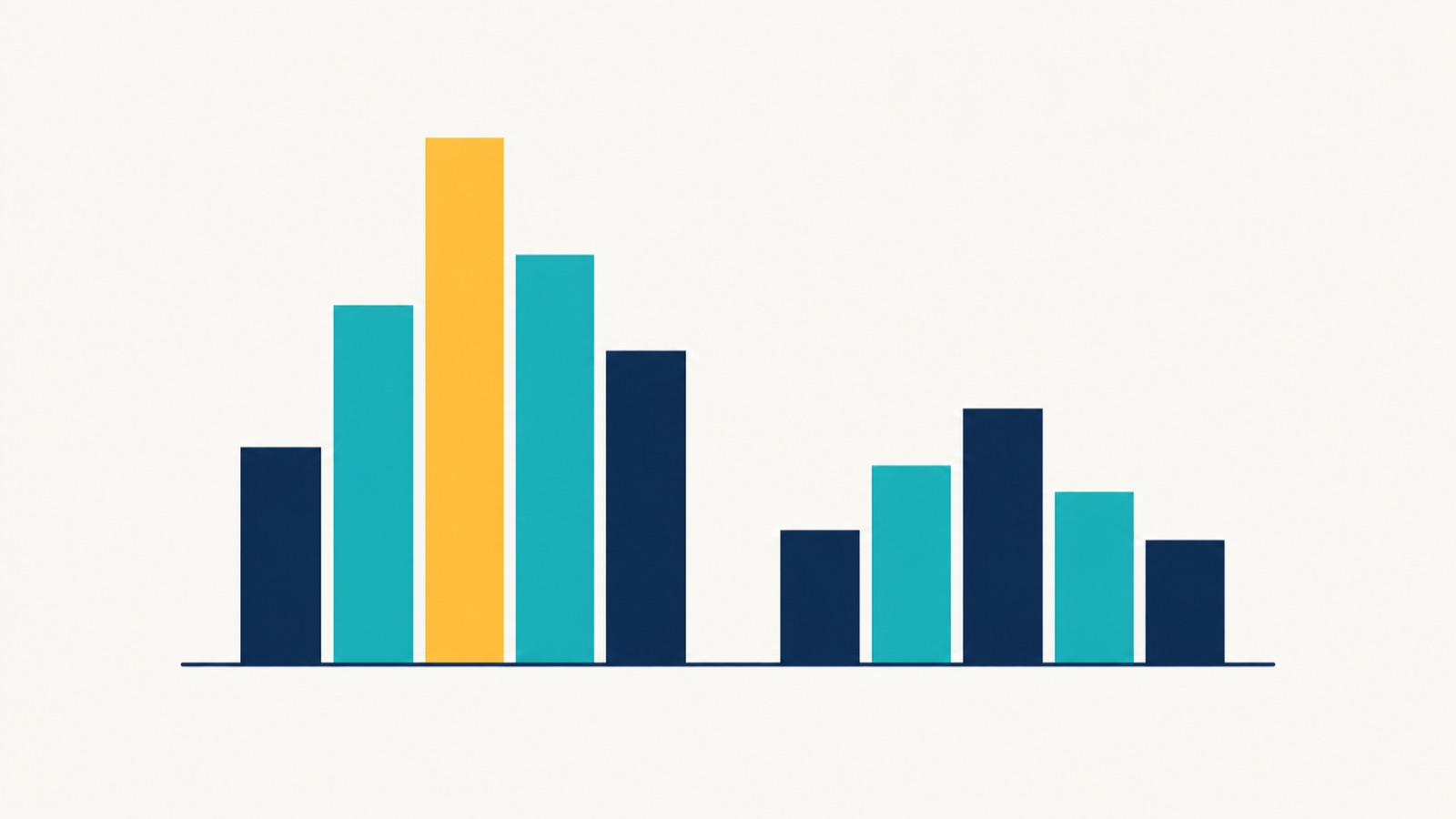
The Perth cases hit that trigger at roughly two and a half times the rate of the cases from everywhere else. Perth makes up 37.3% of the caseload and carries 59.4% of every edit-triggered suspension inside it.
Every one of the 112 Perth cases was reinstated.
What an edit-triggered suspension actually is
It is the most avoidable suspension there is, and it has nothing to do with doing anything wrong.
An owner sits down on a Tuesday afternoon to tidy the profile up. New phone number. Website swapped after the rebuild. A category added. Description rewritten. Fresh photos. All of it saved inside twenty minutes.
Google’s automated systems do not see a diligent owner catching up on admin. They see a pattern that looks statistically like an account takeover, and they do what a security system is supposed to do. The lock exists to protect the asset. It ends up locking the owner out of it.

One Perth case ran exactly to that shape. A home improvement business dropped “PTY LTD” from the business name, changed categories, and made several other edits in the same sitting. The name change was housekeeping from inside the dashboard: the registered entity had not changed, only the way it was written on the profile. The listing went down.
We know that is what happened because the owner told us on the phone, which is worth saying out loud, because it is how most of this category gets classified. Google does not expose an edit history. Unless the owner tells us what they changed, on the intake call or in a screen recording, nobody can replay it.
Five fields do most of the damage: name, address, phone, URL and categories. If you need to change any of them, the front-end edits doctrine explains the safer route, which is proposing the change through the public Maps interface rather than the dashboard.
Why some profiles survive the same edits
This next part is my read of the pattern rather than something the data proves, and the difference matters.

The pattern I keep seeing is that a business with a thin external footprint looks more fragile when significant profile changes are made. That comes from audits across the client base, and it could not come from the 300: every case in that dataset is a suspension, so it holds no businesses that made the same edits and survived them. There is no control group in here and I am not going to write as though there is.
What I do see repeatedly is what tends to be in place when a profile absorbs a round of edits without incident. Citations. Consistent mentions across directories. Real social profiles. A website whose details match the listing.
The way I explain it to clients is that Google has to judge whether a change is plausible, and it can only judge using what it already knows about the business. When it knows very little, dropping “PTY LTD” and swapping a category is hard to tell apart from someone taking over an abandoned listing. When the business is well documented everywhere else, there is something to check the change against.
This is why we build client work in layers rather than in whatever order looks most urgent. The Trust Stack is the model we use for it, and two of its six layers are doing all the work in this article. External Validation is the links, citations and mentions from sources Google already trusts. Platform Signals is how Google verifies that a business is where and what it says it is, which is the layer the Business Profile sits in.
A suspension is a failure in the platform layer. What we keep finding underneath it is a thin external layer. The profile was rarely the problem on its own. It was the only part of the business Google could see clearly enough to doubt.
That is the case for the unglamorous half of local SEO, the foundational work that never produces an exciting screenshot: citations, consistent details everywhere the business appears, real profiles on real platforms. It does not make a profile suspension-proof, because nothing does. It is the difference between an edit Google can check against something and an edit Google has to guess about.
I cannot see inside Google’s systems, and neither can anyone else selling you an opinion about them. This is a pattern across a caseload, not a mechanism I can prove. It is consistent enough that I would give the same advice either way.
Why the national number hides this
23.0% is an average, and averages flatten geography.
A national figure is useful for arguing that edit velocity is a real and underrated trigger. It is close to useless for telling a Perth owner what their actual exposure looks like, because it is diluted by 188 cases from cities behaving very differently.
This is the argument for cutting your own data geographically before you publish it. We classified all 300 cases in one pass and published the national figures without ever splitting them by location. The Perth number did not exist until it occurred to us, months later, that the split was worth doing at all.
Why Perth, specifically
We do not know, and we are not going to guess.

The dataset records what triggered each suspension. It does not record why one metropolitan area would produce that trigger at two and a half times the rate of the rest of the country. Any explanation offered here would be a hypothesis dressed up as a finding, and this article exists because the sector already has too much of that.
There are obvious candidates. Perth’s caseload leans heavily towards trades, mining services and owner-operators who manage their own profile with nobody between them and the save button. Businesses that rebuild a website tend to change the URL and the phone number in the same week. Neither of those is established by this data, and neither should be quoted as though it is.
One thing we can explain is why there are so many Perth cases in the first place. Perth supplies 37.3% of a national dataset, which is far more than one capital city has any business contributing. The reason is us. Search Scope is based in Perth, and a local business looking for help is more likely to ring a local specialist. The caseload is skewed towards Perth because we are.
That accounts for the volume. It does not account for the mix, and the difference between those two things is the one caveat worth holding onto here. Being over-represented explains why 112 of the cases are from Perth. It does not explain why a higher share of those 112 were triggered by edits.
It could, though, in a way we cannot rule out. If Perth businesses find us by word of mouth and interstate businesses find us through search, the two groups may not be the same kind of business, and the gap could partly reflect who is being compared rather than where they are. Nothing in the case log separates those two explanations, so we are not going to pretend it does.
What the data does establish is the gap. Across the Perth profiles that reached us after a suspension, tidying up the listing was the single most common way it happened.
The recovery record, and what it does not mean
All 41 Perth edit-triggered cases came back. So did all 112 Perth cases overall. Nationally the edit category runs 69 filed, 69 reinstated, a clean sweep across the whole dataset. The arithmetic forces one more thing worth stating: if all 112 Perth cases came back and 295 of the 300 did nationally, then all five of the unsuccessful cases in the dataset were outside Greater Perth.
That is a good number and it is easy to misread. It does not mean these suspensions are harmless.
Nothing is actually wrong with the business in an edit-velocity case, which is exactly why the appeal succeeds once the evidence pack lands. The cost is not the outcome. It is the window: the days or weeks the profile spends invisible in Maps and the local pack while the appeal moves, with the phone not ringing and competitors absorbing the calls. A recoverable suspension is still an expensive one.
If a Perth profile is offline right now, the first instruction is always the same: stop editing it. Every save made while a profile is suspended works against the case.
What to do instead
Plan the edit list, then spread it across a week or ten days. One change, then leave it alone. Touch the five high-risk fields through Maps rather than the dashboard. Nothing about that is complicated, it is just slower than most owners want to be on a Tuesday afternoon.
The full version, including a self-audit worth half an hour of your time, is in the guide to avoiding a suspension before it happens. For businesses that would rather not manage the risk in-house, Google Business Profile management in Perth covers the change-control side of it.
How we counted
The methodology matches the national dataset, because this is a subset of it rather than a new study.
- Dataset. Every Google Business Profile suspension case Search Scope took on between 1 February 2025 and 31 July 2026. 300 cases, no sampling, no exclusions.
- Perth. Greater Perth metropolitan area only, by registered business address. Regional Western Australia is counted in the rest-of-Australia group, not in the Perth figure.
- Denominator. Percentages are the share of cases handled, not the share of cases reinstated.
- One trigger per case, classified by Dorian Menard from the audit file on each case, which is why the national trigger table sums to 300 and the Perth subset sums to 112.
- How the trigger is established. For edit-velocity cases, what the owner actually changed is usually only knowable because the owner tells us, on the intake call or in a screen recording. Google does not expose an edit history to anyone. The audit corroborates the account by showing what the profile looks like now and what no longer matches, but it cannot replay the edits. Where the owner cannot say and the audit is not decisive, the case is classified on the strongest available evidence, and that is a judgement rather than a log.
- Why Perth is over-represented. Search Scope is based in Perth, so a disproportionate share of the caseload is local. Perth is 37.3% of the dataset for that reason, not because Perth generates more suspensions than anywhere else. This is selection bias in who hires us, and it is stated here rather than buried.
- What this is not. These are suspension cases that came to a reinstatement specialist. They are not a random sample of Perth businesses, and 36.6% is the share of our Perth cases, not the share of Perth listings. Anyone telling you what percentage of all profiles get suspended is estimating.
- Reinstated means the profile returned to public visibility on Search and Maps, confirmed in the dashboard. Not “appeal filed”, not “Google replied”.
Questions we get asked
Why does my Google Business Profile keep getting suspended?
Repeat suspensions usually mean the underlying configuration problem was never fixed, only the appeal was won. In this dataset the trigger that fires and the problem sitting underneath it are frequently different things, which is why a profile can come back and then fall over again after the next round of edits.
How many edits are too many?
Google does not publish a threshold and we are not going to invent one. Our case log records edit clusters, not edit counts, so any specific number would be made up. The pattern that shows up repeatedly is several of the five high-risk fields changed inside a single sitting.
How long does an edit-triggered suspension last?
Appeals are typically submitted within 24 hours of intake, and Google’s automated review usually responds within 24 to 72 hours of submission. Cases needing manual escalation run longer. There is no reliable end-to-end median, because most of the variance sits in how quickly the business can produce its documents.
Does this mean Perth businesses are worse at managing their profiles?
The data does not support that reading. It shows a higher rate of one specific trigger in one metropolitan area across 112 cases. It does not establish a cause, and it does not say anything about the businesses themselves.
If your profile is already down
Stop editing it, and do not file a second appeal on top of a pending one. Both make the case harder.
Search Scope has reinstated 295 of 300 Australian profiles since February 2025. The done-for-you reinstatement is $550 including GST, paid upfront and fully refunded if we do not get the profile back online. Reinstated or refunded.