
How Local Search Penalties Affect Rankings (2026 Australian Guide)
What triggers local search penalties in 2026, how they affect Map Pack rankings and traffic, and the playbook Australian businesses can actually follow.
As the founder of Search Scope, a Perth-based SEO agency, I’ve seen firsthand how local search penalties can damage a business. They can undo years of work by causing ranking drops, harming visibility, and leading to sharp declines in organic traffic and leads.
These penalties happen when your business violates Google’s guidelines. Common triggers in 2026 include keyword stuffing in business names, fake reviews, duplicate listings, unnatural backlink building, and thin or AI-generated content.
Here’s the short version.
- Common triggers: keyword stuffing in your business name, duplicate Google Business Profile (GBP) listings, fake reviews, low-quality content, and unnatural link building are the most frequent causes
- Impacts: losing your Map Pack position, drops in website traffic, fewer phone calls, fewer direction requests, and loss of customer trust
- Recovery steps: start with a professional local SEO audit, fix GBP issues, address backlink quality (Disavow Tool when warranted, though Google has materially downplayed its importance through 2024-2026), and file a reconsideration request if you received a manual penalty
- Prevention: keep your NAP consistent, publish genuinely local content with real depth, maintain accurate GBP information, build authentic reviews
Recovery takes time and a clear plan. Most algorithmic penalties resolve at the next core update (typically 2-6 months). With a proactive approach you can protect rankings for the long term.
Common causes of local search penalties
Local search penalties often happen because of specific violations. Understanding these common triggers is the first step to avoiding a drop in your rankings and online visibility.
These penalties come in two forms. Manual penalties are applied by a person on Google’s spam team and show up as a notification in Search Console. Algorithmic penalties are triggered automatically when an update rolls out and your site fails the new quality criteria.
The classic algorithm names (Penguin for link spam, Possum for local search filtering) are now part of Google’s core algorithm rather than standalone updates. Both Penguin (integrated into core in 2016) and the Possum behaviour are still active, just no longer announced as separate updates.
Violating Google’s Local SEO Guidelines
Breaking Google’s rules is the fastest way to get a penalty. Here are the most common violations I see with new clients.
| Violation Type | Description | Impact |
|---|---|---|
| Keyword Stuffing | Adding location terms to your business name, like “Bob’s Plumbing Perth & Fremantle.” | Immediate ranking drops or suspension. |
| Fake Reviews | Buying positive reviews or creating fake negative ones for competitors. | Profile suspension and loss of trust. |
| Inaccurate GBP Info | Listing an incorrect address, wrong phone number, or misleading business hours. | Reduced visibility and customer frustration. |
| Multiple Listings | Creating several Google Business Profiles for one actual business location. | Listings can be removed or penalised. |
Low-quality local content
Content that doesn’t meet local user intent can also trigger a penalty. Google wants to see E-E-A-T signals (Experience, Expertise, Authoritativeness, Trustworthiness). Thin or unhelpful content signals the opposite.
- Thin or duplicate content: pages that offer little unique value about your local services or are copied from another source
- Irrelevant content: content that doesn’t match what local searchers are actually looking for
- Poor user experience: slow, hard-to-navigate websites fail Core Web Vitals (LCP, INP, CLS), which directly influence rankings
- Scaled content abuse: Google’s March 2024 Scaled Content Abuse policy (enforced harder through the August 2025 and March 2026 updates) targets mass-produced AI content; thin AI-generated suburb pages are now the most common cause we see
Unnatural link practices
Aggressive or manipulative link building is a major problem. The pattern we see in client audits: a site that previously bought citations or relied on PBNs starts losing rankings as Google’s link-evaluation systems mature.
- Building low-quality links from Private Blog Networks (PBNs) with city-specific anchor text
- Paying for links from unrelated local business directories
- Using automated link schemes that create artificial links from irrelevant local websites
- Excessive exact-match anchor text concentration on commercial terms
A 2026 note on Google’s Disavow tool: Google has materially downplayed its importance. John Mueller has repeatedly said most sites don’t need to use it. The system is increasingly good at ignoring spammy links automatically. Only use Disavow if you have a manual link penalty or a clear, documented negative SEO attack.
Stick to genuine strategies that prioritise user value. Following Google’s guidelines and monitoring your link profile is how you maintain long-term ranking stability.
Effects of Penalties on Rankings, Traffic, and Visibility
Penalties caused by issues like unnatural links or thin content can have a severe and immediate impact on a website’s performance.
Ranking Drops in Local Search
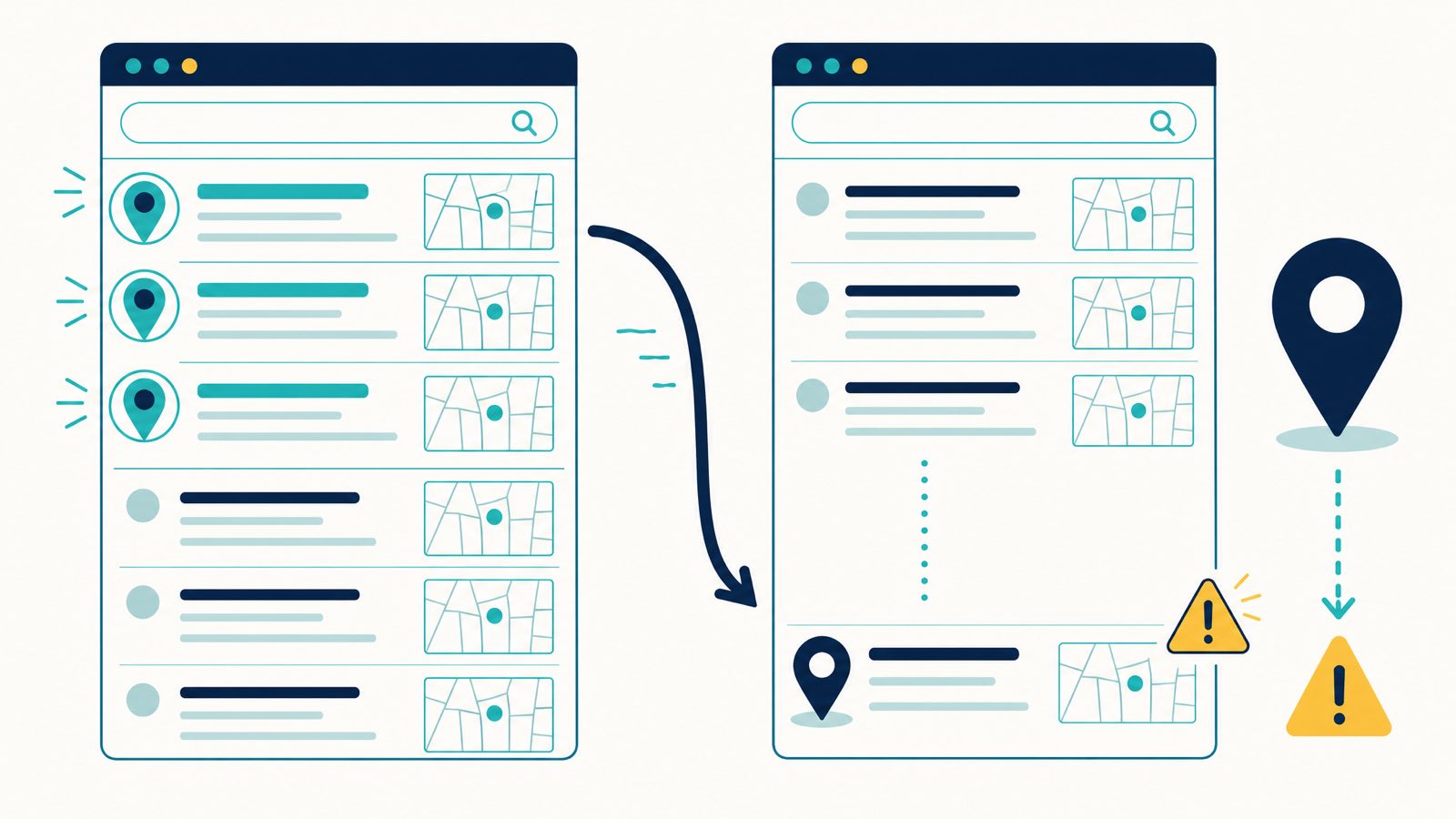
Local search penalties can seriously hurt your business online. They reduce your visibility in the local search results and on Google Maps, often pushing you from a top spot in the Local Pack to page 10 or beyond.
| Visibility Factor | Visibility Before Penalty | Impact After Penalty |
|---|---|---|
| Local Pack Presence | Top 3 “Map Pack” Results | Often completely removed. |
| Organic Rankings | First Page | Drops to page 10 or lower. |
| Map Visibility | Prominently visible in your service area. | Severely diminished or gone. |
| Click-Through Rate | Normal | Can see a reduction of over 90%. |
Reduced organic traffic and GBP interactions
Penalties cause immediate drops in real-world customer actions. Per the BrightLocal Local Consumer Review Survey 2026, local businesses now sit in a review economy where 97% of consumers read reviews and 31% only consider businesses with 4.5+ stars. Any visibility drop compounds: less Map Pack exposure, fewer reviews accumulated, weaker future ranking signals.
A penalty puts all of this at risk:
- Website visitors: a sharp decline in organic search traffic
- Phone calls: fewer enquiries from your Google Business Profile listing
- Direction requests: a drop in navigation requests through Google Maps
- Physical visits: fewer customers walking through your door
- Compounding review effect: fewer customer interactions means fewer reviews, which extends the recovery timeline
Competitors gaining an edge
When your business loses visibility from a penalty, your competitors directly benefit. They absorb the traffic you lost, which strengthens their authority signals and improves their customer engagement metrics. That compounding effect makes it harder to recover lost ground.
“The first page of search results captures the overwhelming majority of search traffic, making it crucial for businesses to maintain top rankings.”
This is especially true in competitive local markets. Businesses with clean SEO practices move fast to take advantage when a competitor drops out of the results.
Recovery strategies for local search penalties
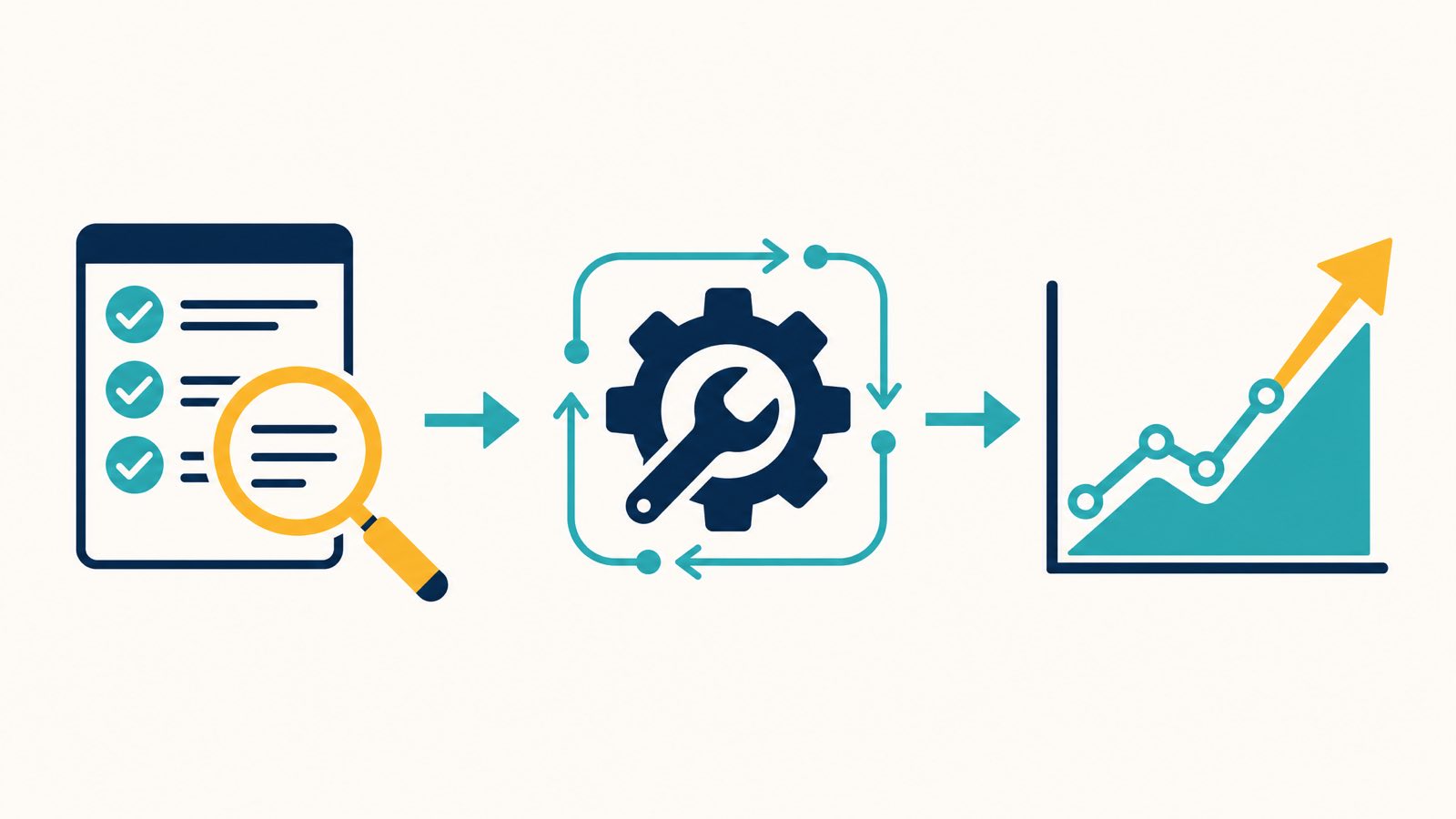
Once you understand the effects of a local search penalty, it’s time to act. A clear recovery plan is the only way to regain lost rankings, rebuild trust, and stay competitive.
Conduct a Local SEO Audit
Start with a detailed local SEO audit to find the exact issues causing the penalty. You should first check Google Search Console for any manual action notifications from Google.
Then, use reliable SEO tools like Ahrefs, Semrush, or BrightLocal to examine these key areas.
| Audit Area | What to Check |
|---|---|
| Business Details | Consistency in Name, Address, and Phone number (NAP) across all citations. |
| Website Content | Duplicate pages, thin content, or keyword stuffing. |
| Link Profile | Harmful or spammy backlinks that need to be identified and disavowed. |
Update and improve your Google Business Profile
Your Google Business Profile is central to local search recovery. Double-check that your business name, address, and phone number are perfectly consistent everywhere online.
Choose the most accurate business categories, not the most numerous. Upload high-quality photos taken at your actual location, respond to every customer review (good and bad), and use Google Posts to maintain an active presence. Per the BrightLocal 2026 LCRS, 80% of consumers prefer businesses that respond to every review and 81% expect a response within a week.
Submit a Reconsideration Request
If you have a manual penalty, you must submit a reconsideration request through Google Search Console. This step is not for algorithmic penalties, as those lift automatically once you fix the issues.
In your request, clearly document all the updates you have made. Provide evidence that you now comply with Google’s rules and explain your plan to avoid future violations. This shows you are committed to following their guidelines.
If your entire profile was suspended, you will need to file a separate reinstatement request directly with the Google Business Profile support team.
Preventing Future Local Search Penalties
After you have dealt with an existing penalty, your next priority is to prevent it from happening again. Taking proactive steps will help you maintain your rankings and stay visible in local search results.
Stay Updated on Google’s Guidelines
Google’s guidelines change, so you need to stay informed. I recommend checking reliable sources like the official Google Search Central Blog or publications like Search Engine Land every month.
Pay special attention to these three areas.
| Focus Area | Key Monitoring Points | Prevention Strategy |
|---|---|---|
| NAP Consistency | Accurate business information. | Verify monthly across all major platforms. |
| Content Quality | Avoid duplicate or thin content. | Conduct a content audit every quarter. |
| Link Profile | Watch for unnatural backlinks from low-quality sites. | Perform a backlink analysis twice a year. |
Publish high-quality, localised content
Creating content made specifically for your local audience is one of the best ways to avoid penalties. The pattern we see with WA service businesses: blog posts addressing genuinely local concerns (Perth’s hard water issues for plumbers, summer roof maintenance for builders, FIFO scheduling for healthcare clinics) consistently outperform generic content templates pulled from US-default playbooks.
This approach builds local authority and provides genuine value, which keeps you well clear of the Scaled Content Abuse policy that’s caught a lot of suburb-page-template sites since March 2024.
Keep an Eye on Local SEO Performance
Tools like Google Search Console are your best resource for understanding how Google sees your site. It will show you performance data and alert you to technical problems.
“Google penalises websites that use manipulative tactics, making monitoring essential.”
Combine Search Console with Google Analytics to stay on top of your site’s health. Perform weekly traffic checks and set up alerts for any unusual drops in performance that could signal a penalty.
For extra security, you can work with local SEO professionals to protect your rankings.
Partnering with Experts for Local SEO Success
Search Scope: Local SEO Services
Search Scope is based in Western Australia, and we focus on helping businesses navigate the challenges of local search penalties. Our local SEO services are designed to produce measurable results.
| Service Area | What It Covers |
|---|---|
| Local SEO Audits | Detailed reviews to find technical issues and penalty triggers. |
| Google Maps SEO | Optimising your profile to boost local visibility in location-based searches. |
| Penalty Recovery | Strategic actions to restore rankings and ensure full compliance with Google’s guidelines. |
| Performance Monitoring | Ongoing tracking to prevent future issues and maintain positive momentum. |
Why professional help matters
Recovering from local search penalties isn’t just about fixing mistakes; it’s about doing it in the right order and not making things worse. An experienced agency can help you recover faster and avoid common mistakes.
Where professional help genuinely makes a difference:
- Compliance time savings: experts already understand Google’s guidelines, which saves you weeks of research and internal resources
- Proven recovery sequencing: getting the order right (audit → fix critical issues → wait for next core update → fix secondary issues → reconsideration request) matters more than executing any single tactic
- Reconsideration request preparation: we conduct in-depth audits to document all issues and prepare detailed evidence of remediation work, which materially improves outcomes
- Avoiding the Disavow trap: aggressive Disavow use by inexperienced practitioners often makes rankings worse rather than better, since Google’s systems are increasingly good at ignoring spam links automatically
Our approach at Search Scope combines technical audits, GBP optimisation and content improvements to help Australian businesses recover and strengthen their local presence.
Key Points on Local Search Penalties
Risks of Non-Compliance
Ignoring local search guidelines can severely harm your online presence. Penalties lead to ranking drops, reduced visibility, and less traffic, all of which directly affect your ability to attract local customers.
Here’s how that impact is typically felt.
| Impact Area | Consequence | Estimated Recovery Time |
|---|---|---|
| Rankings | Disappearing entirely from the local map pack. | 2-6 months after fixing all issues. |
| Visibility | No longer appearing on Google Maps for key searches. | 1-3 months after profile optimisation. |
| Traffic | A sharp decline in local leads and phone calls. | 3-4 months to regain previous momentum. |
Taking Action
Recovering from local search penalties requires a focused and proactive approach. Your business should prioritise these steps.
-
Immediate Audits: Pinpoint penalty triggers and technical problems with a thorough assessment.
-
Content Updates: Remove or fix problematic content and create high-quality, hyper-locally relevant content that matches what users are looking for.
-
Technical Fixes: Resolve specific issues like disavowing harmful links or correcting NAP (Name, Address, Phone) inconsistencies.
Google’s algorithms are constantly getting better at spotting low-quality practices. By focusing on user-first content and sticking to Google’s rules, you can recover and build a stronger local search presence for long-term success.