
Australia's Under-16 Social Media Ban: Five Months In, What Has Actually Happened
Five months into Australia's under-16 social media ban: eSafety enforcing, Meta/TikTok/Snap/Google investigated, 5M+ accounts removed, 61% say no effect.
Australia’s under-16 social media ban took effect on 10 December 2025, enforced by the eSafety Commissioner with civil penalties of up to A$49.5 million per breach. Five months on, this update covers what has actually happened, where the implementation has fallen short, and what it means for Australian advertisers and media buyers.
The short version of where things stand in May 2026:
- 5+ million underage accounts removed or restricted since the ban took effect, according to the eSafety Commission
- Account ownership among 8-15-year-olds dropped from 49.7% to 31.3% (eSafety March 2026 compliance report)
- eSafety moved from monitoring to enforcement on 30 March 2026, investigating Facebook, Instagram, Snapchat, TikTok and YouTube for “potential non-compliance”
- But a May 2026 survey of 1,027 Australians aged 10+ found 61% of young Australians said the ban had not affected them; only 26% said it had significantly affected them (Straits Times via three-university research)
- Penalty determinations expected mid-2026
Under-16 social media account ownership in Australia: before and after the ban
Account ownership for 8-15-year-olds dropped from 49.7% to 31.3% in the first three months of enforcement, but 31.3% is still more than a quarter of all Australian 8-15s with active accounts. Source: eSafety March 2026 SMMA compliance report.
Australia’s social media age restrictions: the law and the scope
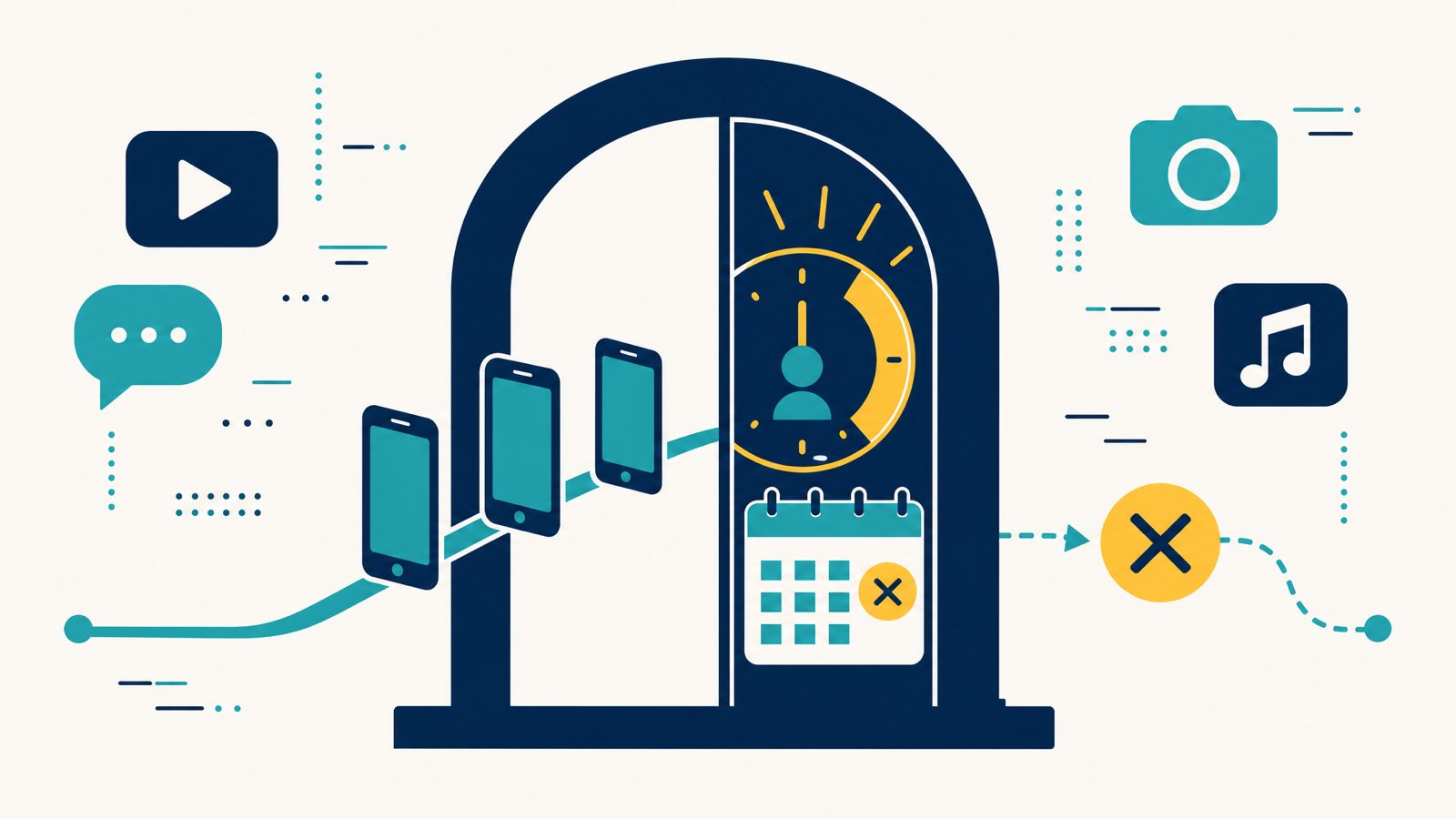
The Online Safety Amendment (Social Media Minimum Age) Act 2024 received Royal Assent on 10 December 2024, with a one-year implementation period that concluded on 10 December 2025. Unlike other jurisdictions’ approaches, Australia’s legislation places zero responsibility on children or parents. The entire compliance burden falls on platforms.
Platforms covered
The eSafety Commissioner has confirmed these platforms are subject to the Social Media Minimum Age (SMMA) obligation:
- Meta: Facebook, Instagram
- ByteDance: TikTok
- Google: YouTube (main platform)
- Snap Inc: Snapchat
- X Corp: X (formerly Twitter)
Platforms self-identifying or under assessment
Additional platforms that have self-identified or agreed to comply include Bluesky, Lemon8 and dating platforms (such as Tinder), per the eSafety Commission’s March 2026 compliance report. Reddit has filed a legal challenge to the ban in Australia’s High Court on privacy grounds (still pending as of May 2026, per AFP via Edition.mv).
In March 2026, the government registered a new legislative rule to ensure the SMMA definition includes platforms with “addictive or otherwise harmful design features”, which broadens the captured set beyond the initial named list.
What’s exempt
- Messaging services: WhatsApp, Messenger (direct communication)
- Gaming platforms: where social interaction is secondary to gameplay (a recurring criticism: gaming chat features are a documented under-16 workaround)
- Educational services: Coursera, educational YouTube channels
- Healthcare platforms: mental health and medical support services
Compliance timeline (actual, not projected)
June 2025: eSafety published final compliance guidelines.
July-November 2025: Platforms deployed age-assurance systems (AI age estimation, ID checks, parental consent mechanisms).
10 December 2025: SMMA obligations commenced. Platforms must take “reasonable steps” to prevent under-16s from holding accounts.
Mid-December 2025: 4.7 million underage accounts removed or restricted in the first weeks (eSafety report).
Early March 2026: An additional 310,000 underage accounts blocked. Total stands above 5 million.
30 March 2026: eSafety moves from compliance monitoring to enforcement stance. Investigations open into Facebook, Instagram, Snapchat, TikTok, YouTube.
Mid-2026: First enforcement decisions expected. Civil penalties up to A$49.5 million per breach.
What this means for advertisers (what we now know after 5 months)
The targeting picture is now clearer than it was pre-launch. The ban eliminates direct age-based targeting of under-16s on covered platforms, but the practical impact on under-16 audiences is more uneven than the headlines suggest.
What the data actually shows
The May 2026 three-university survey of 1,027 Australians aged 10+ found that 61% of young Australians said they had not been affected by the ban, with only 26% reporting significant impact. The eSafety report acknowledges that “a substantial number of children aged under 16 retain accounts” despite the platform-level account removals.
The most common workarounds are well-documented:
- Falsifying age information during account creation (many platforms still rely on self-reported birthdates)
- Using accounts created by older siblings, friends or parents
- VPNs to mask location and bypass Australian-IP enforcement
- “Alt” accounts under fake identities, particularly common in regional WA per ABC News May 2026 reporting
For advertisers, that means under-16 audiences are smaller and harder to reach via legitimate targeting, but they have not disappeared. They are just no longer addressable through clean platform-level targeting.
Practical implications for ad operations
- Direct audience loss for legitimate targeting: no compliant path to target 13-15-year-olds on covered platforms
- Compliance risk: attempting to circumvent restrictions could trigger eSafety investigations and reputational damage
- Budget reallocation: youth-focused campaigns shift spend to alternative channels (more on these below)
- Creative strategy changes: youth-oriented content becomes legally problematic if designed to attract under-16s
- Lookalike audience drift: seed lists that previously included under-16 data will skew older over time, which materially changes campaign performance for brands with younger customer bases
Legal risk assessment
Brands attempting to bypass age restrictions through contextual targeting of “youth-heavy” interests (gaming, music, fashion) could face scrutiny if the eSafety Commissioner determines these constitute attempts to reach under-16s indirectly. The legislation’s “reasonable steps” language is being interpreted in the courts now, with the first enforcement decisions expected mid-2026.
Communications Minister Anika Wells told reporters in May 2026 she expected eSafety “to throw the book at” platforms that systemically failed to uphold their obligations. The same logic will apply to brands that systematically attempt to reach under-16s through indirect means.
The Disruption to Targeting and Segmentation
Current Targeting Options Soon to Disappear
Australian advertisers currently leverage several targeting methods that will be significantly impacted:
- Age-based segments: 13-17 demographic targeting eliminated for under-16s
- Interest targeting: Categories over-indexing with teens (gaming, fast fashion, music) will have reduced reach
- Lookalike audiences: Seed lists containing under-16 data will be stripped, potentially altering model effectiveness
- Remarketing pools: Website visitors under 16 cannot be retargeted on social platforms
How Lookalike Audiences Will Change
This represents one of the most technically complex challenges. If your current customer base includes 13-15 year olds, lookalike audience models will lose this data, potentially creating older-skewing audience suggestions that no longer reflect actual customer behaviour patterns.
Current vs. Post-Ban Targeting Comparison
| Targeting Method | Current Options (Before Dec 2025) | Post-Ban (From Dec 10, 2025) | Impact for Advertisers |
|---|---|---|---|
| Age-based targeting | 13–17 selectable as ad audience segment | Under-16 blocked; only 16+ accounts allowed | Direct loss of younger teen segment |
| Interest-based targeting | Gaming, music, fast food, fashion interests often over-index in 13–17 cohort | Platforms must block/strip under-16 data | Reduced reach in “youth-heavy” interest buckets |
| Lookalike audiences | 13–17 included if they share attributes with seed list | Under-16 excluded from modelling | Lookalikes skew older, less reflective of actual teen behaviour |
| Remarketing | Teens served remarketing ads after website/app visits | Blocked for under-16s | Smaller retargeting pools |
| Brand awareness campaigns | Can specifically build awareness among teens | No legal way to target under-16s | Campaigns must shift to 16–24 cohort |
| Influencer partnerships | Teens reached indirectly via influencers | Still possible, but creators must comply with platform rules | Influencer marketing becomes more central |
| Compliance risk | Low – self-regulated policies by platforms | High – fines up to AUD $49.5M per breach | Legal departments involved in ad planning |
What Will Marketers Do Instead?
Industry experts and agencies are already developing alternative strategies. Based on international precedent and early Australian preparations, successful adaptations will likely include:
1. Refocus on 18–24 as the “New Youth” Segment
The 18-24 demographic becomes the primary “young adult” targeting option, but this cohort exhibits different behaviours, preferences, and purchasing power compared to 13-17 year olds. Campaigns will need substantial creative and strategic adjustments.
2. Contextual Targeting Over Behavioural
With demographic targeting restricted, advertisers will shift toward contextual targeting, serving ads based on content rather than user characteristics. This means advertising alongside youth-oriented content while avoiding direct targeting of young users.
3. Influencer and Creator Economy Investment
Influencer marketing offers an indirect path to younger audiences, though creators must comply with platform age restrictions. Expect increased investment in:
- YouTube creator partnerships (though monetisation is restricted for under-16 focused channels)
- TikTok creator collaborations with older influencers who have cross-generational appeal
- Instagram Reels and Stories campaigns via 18+ creators
4. First-Party Data Collection Strategies
With third-party targeting limited, brands are prioritising direct customer relationships through:
- Email marketing (with appropriate age verification)
- Brand-owned apps and experiences
- Loyalty programmes with family involvement
- Event marketing and experiential campaigns
What it looks like in practice: a Perth retailer example
Consider a Perth-based clothing retailer that previously targeted 13-17-year-olds across Instagram and TikTok. The illustrative numbers below match the order of magnitude we’ve seen agencies report when working with similar Australian brands through Q1-Q2 2026.
Pre-ban campaign setup:
- Target audience: Perth metro 13-17-year-olds interested in fashion
- Estimated reach: ~45,000 directly targetable teens per month
- Primary platforms: Instagram (then ~57% of Australian teens) and TikTok (~38%)
- Campaign focus: back-to-school fashion, weekend wear, school formals
Post-ban (current) setup:
- New target: Perth metro 16-24-year-olds plus household/parent targeting
- Reach reduction: roughly 60% drop in directly targetable audience for the original cohort
- Channel diversification: ~30% budget shift to YouTube creators (using compliant 18+ talent), local events, school sponsorships, and email/SMS once teens turn 16
- Creative adaptation: family-oriented messaging that reaches parents as decision-makers for under-16s
Budget impact: the retailer is seeing roughly a 40% increase in cost per acquired customer for the under-16 demographic. The teens haven’t stopped existing, but the targeting cost has gone up because they’re now reached indirectly via parents or via overflow once they turn 16.
Snapchat’s published response gives some scale: the company has locked 450,000 underage accounts as of May 2026 (AFP coverage), and Meta described accurate age verification as “a challenge for the whole industry”.
How other countries are responding (May 2026 update)
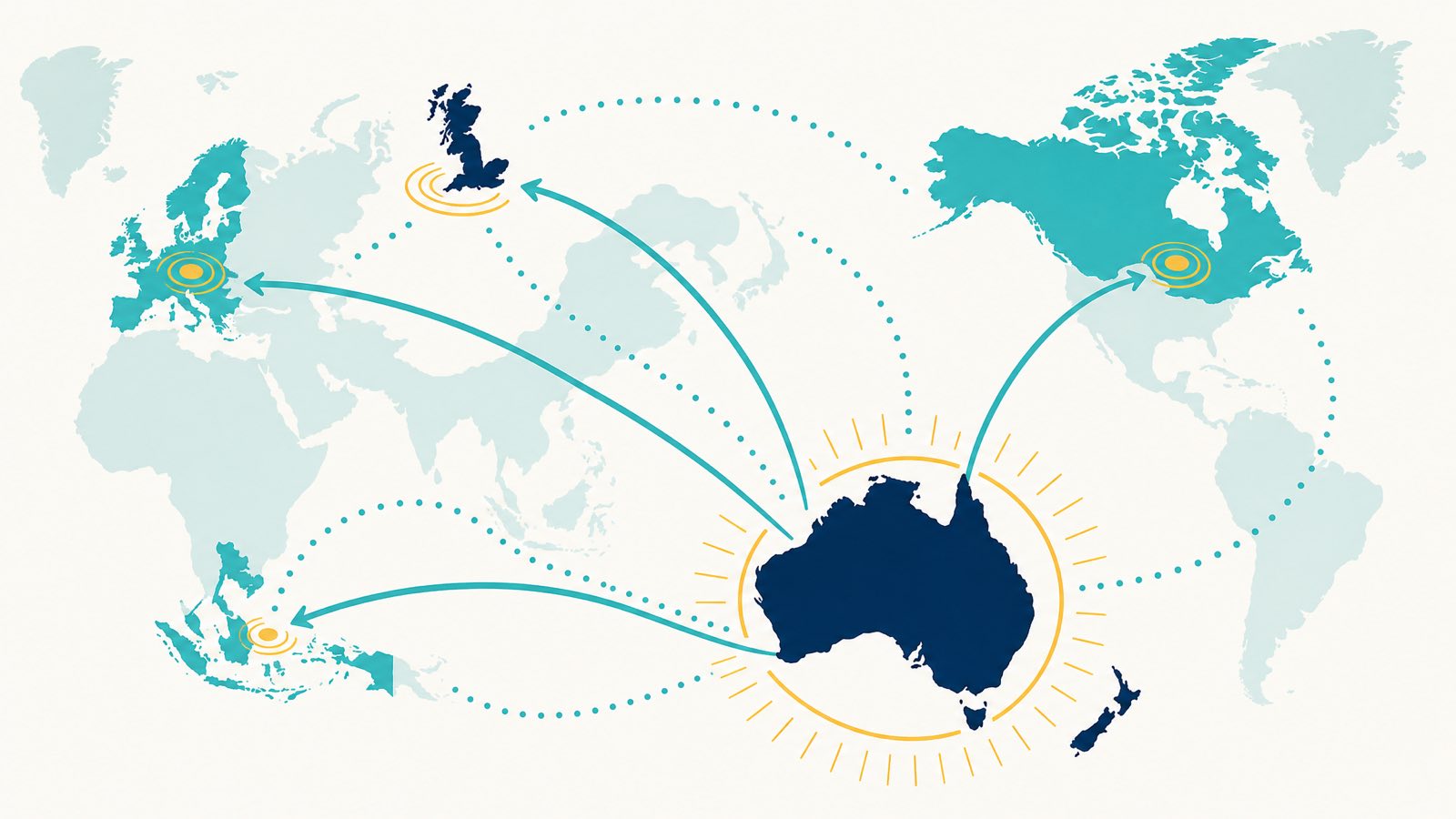
Communications Minister Anika Wells said in May 2026 that “more than a dozen countries” are now following Australia’s lead. The international landscape:
European Union
The Digital Services Act already restricts targeted advertising to minors, and the EU is closely monitoring Australia’s implementation. The EU’s “digital duty of care” framework has been cited by Australian academics (including Prof Lisa Given at RMIT, via The Conversation March 2026) as a potentially more effective complement to the SMMA approach.
United Kingdom
The UK is studying the Australian approach closely. The Online Safety Act already addresses children’s protection, but the UK has not yet committed to an Australia-style hard age ban.
Singapore
Singapore’s Minister for Health Ong Ye Kung said in April 2026 that Singapore would not pursue an outright ban, instead addressing concerns through algorithmic-feed and direct-message regulation. The Ministry of Digital Development and Information is in active discussions with tech platforms.
United States and Canada
Multiple US states have introduced similar legislation, though federal implementation remains stuck. California’s Age-Appropriate Design Code Act has overlapping objectives. Canada’s Digital Charter Implementation Act includes youth protection provisions, with Australia cited as a reference framework.
Global marketing implications
Multinational brands should prepare for a patchwork of age verification requirements globally. The Australian implementation issues now well-documented (workarounds, VPN circumvention, the gap between platform-level removals and actual child usage) are informing how other jurisdictions draft their own legislation.
How to adapt your campaigns now (the ban is live)
The ban is in force. The action items below are no longer “before the ban” preparation; they are corrective work for any Australian marketer with under-25 audiences in scope.
1. Audit current youth targeting segments
Review all current campaigns that previously targeted under-16s. Document:
- Campaign performance baselines
- Audience composition (13-15 vs 16-17 split)
- Budget allocation across affected segments
- Conversion rates by age group
2. Test alternative targeting methods
If you haven’t already, start A/B testing alternative approaches:
- Contextual targeting: Content-based rather than demographic targeting
- Family targeting: Household decision-makers (parents with teens)
- Interest expansion: Broader interest categories that capture family units
- Geographic targeting: School catchment areas, family-oriented suburbs
3. Diversify channel mix
Reduce reliance on covered social platforms for under-25 audiences:
- Email marketing: Direct customer relationships with appropriate age verification
- Connected TV/OTT: Family viewing contexts
- Gaming advertising: In-game placements on age-appropriate platforms
- Outdoor advertising: Transit, shopping centres, school-adjacent locations
4. Collaborate with legal teams
Marketing and legal teams need to align on:
- Campaign review processes for youth-adjacent content
- Age verification requirements for owned channels
- Data handling procedures for customer lists containing minors
- Influencer contract clauses addressing age restrictions
Where this leaves Australian marketers in mid-2026
Five months in, the Australian under-16 ban is real but imperfect. The platforms have removed millions of accounts; eSafety has moved into enforcement; penalties are coming. The first published academic survey suggests, however, that the ban has done less to change actual under-16 social media behaviour than the headlines implied it would.
For Australian marketers, the working assumption should be:
- Direct targeting of under-16s is no longer compliant. Don’t try.
- Under-16s are still on the platforms in meaningful numbers, but you can’t reach them legitimately. Don’t bank on incidental reach.
- The 18-24 cohort plus parental-decision-maker targeting plus channel diversification (YouTube via 18+ creators, CTV, email, events, owned audiences) is the new baseline.
- Watch the mid-2026 enforcement decisions closely. They will set the precedent for what “reasonable steps” actually means in court.
The brands that adapt cleanly to the new structure will outperform those still trying to find workarounds in the old one.
For Australian marketers thinking through how to adapt their own targeting and channel mix, book a 30-minute call or drop us a line and we’ll come back with a scoped recommendation.
Sources: Analysis draws on official eSafety Commissioner reporting (March 2026 SMMA compliance report), The Conversation, ABC News, AFP via Edition.mv, The Straits Times, Techstory, and platform statements. Regulations continue to evolve; consult legal counsel for specific compliance advice.