Small Business SEO Guide: Essential Strategies for Growth

Last Updated on 12 January 2026 by Dorian Menard
Local SEO helps small businesses attract nearby customers by making their online presence more visible. This guide explains how to improve your local SEO with actionable steps:
- Optimise Your Google Business Profile: Keep details accurate, add photos, and respond to reviews.
- Use Local Keywords: Target location-specific terms like "plumber in Atlanta."
- Improve Website Performance: Ensure your site is mobile-friendly, fast, and easy to navigate.
- Build Local Backlinks: Partner with local businesses and contribute to community sites.
- Encourage Reviews: Ask for customer feedback and respond promptly.
Track progress using tools like Google Analytics and monitor metrics like local traffic, customer actions, and reviews. Start with daily tasks like updating your profile and responding to reviews, and work on weekly and monthly strategies for consistent growth.
SEO Strategies Small Businesses Can Use Right Away
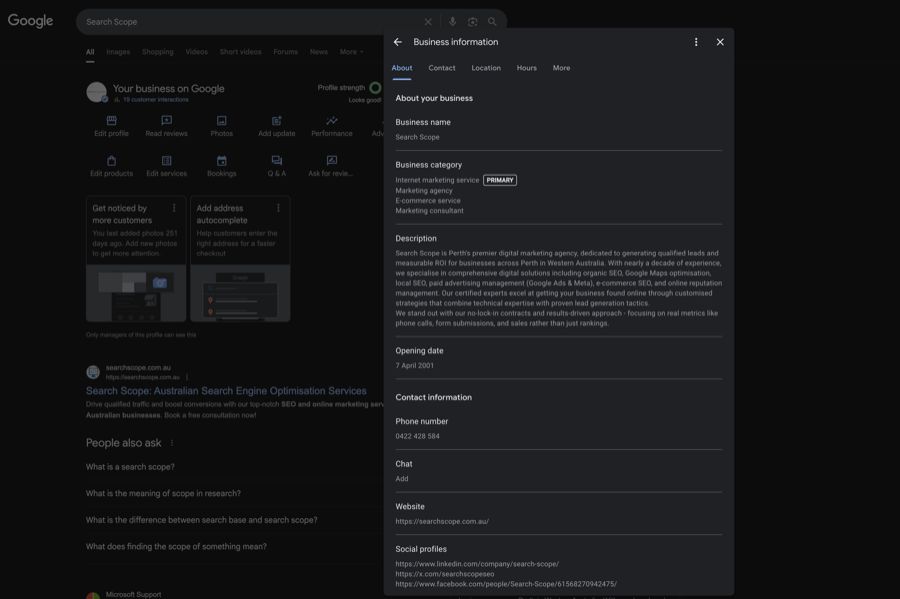
How to Optimise Your Google Business Profile
Your Google Business Profile (GBP) acts as your online storefront, so it’s essential to keep it accurate and engaging. You want to make sure this business profile is fully optimised.
Double-check that all your business details are correct and consistent across platforms.
Regularly update your profile to keep it appealing – add photos of your products, team, or workplace to give potential customers a closer look at your business.
Here are some important elements to focus on:
| Element | Best Practice | Impact |
|---|---|---|
| Photos | Use high-quality images updated weekly | Attracts more profile views |
| Posts | Share updates about promotions or news | Boosts customer engagement |
| Reviews | Respond to all feedback promptly | Builds customer trust |
| Services | Provide detailed descriptions | Helps clarify offerings |
Simple Keyword Research for Local Businesses
Google Keyword Planner is a handy tool for figuring out what local customers are searching for.
For small businesses, targeting location-specific keywords helps attract nearby customers. For example, combine your service with your area, like "bakery in Subiaco" or "24-hour locksmith Mandurah."
To get started with keyword research:
- List your main products or services, then add location-specific terms like your city or neighborhood.
- Use Google Keyword Planner to identify popular search terms.
- Focus on keywords with high search volume and lower competition to improve your chances of ranking.
Improving Your Website’s Performance
A fast, mobile-friendly website is a must for local SEO. Research shows that 76% of mobile users searching for nearby businesses visit a store within a day, and 28% of those searches lead to a purchase.
To enhance your website’s performance:
- Test your site’s mobile-friendliness using Google’s tool.
- Optimise images, ensure the site loads quickly, and make it responsive for mobile users.
- Simplify navigation to improve user experience.
- Use a secure HTTPS connection for added trust.
The Complete Local SEO Checklist for 2024
Advanced Local SEO Tips for Better Results
Once your website is optimised and you’ve integrated local keywords, these additional strategies can help increase your local visibility and authority.
Building Backlinks from Local Sources
Strengthen your website’s credibility by connecting with trusted local organisations. Here are some effective ways to secure local backlinks:
- Local Chambers: Join your local chamber of commerce and participate in their events to earn valuable .org links.
- Community Websites: Contribute area-specific content to local community sites to boost your relevance.
- Business Partnerships: Collaborate with local businesses on joint promotional efforts that benefit both parties.
- Local Media: Share newsworthy updates or stories to attract coverage from local news outlets.
Don’t forget to list your business on reliable local directories like Yelp, True Local, and Hotfrog. We have compiled a list of the best directories for your business in Australia.
Crafting Content for Local Audiences
Tailor your content to address local issues or highlight community-focused topics. For example, a plumbing company could create guides on preventing frozen pipes during harsh winters or managing water quality challenges specific to the area.
Here are some content ideas that resonate with local audiences:
- Guides and resources tailored to your area
- Coverage of local events or community features
- Seasonal tips relevant to your region
- Collections of community resources or services
Managing and Encouraging Customer Reviews
Customer reviews play a key role in your local search rankings and help build trust. Studies show that a steady stream of positive reviews can improve your Google Business Profile ranking and boost click-through rates.
Here’s how to handle reviews effectively:
- Ask for Feedback and Respond: Follow up with customers after purchases, encouraging them to leave reviews. Always respond to reviews – whether positive or negative – to show you value their input.
- Showcase Reviews: Highlight positive reviews on your website as social proof and use schema markup to display star ratings in search results.
| Review Task | Frequency | Purpose |
|---|---|---|
| Monitor and Respond | Daily | Stay engaged with customers |
| Analyse Reviews | Quarterly | Identify areas for improvement |
| Update Response Templates | Monthly | Keep responses consistent and relevant |
sbb-itb-c74901f
How to Apply These Strategies and Track Progress
Once you’ve implemented basic Perth SEO for small businesses, it’s time to set up a system to apply and monitor these strategies effectively. This guide is tailored to help small businesses boost their local SEO without needing a large budget or deep technical knowledge.
Steps to Start Using These SEO Methods
Begin by auditing your online presence with tools like BrightLocal to pinpoint areas for improvement in your local SEO efforts.
Here’s a simple framework to get started:
- Set Up Tracking and Optimise Your Online Presence
- Use Google Analytics to monitor key actions like form submissions, calls, and direction requests.
- Ensure your business information is consistent across all platforms:
Platform Key Details Website & GBP Name, Address, Phone (NAP), Hours, Service Areas Directories & Social Profiles Business Details, Categories - Develop a Local Content Strategy
- Create diverse content like FAQs, videos, and infographics.
- Focus on solving specific local issues your audience faces.
- Use locally-researched keywords to improve relevance.
How to Measure SEO Success
Track these key performance indicators (KPIs) to evaluate your progress:
| Metric | What to Monitor | Frequency |
|---|---|---|
| Search Performance | Rankings and organic traffic | Weekly |
| Customer Actions | Calls, direction requests, form submissions | Daily |
| Reviews | New reviews and rating trends | Weekly |
What to Focus on in Google Analytics
- Growth in local organic traffic
- Performance of location-specific pages
- Conversion rates from local searches
Consolidated Performance Monitoring
Combine insights from various tools to get a full picture of your local SEO efforts:
- Google Business Profile data
- Website analytics
- Review management tools
- Local ranking trackers
Keep Growing with Consistent SEO Efforts
Key SEO Strategies to Focus On
For small businesses, achieving SEO success comes down to sticking with proven methods. According to Google, businesses with complete and accurate Google Business Profiles are 2.7 times more likely to earn consumer trust.
Here are some key strategies and their benefits:
| Strategy | Impact | Key Focus Areas |
|---|---|---|
| Local Search Optimisation | 76% of local searches lead to visits within 24 hours | Use local keywords, target service areas |
| Google Business Profile | Boosts reputation score 2.7x | Regular updates, photo uploads, Q&A |
| Website Performance | Major factor for rankings | Focus on mobile optimization, speed |
Now, let’s look at how to translate these into actionable steps for your business.
Practical Action Plan for Small Businesses
To keep your SEO efforts on track, here’s a simple plan that breaks down tasks into daily, weekly, and monthly actions:
Daily Tasks:
- Respond to customer reviews promptly.
- Update business hours or announcements as needed.
- Monitor customer interactions, like calls and direction requests.
Weekly Tasks:
- Check search metrics in Google Analytics.
- Add locally relevant updates to your website.
- Ensure your business information is consistent across all platforms.
Monthly Tasks:
- Research new local keywords to target.
- Review competitor rankings and strategies.
- Publish fresh, locally tailored content.
The most successful small businesses make SEO a regular part of their workflow.
By dedicating time each week to optimising your presence online and using tools like Google Analytics and Search Console, you can consistently improve your visibility in local search results and attract more customers.
FAQs
Here are answers to some common questions small business owners often have about local SEO services.
How do I optimise my Google Business Profile?
Optimising your Google Business Profile starts with providing accurate and complete details. Here’s how to do it:
- Use your actual business name – avoid stuffing it with extra keywords.
- Double-check that your contact info and operating hours are correct and match your website.
- Write a short description (250-750 characters) with relevant keywords.
- Upload videos to highlight your services or showcase your business location.
Recent data shows that businesses with fully completed Google Business Profiles are 70% more likely to attract in-person visits than those with incomplete profiles.
How to SEO a Google Business Profile?
Improving your Google Business Profile for local SEO involves a few key steps:
| Task | Why It Matters | What to Do |
|---|---|---|
| Profile Verification | Builds trust | Complete verification via mail, phone, or email |
| Category Selection | Boosts search relevance | Pick one main category and 2-3 secondary ones |
| Review Management | Improves credibility | Respond to all reviews quickly, ideally in 24 hours |
Visit our Google My Business SEO services page if you need help with your GBP!
How do I rank my website locally?
Boosting your local search rankings requires consistent effort in these areas:
- NAP Consistency: Ensure your business name, address, and phone number (NAP) are listed consistently across directories. Regular audits can help maintain accuracy.
- Local Content: Write content that speaks directly to your audience and highlights your service area.
- Build Citations: Studies reveal that businesses with consistent citations across major platforms see a 23% increase in local search rankings.
- Technical Setup: Optimise your site for speed (under 3 seconds), mobile usability, and include schema markup for local businesses.
These tips address frequent questions and provide actionable steps to improve your local SEO efforts.
Related Blog Posts

Dorian Menard
https://searchscope.com.auI’m Dorian, founder of Search Scope and an SEO obsessed with ROI and lead generation. After a decade in the trenches, I’ve built and ranked digital assets for businesses across the world. I cut through the noise with data, automation, and strategies that actually convert. When I’m not scaling rankings, you’ll find me on a motorbike or setting chess traps — always planning three moves ahead.