AI SEO Perth: Generative Engine Optimisation That Drives Revenue

AI SEO isn’t about ranking on page 1 anymore. It’s about getting your business cited by ChatGPT, Google’s AI Overviews, and Perplexity when customers ask questions in your industry.

Search behavior is fundamentally changing. 40% of users now start their search on AI platforms instead of traditional Google. If your business isn’t optimised for AI retrieval, you’re invisible to a massive and growing segment of qualified traffic.

We help Perth businesses dominate AI search through Generative Engine Optimisation (GEO)—with proven results in 3 months, no lock-in contracts, and 10+ years of SEO expertise backing every strategy.

Lead Gen Solutions
Search Engine Marketing
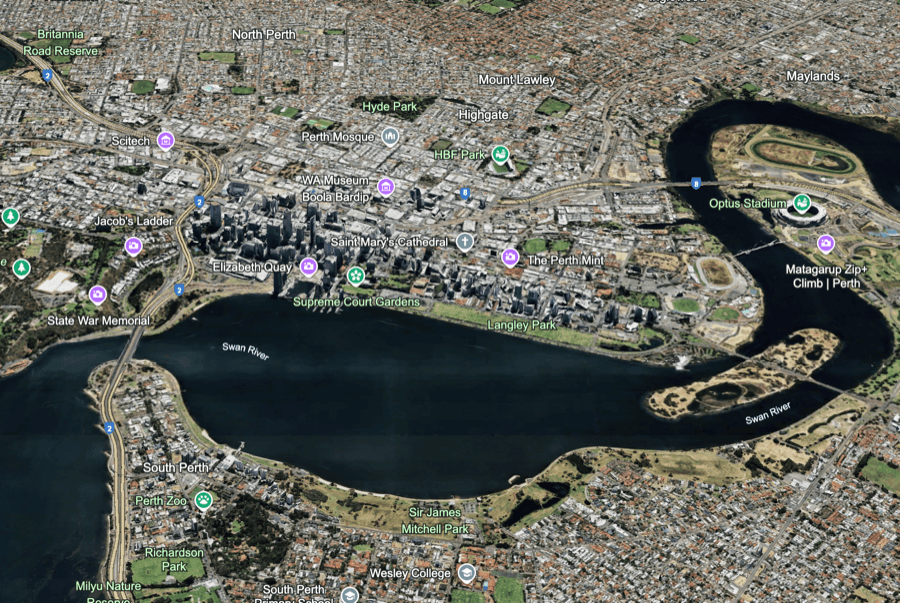
Aerial view of Perth, Swan River visible.
SEO lead generation for business growth

0 +

Projects completed

0 +

Certified Experts

0 +

Years in business

0 %

Client satisfaction

Our Services

Search Scope AI SEO Services: What We Actually Do

Most agencies talk about AI SEO in theory. We execute it in practice. Our approach splits based on your business model because local service businesses and ecommerce brands need different strategies to dominate AI search. Here’s what we build for each.

Local businesses

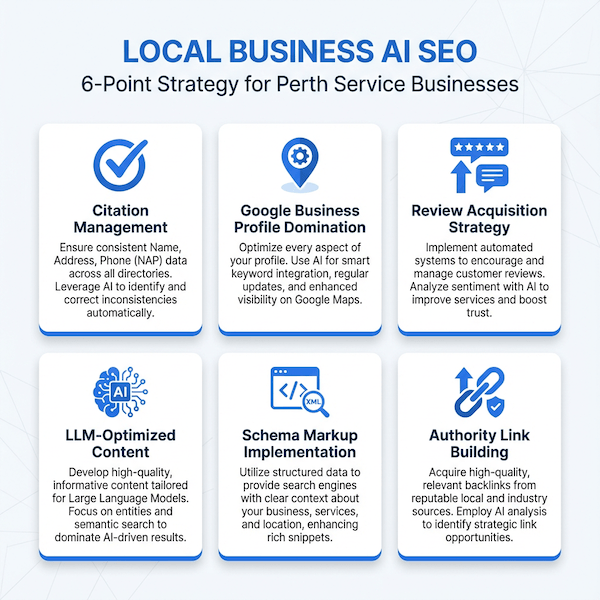
If you’re a service business, medical practice, or local brand, getting cited in AI search requires a clean, authoritative digital footprint. Here’s how we do it:

1. Clean Digital Footprint (Citation Management) 

AI platforms cross-reference your business information across the web. Inconsistent NAP (Name, Address, Phone) data kills trust and reduces citation likelihood. We:

  • Audit your citations across 50+ directories
  • Fix inconsistencies in business name, address, phone, hours
  • Build new citations in high-authority local directories
  • Monitor ongoing citation health

2. Google Business Profile Domination 

Your GBP is one of the most authoritative local signals for AI platforms. On top of our Google Maps SEO expertise, we optimise:

  • Category selection (primary + secondary)
  • Service area definitions
  • Attributes and business hours
  • Q&A section (we seed questions AI platforms frequently reference)
  • Posts and updates for recency signals
local business ai seo strategy

3. Review Domination Strategy 

AI platforms heavily weight review volume, recency, and sentiment when citing local businesses. We implement:

  • Automated review request systems
  • Multi-platform review acquisition (Google, Facebook, industry-specific)
  • Review response optimisation (signals active management)
  • Sentiment tracking and reputation monitoring

4. Content Optimised for LLM Retrieval 

We create content AI platforms actually cite:

  • Service pages with clear, factual descriptions
  • FAQ pages targeting common AI queries
  • Local expertise content (e.g., “Cost of dental implants Perth”)
  • Structured with headings, bullet points, and natural language

5. Schema Markup Implementation 

Schema is machine-readable data that tells AI exactly what your business offers:

  • LocalBusiness schema (core entity data)
  • Service schema (specific offerings)
  • Review schema (aggregate ratings)
  • FAQPage schema (common questions)
  • BreadcrumbList schema (site structure)

6. Authority Link Building 

We don’t chase low-quality backlinks. We build citations in:

  • Top 10 listicles (e.g., “Best Dentists in Perth”)
  • Local news publications and industry blogs
  • Chamber of commerce and business associations
  • Guest posts on authoritative domains

Result: AI platforms cite your business as the local SEO authority when users ask location-specific queries in your industry.

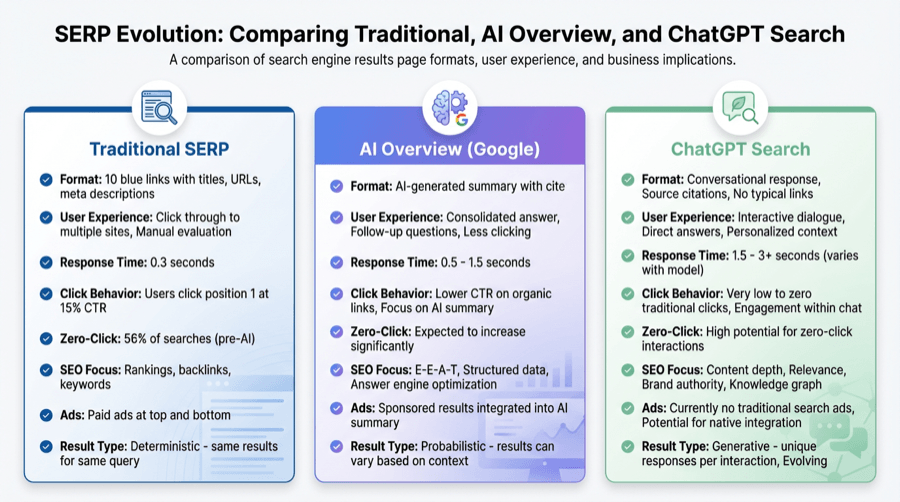
serp evolution, comparing traditional, ai overview and llm search
Ecommerce stores

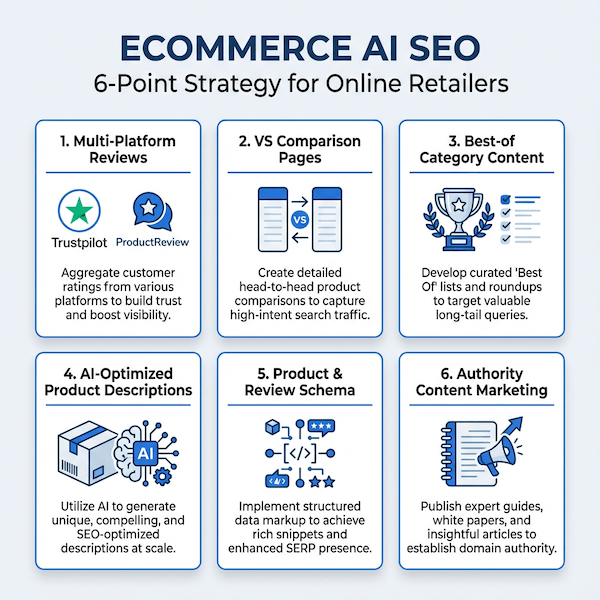
Ecommerce AI SEO requires a different playbook. We focus on product visibility and category authority:

1. Review Platform Domination Since Google Maps matters less for ecommerce, we dominate review platforms AI systems trust:

  • Trustpilot, ProductReview.com.au, and industry-specific platforms
  • Automated post-purchase review requests
  • High-volume, recent reviews (critical for AI citation)

2. Comparison (“VS”) Pages AI platforms love comparison content when users ask “X vs Y” questions. We create:

  • Product comparison pages (e.g., “Product A vs Product B”)
  • Brand comparison pages
  • Detailed spec comparisons with tables and structured data
  • Honest, balanced content (not just promotion)
ecommerce ai seo strategy

3. “Best [Category]” Pages These pages get cited heavily by AI when users ask “what’s the best X for Y?” We build:

  • Best-of category pages (e.g., “Best Running Shoes for Flat Feet”)
  • Buyer’s guides with clear criteria
  • Top 5/10 lists with detailed explanations
  • Updated regularly for recency signals

4. Product Content Optimisation for AI Retrieval We optimise product pages to be LLM-friendly:

  • Clear, benefit-focused descriptions (not keyword-stuffed fluff)
  • Detailed specifications in structured format
  • FAQ sections answering common product questions
  • How-to content and use cases

5. Schema for Products and Reviews Ecommerce schema helps AI platforms understand your products:

  • Product schema (name, price, availability)
  • AggregateRating schema (review data)
  • Offer schema (pricing and promotions)
  • BreadcrumbList schema (category structure)

6. Authority Content Strategy We create topical authority content that gets cited:

  • Buying guides and educational content
  • Industry trend articles and insights
  • How-to guides related to your products
  • Expert roundups and original research

Result: When users ask AI platforms product-related questions, your brand appears as a cited authority with direct product recommendations. A perfect mix when paired with traditional Ecommerce SEO.

Both strategies share a common foundation: technical SEO excellence, high-quality content, and authoritative backlinks. The difference is where we focus the effort. That’s what 10+ years in competitive markets teaches you—strategy matters more than tactics.

How We Work

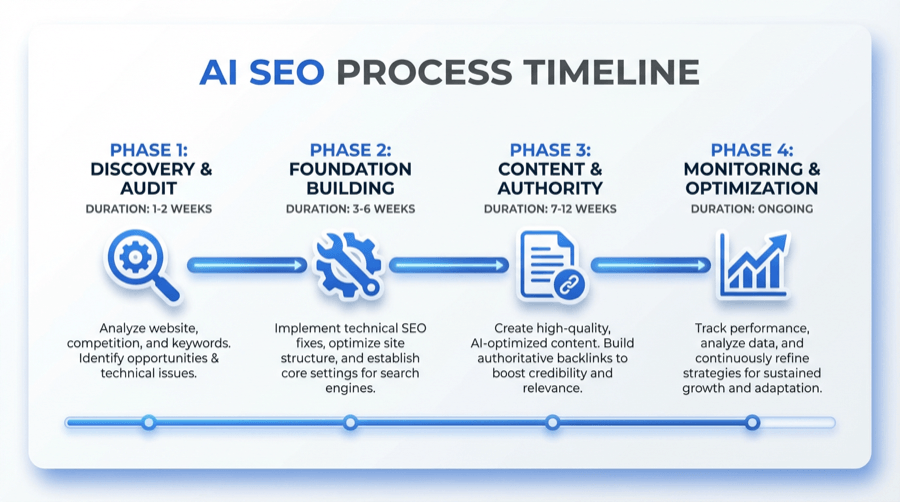
Our AI SEO Process: What to Expect

We don’t believe in black-box SEO where you have no idea what’s happening. Here’s our exact process for AI SEO implementation.
 
Most clients see measurable traction within 3 months when domain foundations exist (established site with some authority). New domains take 6-9 months or less depending on the competition.

Phase 1: Discovery & Audit

What We Analyse:

  • Current AI visibility (are you being cited anywhere?)
  • Traditional SEO foundations (technical health, backlink profile)
  • Digital footprint consistency (citations, NAP, schema)
  • Content gaps (what should you rank for but don't?)
  • Competitor AI presence (who's winning and why?)

Deliverable: Comprehensive audit report with prioritised recommendations and projected timeline.


Phase 2: Foundation Building

Technical Optimisation:

  • Fix critical technical SEO issues (site speed, mobile, indexing)
  • Implement or enhance schema markup (LocalBusiness, Product, FAQPage)
  • Optimise site structure for crawlability
  • Set up tracking and monitoring systems

Citation & Digital Footprint:

  • Clean up NAP inconsistencies across the web
  • Build/optimise Google Business Profile
  • Create or claim listings on key directories
  • Implement review request systems

Phase 3: Content & Authority

Content Creation:

  • AI-optimised service/product pages
  • FAQ sections targeting AI queries
  • Comparison and "best of" pages (for ecommerce)
  • Educational content demonstrating expertise

Link Building:

  • Outreach for listicle placements
  • Guest posts on authoritative domains
  • Industry partnerships and citations
  • Local news and PR opportunities

Phase 4: Monitoring & Optimisation

What We Track:

  • AI citation frequency (manual testing + monitoring tools)
  • Traditional SEO metrics (rankings, traffic, conversions)
  • Review volume and sentiment
  • Schema validation and rich results
  • Competitor movements

Monthly Reporting: Clear, jargon-free reports showing what's working, what's not, and what we're doing next.

Infographic of AI SEO process timeline in four phases.

What You Can Expect

Here's what separates us from agencies just adding "AI SEO" to their service list: we integrate AI optimization into traditional SEO strategy. Every piece of content we create, every backlink we build, every technical fix we implement considers both Google's algorithm and AI platform retrieval.

You don't need two separate strategies. You need one cohesive approach that dominates both traditional and AI search. That's what we deliver.

What is AI SEO and Generative Engine Optimisation (GEO)?

AI SEO is the strategic optimisation of your content to be discovered, cited, and recommended by AI-powered search platforms like ChatGPT, Google’s AI Overviews, Perplexity, and Gemini. It’s also called Generative Engine Optimisation (GEO) or Answer Engine Optimisation (AEO).

Unlike traditional SEO where you compete for position 1-10 on a search results page, AI SEO is about becoming the authoritative source that AI platforms cite when answering user queries. If an AI doesn’t know your brand exists, you’re invisible to a massive and growing segment of search traffic.

Why It Matters in 2026: Search behavior is fundamentally changing. According to recent data:

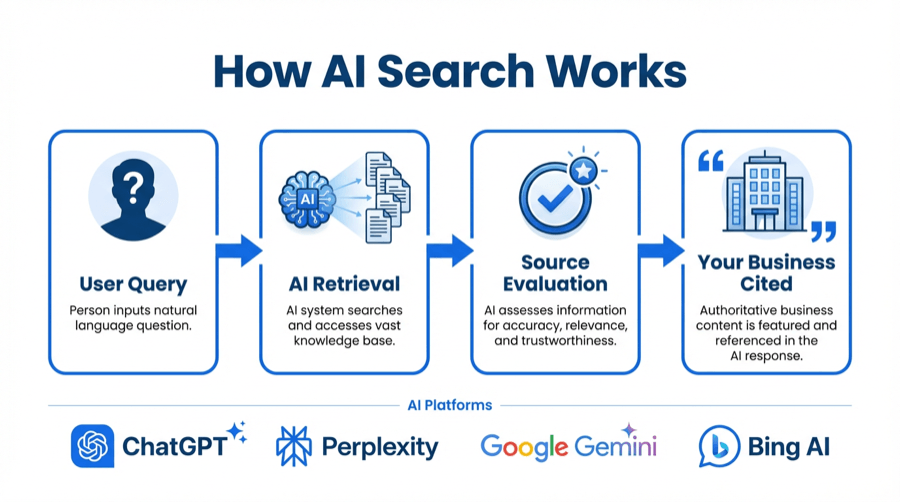
Infographic explaining AI search process flow

The shift isn’t coming—it’s already here. Traditional SEO still matters, but AI SEO determines whether you’re part of the conversation when AI platforms answer questions in your industry.

The Difference: Traditional SEO gets your website onto page 1. AI SEO gets your business cited as the authority within AI-generated answers. Both are critical for 2026 and beyond.

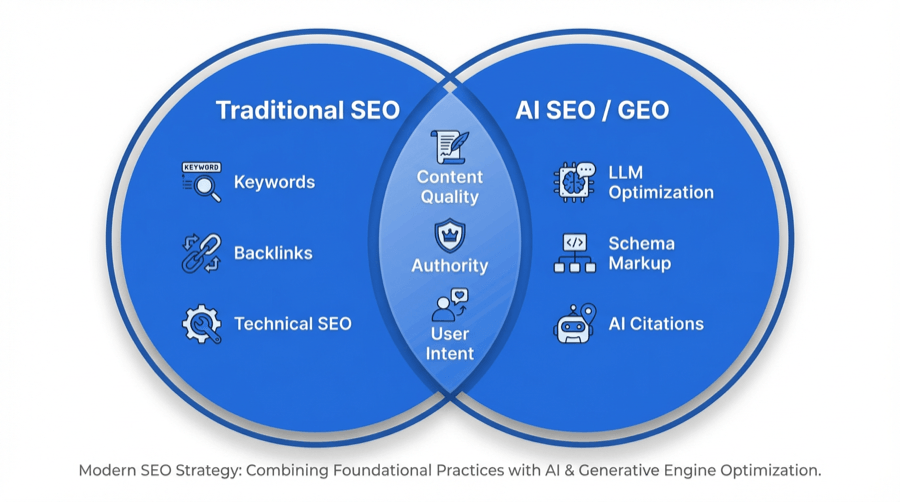
AI SEO VS Traditional SEO

Here’s what most Perth businesses don’t understand: AI SEO isn’t a replacement for traditional SEO—it’s an evolution. Google still drives massive traffic, but how users interact with that traffic is changing.

The businesses winning in 2026 are doing both:

  • Traditional SEO foundations: Technical optimisation, backlinks, keyword targeting
  • AI SEO layer: Content structured for LLM retrieval, schema markup, authoritative citations

If you ignore AI SEO, you’re banking on search behavior staying the same. That’s not a bet we’d take. If you ignore traditional SEO, you’re leaving money on the table right now.

The answer? Integrate both. That’s exactly what we do for our clients at Search Scope.

How Do AI Search Platforms Find and Cite Your Business?

Understanding how AI platforms work is critical for optimisation. Unlike Google’s traditional algorithm that ranks web pages, AI systems like ChatGPT, Perplexity, and Google’s Gemini retrieve information from their training data and real-time web searches to generate conversational answers. Your job is to make your content easily retrievable and authoritative enough to cite.

The AI Retrieval Process:

Step 1: Query Understanding 
The AI interprets user intent—not just keywords, but context, location, and specificity.

Step 2: Information Retrieval 
The AI searches its training data and performs real-time web crawls to find relevant, authoritative sources.

Step 3: Source Evaluation 
It prioritizes content based on:

  • Factual accuracy and clarity
  • Domain authority and trustworthiness
  • Structured data (schema markup)
  • Recency and relevance
  • Citation from other authoritative sources

Step 4: Response Generation 
The AI synthesizes information into a natural language answer, citing 2-5 primary sources.

AspectTraditional SEOAI SEO (GEO)
GoalRank on page 1 of GoogleGet cited in AI-generated answers
Optimisation TargetGoogle’s ranking algorithmLarge Language Models (LLMs)
Content FormatKeywords, backlinks, technical SEONatural language, structured data, factual depth
Success MetricPosition 1-10 in SERPsCitation frequency in AI responses
User IntentClick-through to websiteImmediate answer with source attribution
Competition10 spots on page 13-5 cited sources in AI answer

What Makes Content “AI-Friendly”?

AI platforms prefer content that is:

  • Clearly structured with H2/H3 headings and short paragraphs
  • Factually dense without marketing fluff
  • Schema-enhanced so machines can understand context
  • Cited by others (backlinks from authoritative domains)
  • Conversational in tone, answering specific questions
  • Locally relevant when location matters (critical for Perth SEO campaigns)

This is why generic, keyword-stuffed SEO content fails in AI search. LLMs are trained to prioritise helpful, accurate information—not marketing copy disguised as content.

Partners

People we work with

We work with a wide range of businesses, from Australian local businesses to international clients and brands. These are real reviews, from real people, that can be verified on my LinkedIn profile.

Sorry, your ID is maybe not correct (If you did not place any ID that means auto-detect does not work.). And please make sure that your selected element is developed with Swiper.

FAQ

Frequently Asked Questions

Browse through our frequently asked questions to find quick answers to your queries. Got more questions? don’t hesitate to contact us.

How much does AI SEO cost?

AI SEO pricing depends on business complexity, competition level, and existing site health. Local service businesses typically invest $2,500-$5,000/month. Ecommerce brands with large product catalogs start at $4,000-$8,000/month. We provide custom quotes after auditing your site. No surprises, no hidden costs, no lock-in contracts.